

 BBC
BBC 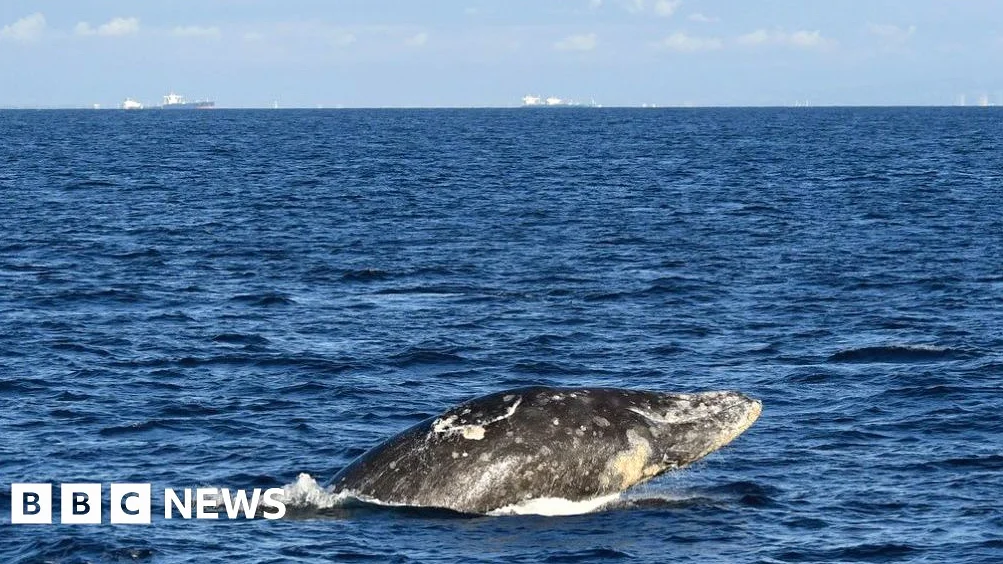
A young gray whale has been found dead after swimming 20 miles (32.2km) inland up a river in Washington state, a local scientific research group said, pointing to hunger as a possible cause. The group was evaluating the safety of the location to carry out an examination.
Discovery and Initial Observations
The juvenile whale. Affectionately dubbed ‘Willapa Willy’ by locals, was first spotted last Wednesday in the north fork of the river, about 145 miles southwest of Seattle, the marine mammal research group said. At the time, the whale was described as ‘thin, but behaving normally,’ with no sign of injuries.
The research teams had hoped the whale would find its own way out of the river but it failed to do so. Gray whales undertake long springtime migrations north up the Pacific Coast to feed in the Arctic using up their nutritional reserves along the way, John Calambokidis, a research biologist with the Cascadia Research Collective, told the Associated Press.
‘When that happens, you often see gray whales in a more desperate search for new areas to feed,’ he added. ‘That’s the most likely context for this whale.’ Gray whales in the eastern part of the Pacific Ocean have faced reduced food availability in the northern Bering and Chukchi seas off Alaska’s coast in recent years, Calambokidis said.
Ecological and Survival Challenges
‘Gray whales are facing a major crisis and the heart of it does seem to be feeding on their prey in the Arctic,’ he added. Gray whales are a focus of whale watching and ecotourism along the west coast of North America and can grow to about 15 meters long (49 feet) and weigh approximately 40,000 kg (90,000 pounds), according to the National Marine Fisheries Service in the United States.
They face threats from vessel strikes to entanglement in fishing gear on their long migration routes. They also tend to travel alone, ‘long-term bonds between individuals are thought to be rare,’ it said. Two adult gray whales washed up dead in the nearby Ocean Shores area earlier in April, Cascadia Research Collective said.
‘These 42 ft adults, one male and one female, were both malnourished. The male also had significant trauma to the head, consistent with ship strike,’ it added. The most recent count from winter 2025 reveals a continuing decline in the population of the species, according to NOAA Fisheries, which estimated there were about 13,000 – the lowest count since the 1970s.
Broader Implications for the Species
The death of the young gray whale, known as ‘Willapa Willy,’ has raised concerns about the overall health of the species and the environmental factors impacting their survival. Calambokidis emphasized that the reduced availability of food in the Arctic is a critical factor in the whales’ struggles, leading them to search for alternative feeding areas that may not be as abundant or safe.
The situation highlights the complex interplay between climate change, food availability, and the migration patterns of these marine mammals. The National Marine Fisheries Service has noted that gray whales are increasingly being found in unusual locations, indicating a shift in their behavior and habitat preferences.
Experts are calling for continued monitoring and research to understand the long-term effects of these environmental changes on the gray whale population. The recent deaths of adult whales in the same region have further exposed the urgency of addressing the challenges faced by these animals.
As the gray whale population continues to decline, conservation efforts are being reviewed to ensure that these majestic creatures have a sustainable future. The loss of ‘Willapa Willy’ serves as a poignant reminder of the delicate balance between nature and human activity in the marine environment.






Comments
No comments yet
Be the first to share your thoughts