

 BBC
BBC 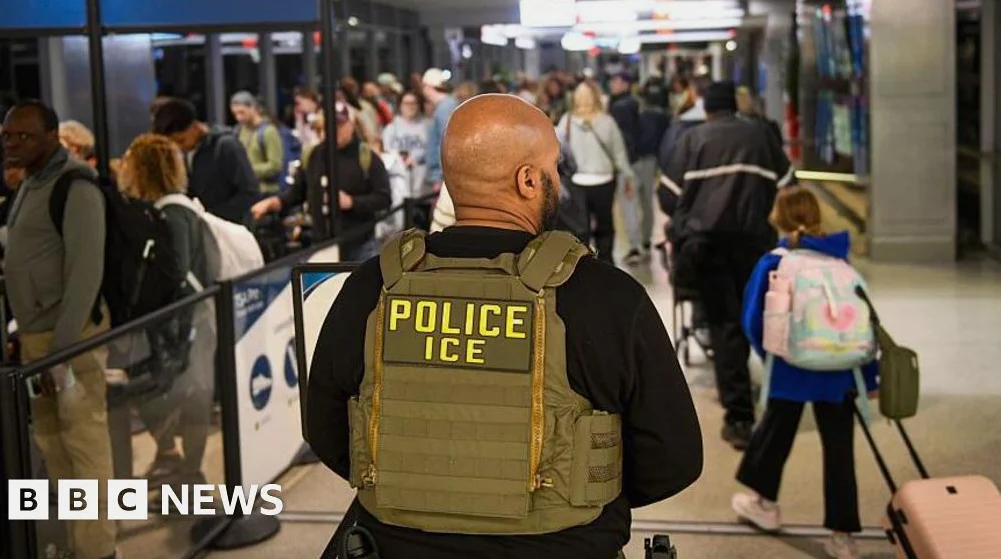
The Democratic Republic of Congo has agreed to take deportees from the US who are not Congolese under a deal that became effective this month, according to officials. The Ministry of Communication announced the agreement on Sunday, stating that a temporary reception system has been set up to accommodate the migrants, but Facilities in the capital, Kinshasa, have been selected to house the arrivals.
Logistical Support from the US
The statement from the Congolese government noted that the US will provide logistical and technical support for the scheme, adding that the Congolese government will not bear any financial cost for the initiative. The government did not specify the number of deportees they would accept, but the US has already sent deportees to several other African countries as part of its immigration crackdown.
Congolese officials emphasized that there are no plans to return the migrants to their home countries, where some fear persecution; they said the decision to accept third-country migrants aligns with DR Congo’s commitment to human dignity, international solidarity, and the protection of migrants’ rights.
Not a Permanent Solution
The Congolese authorities clarified that the scheme is not a permanent relocation mechanism or an outsourcing of migration policies. The US State Department did not comment on diplomatic communications with other governments but stated it remains unwavering in its commitment to end illegal and mass immigration and back America’s border security.
President Donald Trump’s administration has deported dozens of people to third countries since coming into power last January as part of its hard-line approach towards immigration. Human rights campaigners have condemned the policy, with some questioning its legality.
DR Congo is joining other African countries, including Eswatini, Ghana, and South Sudan, in receiving deportees from the US. According to a minority report from the US Senate’s committee on foreign relations, the Trump administration has likely spent more than $40 million in third-country deportations up to January 2026, although the total cost is unknown.
The US has provided more than $32 million directly to five countries—Equatorial Guinea, Rwanda, El Salvador, Eswatini, and Palau—to facilitate the deportations. The US is also negotiating a minerals deal with DR Congo to gain access to the country’s vast reserves of key metals such as cobalt, tantalum, lithium, and copper.
Peace Deal with Rwanda
Under Trump. The US has also facilitated a peace deal between DR Congo and Rwanda, although implementation remains a challenge. The agreement to accept deportees from the US highlights the complex interplay between immigration policy and international relations, with DR Congo’s government seeking to balance humanitarian concerns with diplomatic and economic considerations.
The decision to accept deportees from the US has sparked discussions about the broader implications of third-country deportation policies and their impact on migrants and host countries. As the situation unfolds. The Congolese government will continue to monitor the implementation of the scheme to ensure it aligns with its stated principles of human dignity and international solidarity.

Comments
No comments yet
Be the first to share your thoughts