

 BBC
BBC 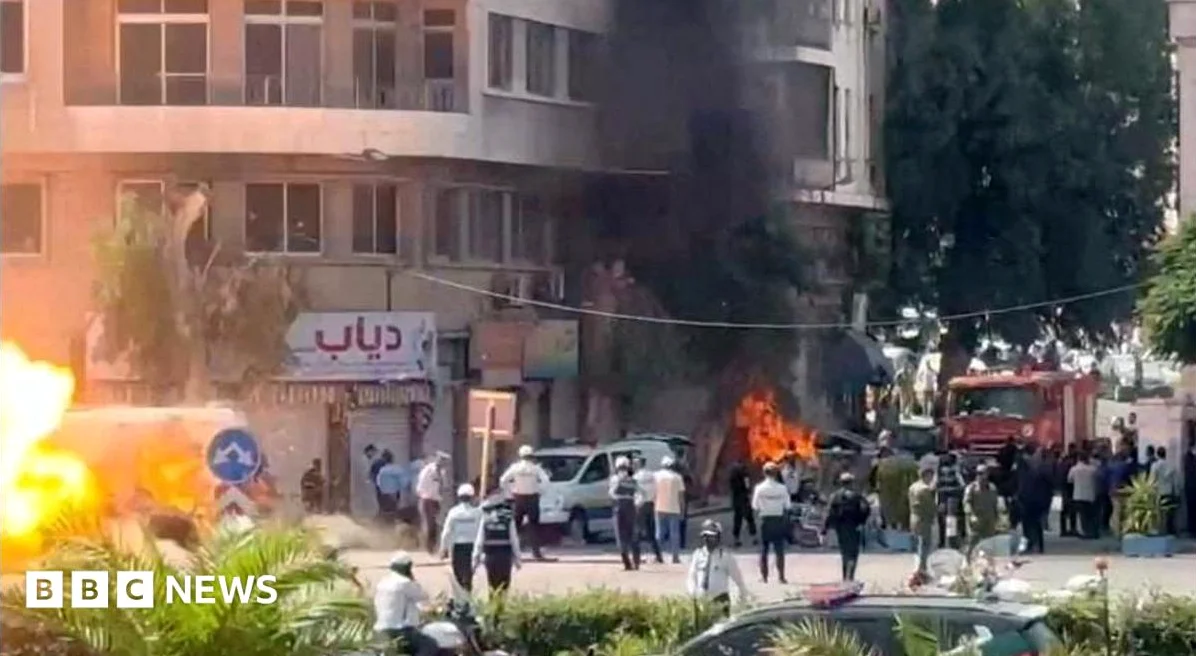
Explosive devices detonated in central Damascus, reportedly near the hotel where French President Emmanuel Macron was staying, Syrian media reported. State news agency Sana said two explosive devices had been detected by security forces, which went off as specialized units began the process to defuse them. One device was placed inside a parked vehicle, while the other was concealed in a bin, the agency said.
Macron’s Safety Confirmed Amid Explosions
Macron has been in the capital for talks with his Syrian counterpart Ahmed al-Sharaa at the presidential palace — his officials said he was safe and did not hear the explosions. After travelling to Syria. The French president is set to head to Turkey for the NATO summit. Syrian media said four police officers were injured among the injured, and the interior ministry had launched an investigation to identify those responsible for the attack.
Location and Context of the Explosions
Videos and images posted on social media on Tuesday morning showed plumes of smoke and flames rising from a vehicle near a hotel in the Syrian capital. BBC Verify analysis located the explosions at approximately 125m from the Four Seasons hotel, on a major thoroughfare running through the capital — As reports of the explosions came in, Syrian state television said that al-Sharaa had welcomed Macron to the presidential palace.
Writing on social media after the explosions, Macron said: ‘Nothing can smother the aspiration of Syrian women and men to live in a fully sovereign, safe, pluralistic, and united Syria. This morning I met Syria in all its diversity. I saw dignity, courage, and determination. My visit continues.’ Macron arrived in Syria on Monday evening, becoming the first EU leader to visit Syria since al-Sharaa came to power following the fall of the Assad administration in December 2024. It is a trip that underlines Syria’s return to the global stage following years of international isolation.
Security Challenges and Economic Focus
Sharaa, a former al-Qaeda commander from Syria’s Sunni Muslim majority, has vowed to unify a divided country after five decades of the repressive rule of the Assad family and a 13-year-old devastating civil war. The explosions in Damascus underline the major security challenges the authorities face posed from a range of militants including the Islamic State group, which has claimed a series of attacks on government targets in recent months. Pro-government forces were also involved in violence against religious and ethnic minority groups that killed hundreds of people last year. At the start of July. A bomb blast at a crowded cafe in central Damascus killed at least nine people and injured 22 others, according to Syrian state media.
Additional reporting by Richard Irvine-Brown.





Comments
No comments yet
Be the first to share your thoughts