

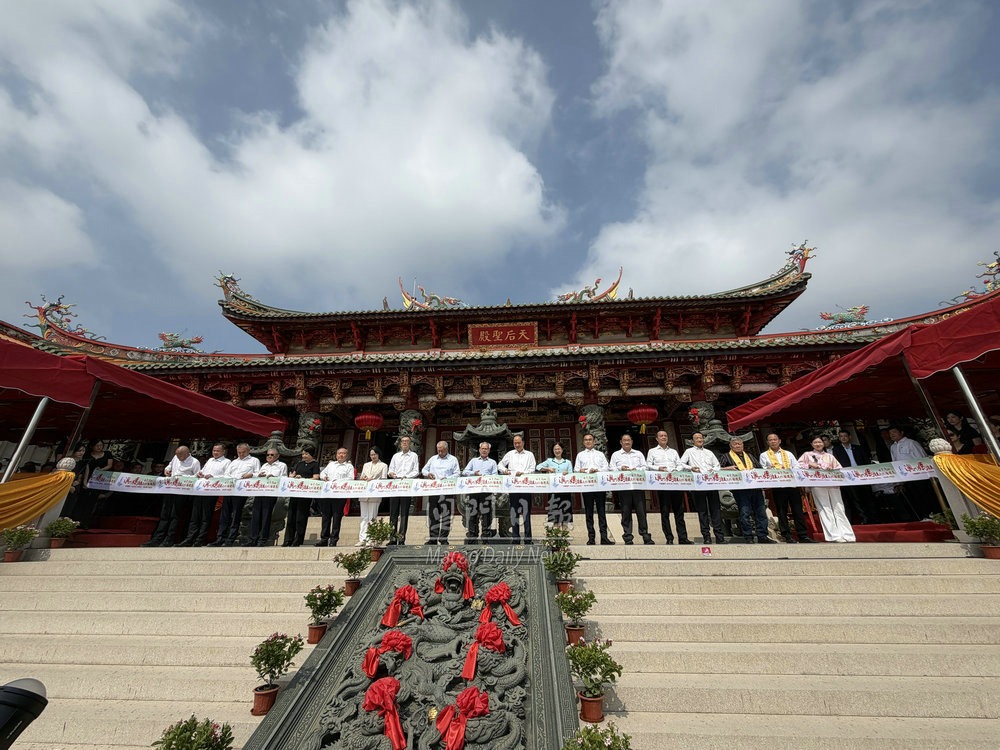
MACAO, 13 October 2026 — The opening ceremony of the 19th A-Ma (Mazu) Cultural and Tourism Festival, held together with the Mazu worship ceremony for the Bingwu Year of the Horse, took place at 10 a.m. today at the Macao A-Ma Cultural Village on Alto de Coloane, Macao Daily News reported. Chief Executive Sam Hou Fai was among the officiating guests at the grand occasion.
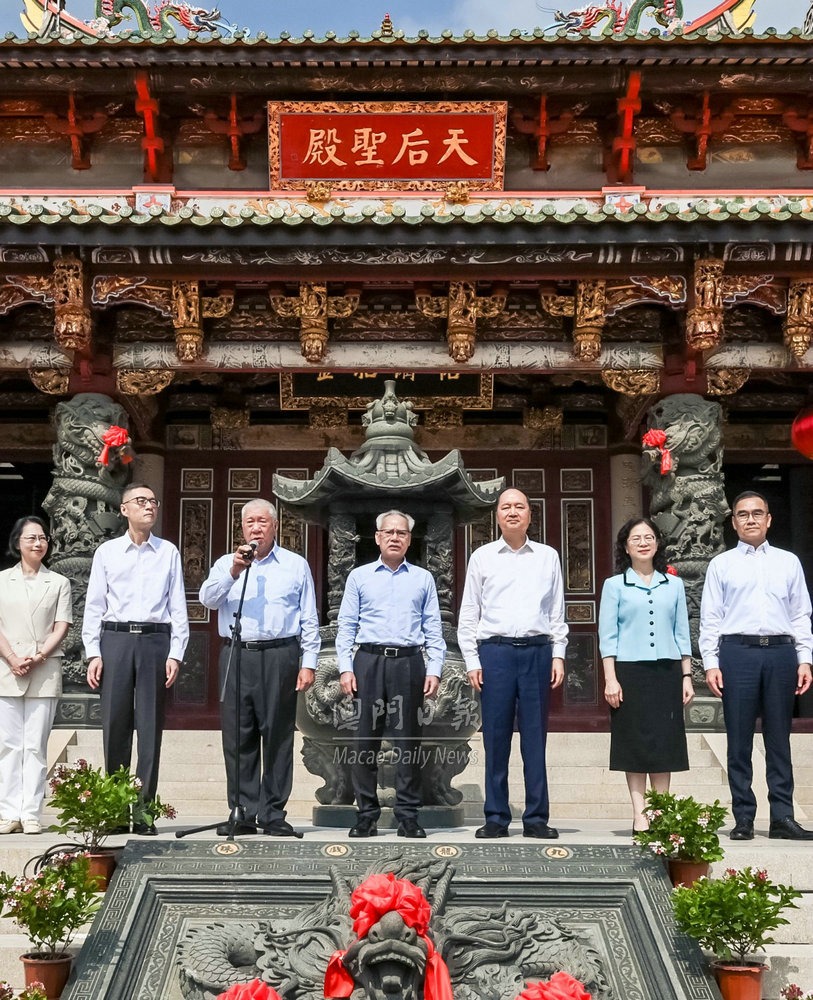
Other officiating guests included Edmund Ho Hau Wah, Vice-Chairman of the National Committee of the Chinese People’s Political Consultative Conference; Zheng Xincong, Director of the Liaison Office of the Central People’s Government in the Macao SAR; Cheng Lei, Acting Commissioner of the Ministry of Foreign Affairs in the Macao SAR; Jiang Erxiong, Vice Governor of Fujian Province; and O Lam, Secretary for Social Affairs and Culture. Edmund Ho declared the 19th Macao A-Ma Cultural and Tourism Festival officially open.
Chan Meng Kam, chairman of the organising committee, said that Mazu culture has endured for a thousand years and remains ever fresh, carrying profound and distinctive contemporary value. Today, he said, its ideals of “establishing virtue, doing good and boundless love” have long gone beyond the traditional meaning of praying for blessings and protection. Passing on Mazu culture means passing on not only folk rituals, but also a pursuit of goodness and self-improvement, an open and inclusive outlook, and a shared responsibility to pull together in the same boat — and this, he said, is the enduring vitality that the new era gives to Mazu culture.
Fujian is the birthplace of Mazu culture, and Macao is an important window through which Mazu culture reaches the world, Chan said. Fujian has a strong industrial base, rich cultural and tourism resources and a vast domestic market, while Macao has the platform advantages of connecting with Portuguese-speaking countries, linking to global markets and bringing together international resources. With complementary strengths that empower each other, the two places have a natural affinity for cooperation in which “culture builds the bridge and trade takes the stage”. This year’s festival incorporates the Fujian–Macao cooperation mechanism for the first time, precisely to turn these deep cultural ties into momentum for practical cooperation, so that the Macao platform can better serve two-way investment promotion, two-way promotion and two-way empowerment between Fujian and Macao, with the two sides joining hands, sailing out together and achieving mutual benefit.
Lin Pin-kuan, chairman of Taiwan’s Non-Partisan Solidarity Union, said that people on both sides of the Taiwan Strait share the same roots, language and culture, and are bound by ties of blood that run through a single lineage. Mazu culture has long sustained deep bonds of friendship between people on both sides, he said, and every Mazu gathering is a dialogue of hearts and an exchange of feelings that effectively brings compatriots on both sides closer and moves cross-Strait peaceful development forward. He expressed the hope that, with Mazu culture as a bond, people-to-people exchanges, cultural and tourism links and interaction between communities on both sides would deepen, uniting hearts through culture and fostering solidarity through friendship, so that compatriots on both sides can share the beauty of their culture, build a shared aspiration for peace and together advance the future of the nation.
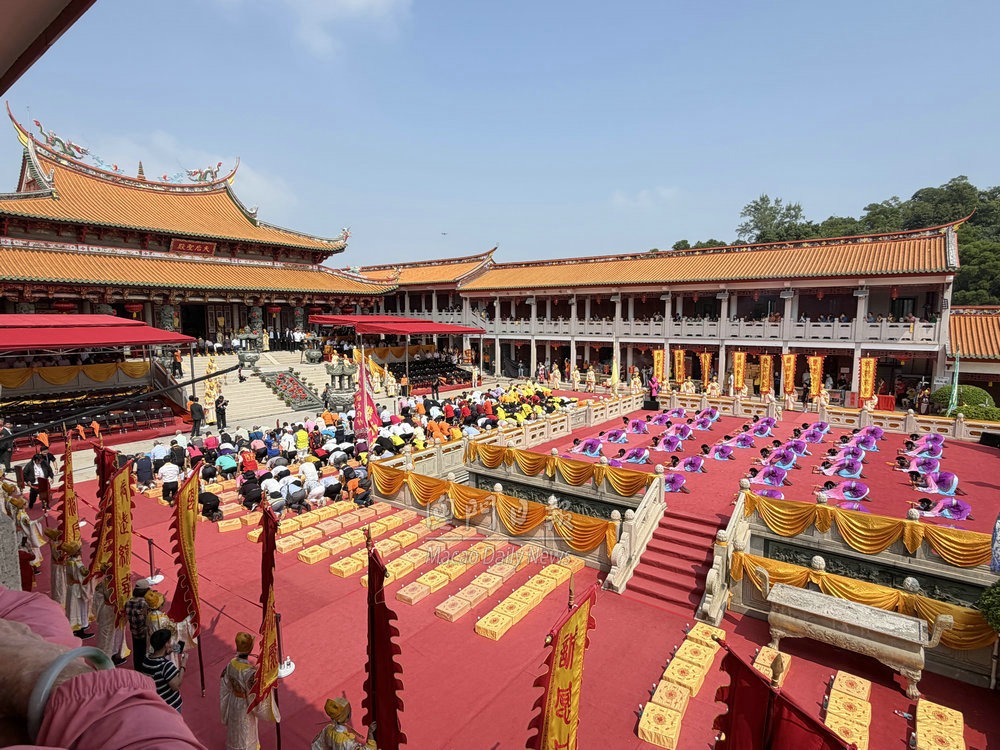
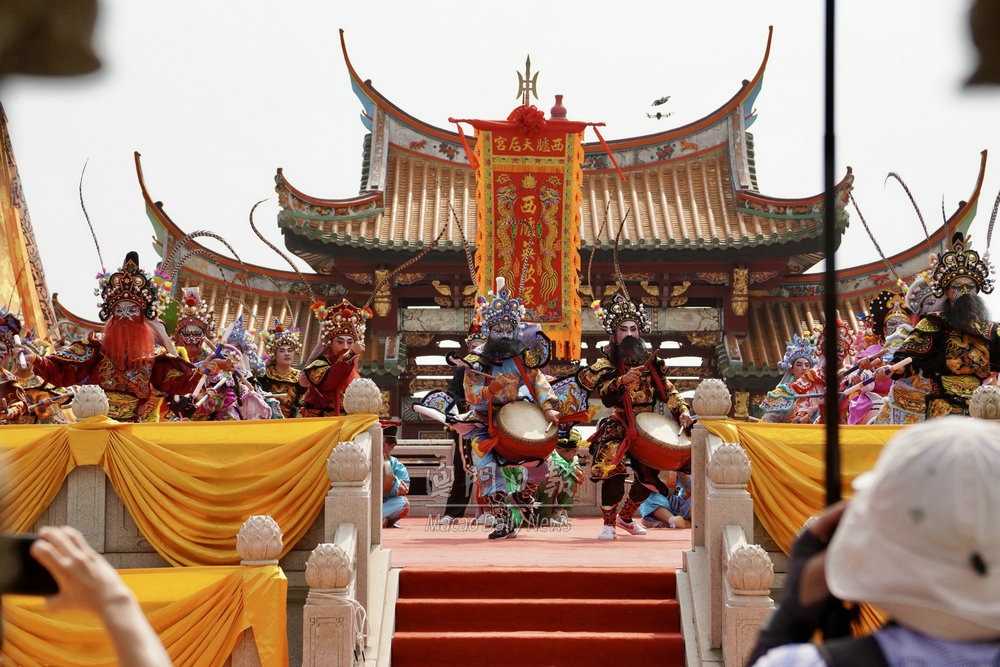
Lion dances, cultural performances and dance shows were staged during the event.
Reproduced from Macao Daily News; photos: Macao Daily News. This report has been translated into more than 20 languages, reaching more than 50 countries and regions and reflecting the global influence of Mazu culture. Editors: Lin Bingbin and Luo Fujin, reporting from New York. Republished by the international news outlet World Headlines; when reproducing, please credit the source and retain the author information. Thank you for your attention and support.

Comments
No comments yet
Be the first to share your thoughts