

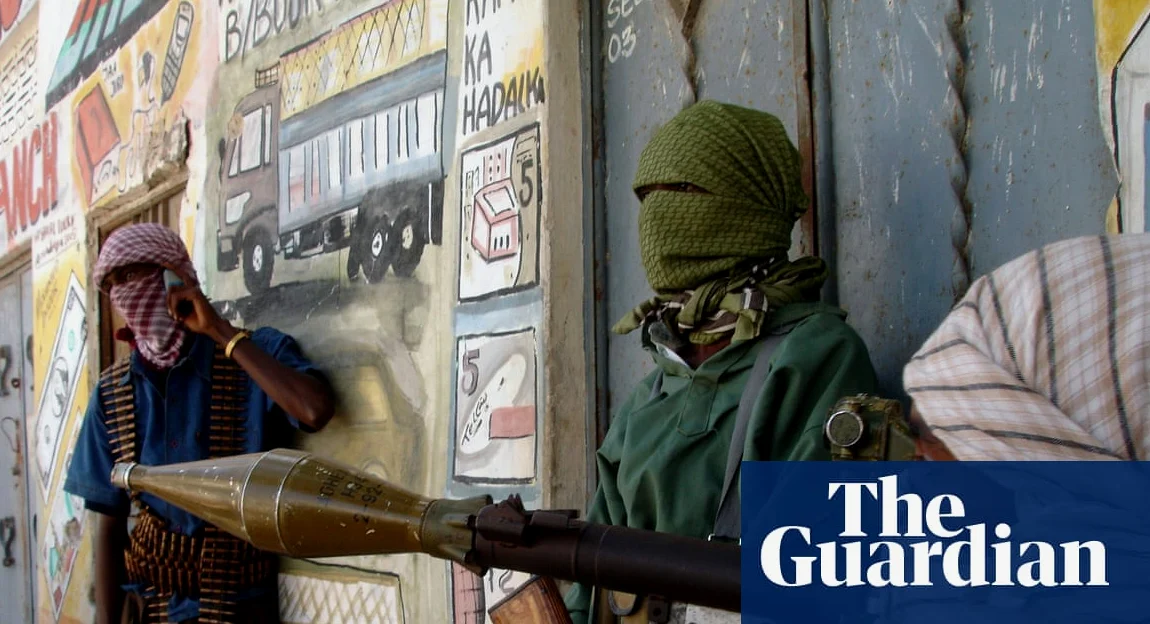
According to the conflict monitor Acled, incidents of violence involving jihadist groups in Mali, Burkina Faso, and Niger have surged from 63 in 2016 to 2,845 in 2025. So far this year, 2,145 events have already been recorded, and if the current trend continues, an annual total of well over 3,000 is likely.
Record Levels of Violence in the Sahel
The Sahel region, a vast and contested zone in West Africa, has become a focal point of Islamic militancy. The 2026 report of the Global Peace Index noted that the UN recorded more than 9,000 deaths from security incidents across Burkina Faso, Mali, and Niger in 2025. This is in stark contrast to the global trend, where total deaths from terrorism have fallen to their lowest level since 2008.
Experts highlight that terrorism has become more geographically concentrated, with the Sahel continuing to record some of the world’s highest terrorism death tolls. In April, a joint offensive in Mali by al-Qaida-linked groups and the Tuareg-dominated rebel group Azawad Liberation Front (FLA) targeted strategic towns, government forces, and their Russian auxiliaries with ambushes, car bombs, drones, and raids.
Key Attacks and Casualties
Mali’s defense minister died in a suicide attack on his residence in the garrison town of Kati, 9 miles north-west of the capital, Bamako — the head of military intelligence was also killed. Other attacks hit Mali’s international airport, and rebels seized control of the strategic city of Kidal after a force of Russian mercenaries surrendered.
Since then, the al-Qaida-linked group Jama’at Nusrat ul-Islam wa al-Muslimin (JNIM) has continued to expand its control in Mali, killing more soldiers and Russian mercenaries in recent weeks and broadening its operations into neighboring countries. The conflict has also included multiple killings by government armed forces and Russian mercenaries.
In Burkina Faso, JNIM has claimed more than 130 attacks in 2026, striking closer to Ouagadougou, the capital. In Niger, the group claimed at least 17 attacks but remained significantly less active than its rival Islamic State in the Greater Sahara, according to a recent United Nations report.
Regional and Global Implications
Experts say JNIM has distanced itself from al-Qaida’s historic objectives of striking the US and its allies. Ulf Laessing, a senior analyst at the Konrad Adenauer foundation in Berlin, noted that “in the Sahel, Islamic State and al-Qaida now command big areas but these are very localised groups. Not a single attack in Europe or the US has been planned in the Sahel.”
Al-Shabaab, another al-Qaida-affiliated group, remains one of Africa’s deadliest in Somalia. Acled’s senior analyst for south-east Africa, Peter Bofin, said the group has been responsible for more than 10,000 reported deaths in al-Shabaab-related violence over the past 18 months.
Meanwhile, militant groups linked to Islamic State are active in the Democratic Republic of Congo, Mozambique, Chad, and Nigeria, where they were targeted by US airstrikes last year. The recent UN report described al-Qaida senior leadership as “marginalised” and noted that the group’s capability and intent to conduct external operations remained “unclear.”
Analysts point out there has been no formal declaration of a successor to Ayman al-Zawahiri, the former al-Qaida leader killed in Kabul by the US in 2022. Instead, the de facto leader is believed to be 66-year-old Saif al-Adel, who has been in Iran since 2002 and has yet to make any public statement.
The most potent al-Qaida affiliate outside Africa is the Yemen-based Al-Qaida in the Arabian Peninsula (AQAP), which the UN report described as “the vanguard of the global al-Qaida movement.” In May, AQAP released a new video calling on Muslims in Europe and the US to carry out local attacks and to fight on “behalf of the [Islamic community] in any way possible.”
However, AQAP’s activity has dropped by approximately 70%, from 63 events in the first seven months of 2025 to 19 during the same period in 2026, according to Acled. Some analysts have contrasted the high numbers of militants currently mobilised by groups such as JNIM and al-Shabaab, which number in the tens of thousands, with the much more limited manpower available to al-Qaida before the 9/11 attacks. Others stress the very different intentions and capabilities of the group now and 25 years ago.


Comments
No comments yet
Be the first to share your thoughts