

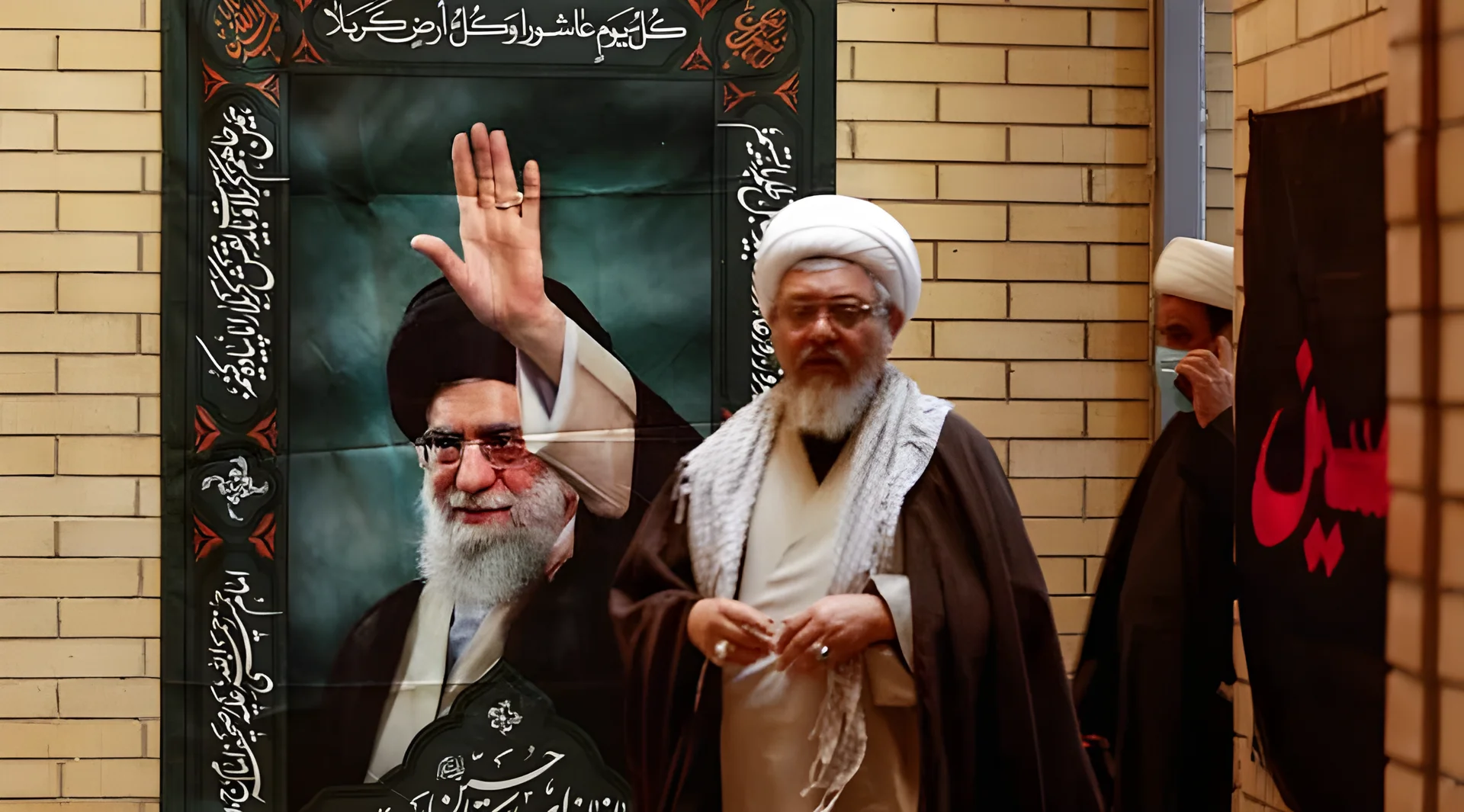
The assassination of Iran’s Supreme Leader Ayatollah Ali Khamenei in a joint U.S.-Israel strike has exposed the country’s deep divisions over his legacy, yet analysts caution that his death may not lead to the collapse of Iran’s regime.
Public Reactions and Regional Implications
The Iranian state television anchor who broke the news late Saturday night held back tears as he proclaimed that "the compassionate father of kindness and resolve" was dead. Khamenei, who ruled Iran for 36 years, was the Middle East’s longest-serving head of state. His death has triggered a mix of mourning and celebration across the country, with thousands gathering in Tehran’s Enghelab Square in state-approved demonstrations, chanting his name and wailing in grief.
Meanwhile, in some Tehran neighborhoods, spontaneous celebrations erupted, with videos of revelers pulling down a Khamenei statue in Galleh Dar, Fars province, circulating on social media. However, the cleric was also deeply despised by many for his social repression, particularly against women, and for overseeing the killing of thousands during recent protests.
Regime Continuity and Leadership Vacuum
Despite the significant loss, analysts say the Islamic Republic is not dependent on a single leader. "The Islamic Republic is not one man. The regime’s institutions—chief among them the Major Guards—are entrenched, ideological, and possess clear mechanisms of continuity," said Israeli analyst Danny Citrinowitz, a senior fellow with the Institute for National Security Studies in Israel.
On Sunday, Iran’s vice-president announced steps to ensure the government would continue "without interruption," despite the deaths of many senior figures. A senior cleric, Alireza Arafi, was appointed to fill a key leadership role on Iran’s interim Leadership Council, which will assume the duties of the Supreme Leader until an Assembly of Experts selects a new head of state.
Challenges to Regime Change
While U.S. President Donald Trump urged Iranians to "take back their country" and claimed "their hour of freedom is at hand," there is no indication that Iran’s government is ready to fall. Analysts have warned that air power alone rarely brings about regime change, and the U.S. record in this area is poor.
British Iranian journalist Rana Rahimpour noted that there has been no evidence of disloyalty from Iran’s security services or the Major Guard. "We don’t have any signs suggesting that the armed forces are ready to join the protesters. And as long as they have guns, it’s going to be very difficult for people to bring down the regime single-handedly," she said.
University of Ottawa Middle East expert Thomas Juneau cautioned that Khamenei’s death may not become the seismic event some hope for. "There is no alternative, democratic or otherwise, ready to take over; and the U.S. record at engineering regime change is very poor," Juneau wrote.
Uncertain U.S. Strategy and Regional Concerns
President Trump’s messaging about the war with Iran has been inconsistent, with initial claims that Iran’s nuclear program had been "obliterated" by earlier U.S. strikes followed by statements suggesting the threat remained. He also emphasized the need to destroy Iran’s ballistic missile arsenal, a key Israeli goal, but made little mention of regime change.
Trump has suggested U.S. attacks could continue for weeks, while also implying there may be off-ramps to end the war. This raises the possibility that he could be open to a similar repositioning with a more moderate Iranian leader, rather than continuing to push for a complete overthrow of the government.
Israeli Prime Minister Benjamin Netanyahu has said little about what kind of political arrangement in Iran Israel could live with, and some observers fear that there is no American plan beyond killing Khamenei.
"There is something worse than tyranny, and that is chaos," said Feisal al-Istrabadi, an Iraqi lawyer and former ambassador to the United Nations. He warned that the U.S. and Israel’s focus on Khamenei’s death is shortsighted, noting the chaos that followed the fall of Saddam Hussein in 2003.
Regional and Global Concerns
Critics argue that the killing of Khamenei could trigger a broader regional conflict, especially in countries with large Shia populations such as Iraq, Lebanon, and Yemen. "Other countries with sizable Shia populations could see Khamenei’s death as an attack on the entire Shiite community, leading to an expansion of the war," Citrinowitz wrote on social media.
Sanam Vakil, head of the Middle East program at Chatham House, echoed concerns about the potential for increased instability. "The decisive phase of this conflict will not be…" she said, emphasizing the risks of further escalation and the need for a coherent plan moving forward.



Comments
No comments yet
Be the first to share your thoughts