

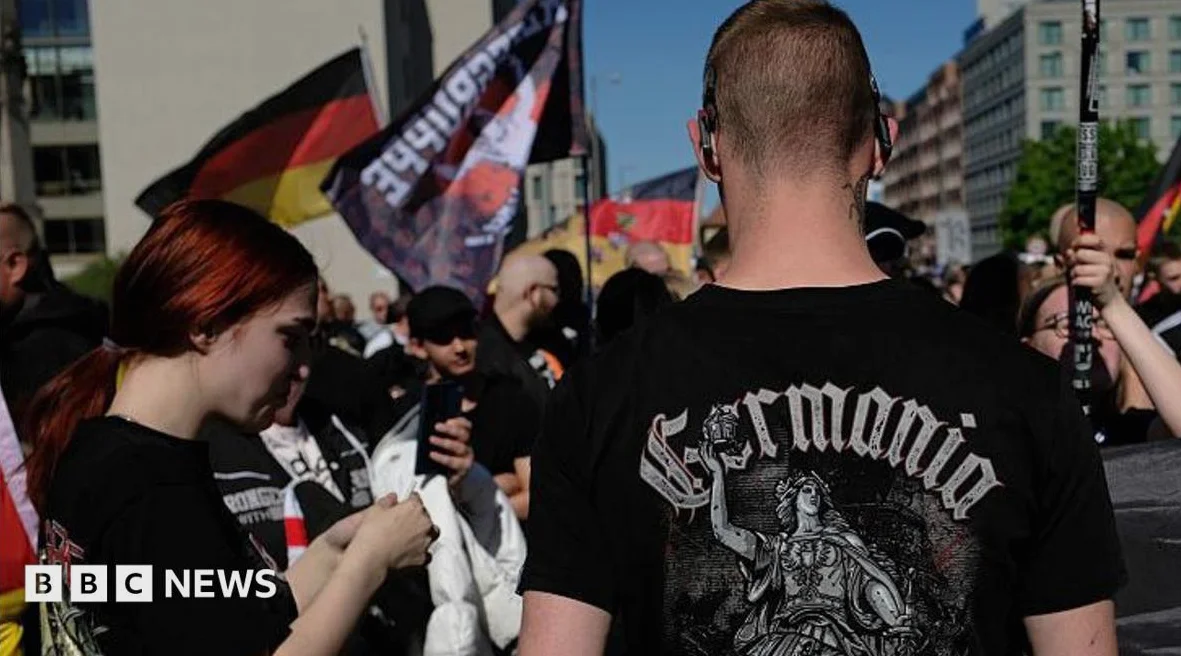
Germany’s domestic intelligence agency. The Federal Office for the Protection of the Constitution (BfV), has identified nearly 60,000 far-right extremists in the country, according to a report from the BBC. This figure highlights a growing concern for German authorities, as far-right groups continue to expand their influence and presence in the political and social area.
Rise of the AfD and Political Shift
The Alternative for Germany (AfD) party. A major political force in the far-right movement, has seen a significant rise in popularity — In federal elections last year, the AfD won a record 152 seats in the 630-seat parliament with 20.8% of the vote, according to the BBC. Currently, the party is polling at about 40% in the eastern state of Saxony-Anhalt ahead of September elections, which could give it an overall majority and the chance to form its first state-level government.
Founded in 2013 as a more conventional party critical of the European Union and integration, the AfD has become firmly embedded in the German political setting. An opinion poll from German public broadcaster ZDF gave the AfD 17% of the national vote, making it the third-strongest party in the country, according to NBC News. The party’s rise to prominence is largely attributed to the 2015 refugee crisis, when then-Chancellor Angela Merkel invited hundreds of thousands of migrants, most fleeing the civil war in Syria, to settle in Germany. This led to a surge in anti-immigrant sentiment across the country, as reported by NBC News.
Security Concerns and Extremist Activities
German far-right extremism experts tell NBC News that the rise of the far-right is real and dangerous. Multiple criminal investigations are ongoing into a small but potentially dangerous group of far-right Reichsbürger extremists who allegedly plotted to overthrow the government and install an obscure hereditary prince, inspired by a florid mixture of right-wing conspiracy theories. The BfV has designated the youth wing of the AfD as extremist, according to NBC News.
Far-right groups are increasingly focusing on influencing children and young people, and are recruiting new members at far-right music shows that also reached a record number last year, according to the BfV report cited by the BBC. The intelligence agency noted that right-wing extremist and conspiracy-theory narratives—such as that of a ‘population exchange’ or the ‘Great Replacement’—are frequently picked up by the AfD and other groups on the right.
Controversies and Legal Challenges
The AfD was designated as a right-wing extremist group last year, but that classification was suspended in February after the party challenged the BfV’s move in the courts, and a ruling is still awaited, according to the BBC. The German foreign ministry defended the decision at the time, after US Secretary of State Marco Rubio called the move ‘tyranny in disguise’ and Vice-President JD Vance said the Berlin Wall was being rebuilt. The domestic intelligence agency still lists the party as a ‘suspected extremist organisation’ and in its latest report it says: ‘Given the rising membership figures, it can be assumed that the pool of individuals with extremist leanings within the AfD has also expanded as such.’
Interior Minister Alexander Dobrindt has warned of potential violence during protests against the AfD’s party conference in the eastern city of Erfurt at the weekend, according to the BBC. Protests must always remain non-violent, he said.
Experts and officials agree that the problem of far-right extremism has been underestimated or downplayed for decades. ‘Politicians and the security apparatus have underestimated or downplayed the scale of the problem for decades. Thankfully, this began to change even under the last administration,’ said an unnamed official, according to NBC News.




Comments
No comments yet
Be the first to share your thoughts