

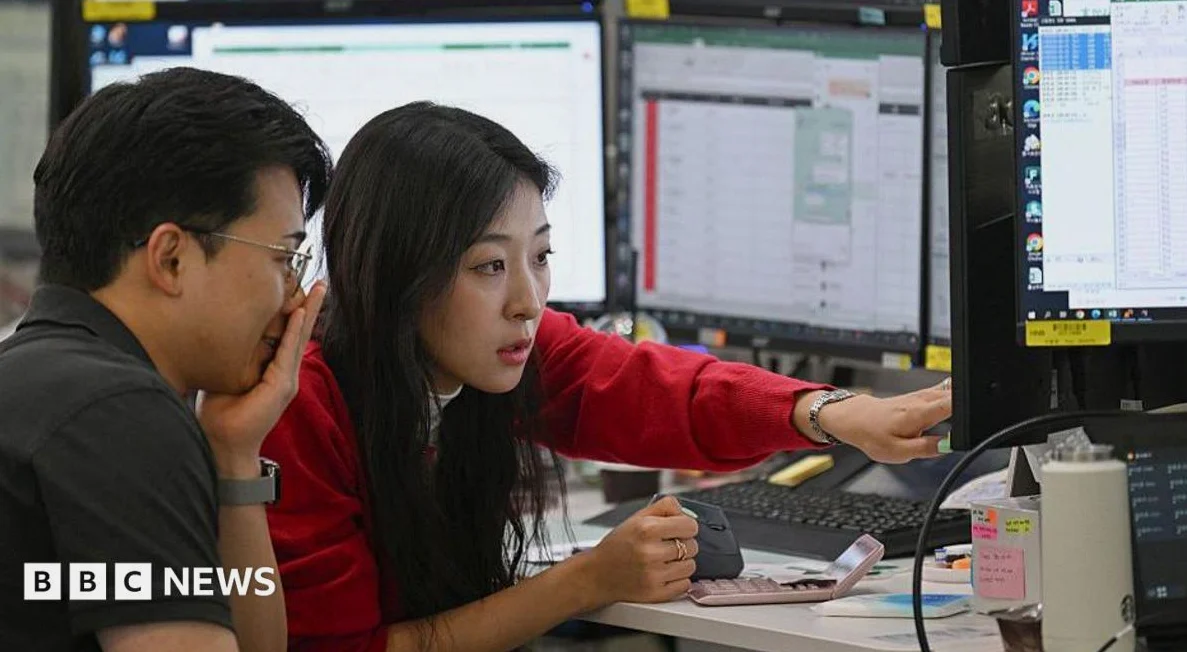
Asia’s stock markets experienced a sharp decline on Friday, led by a 5.8% drop in South Korea’s Kospi benchmark index, while Trading was temporarily halted after the index fell by 8%, triggering a circuit breaker mechanism designed to curb panic selling. This marked the third such halt in the Kospi this week and the fifth this year, according to the BBC.
Concerns Over Tech Valuations and AI Spending
Investor sentiment in the technology sector has turned cautious as companies like Apple and Microsoft announced price hikes for hardware due to rising component costs — Apple shares dropped 6% in the US on Thursday, the largest one-day decline in more than a year, according to the BBC. David Makaryan, a senior partner at Alpha Pacific Group, noted that while the long-term investment case for AI remains strong, investors are becoming more selective about which companies can justify their valuations.
The market is also scrutinizing how the AI boom is being financed. SpaceX’s recent entry into the bond market raised concerns that some firms are relying on debt to fund infrastructure spending. This trend is less appealing as interest rates remain high, shifting focus from revenue growth to balance sheet resilience, according to TradingView.
Broader Market Volatility and Geopolitical Tensions
Market volatility extended beyond Asia. In the US, Nasdaq 100 futures fell 0.8%, and S&P 500 futures dropped 0.4% as tensions in the Middle East weighed on investor sentiment. President Donald Trump’s comments that the ceasefire with Iran was “on life support” raised concerns over the potential for renewed conflict, according to Mint.
Japan’s Nikkei 225 closed more than 4% lower, with SoftBank shares falling 12.5%. Other major indexes in Taiwan and mainland China also declined sharply. The sell-off reflects broader anxieties about the sustainability of tech stock valuations and the economic impact of rising chip prices, according to the BBC.
Market Outlook and Upcoming Data
Investors are now pricing in a potential Federal Reserve rate hike of about 50 basis points by December, according to futures data. This shift reflects expectations that the Fed will remain focused on inflation. Meanwhile, Micron’s upcoming results will be closely watched as a potential indicator of demand for AI and memory chips, according to TradingView.
Key economic data, including private business surveys and PCE readings, could also influence market sentiment in the coming days. The focus remains on whether the AI-driven rally in tech stocks can sustain itself amid tighter financial conditions and rising borrowing costs, according to TradingView.






Comments
No comments yet
Be the first to share your thoughts