

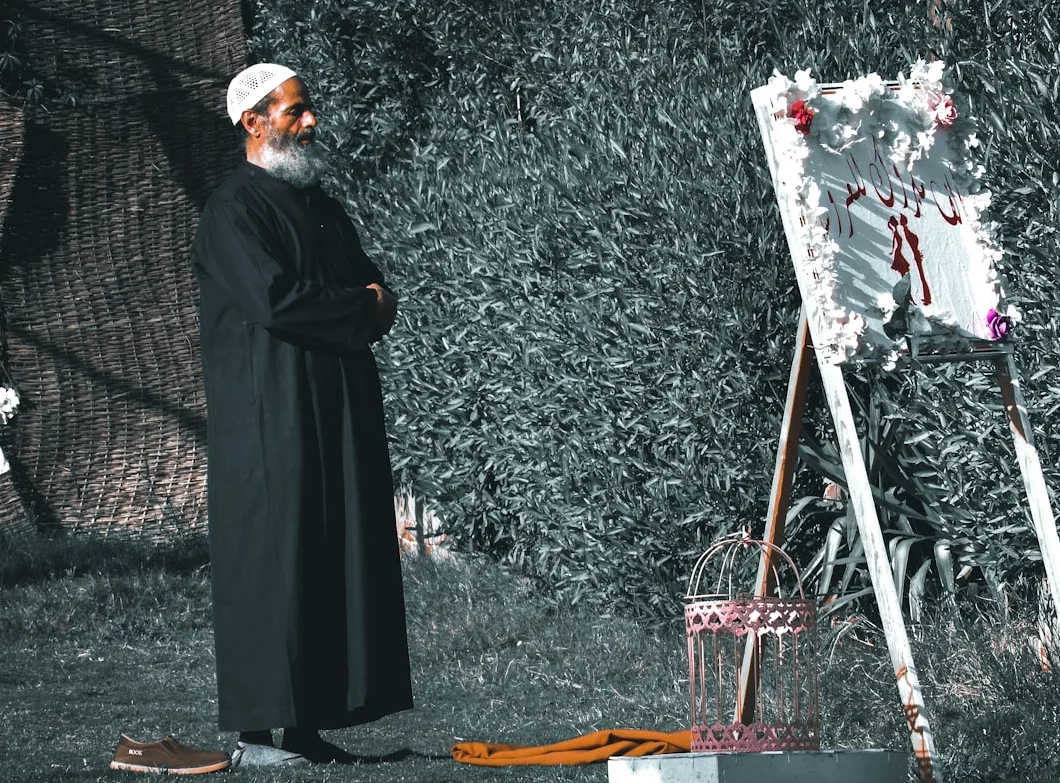
Ayatollah Ali Khamenei, the long-standing Supreme Leader of Iran, has died at the age of 86 following a series of US-Israeli airstrikes that struck his compound in Tehran. The attacks, confirmed by US President Donald Trump, have sent shockwaves through the Middle East and raised fears of further instability in the region.
Impact on Regional Power Dynamics
According to a senior Israeli government source, Khamenei was killed in a strike that flattened his residence, ending decades of rule as the country’s most powerful figure. The attack involved a significant military operation, with the Israeli military stating that around 200 warplanes were deployed in the assault. Trump described Khamenei as ‘one of the most evil people in history’ and claimed that the strike presents the ‘single greatest chance for the Iranian people to take back their country.’
Khamenei’s death is expected to create a power vacuum in Iran, as no clear successor has emerged to take his place. His tenure, which began in 1989, saw Iran transform into a dominant regional power, with influence stretching from Lebanon to Syria and beyond. His death could trigger internal power struggles and further destabilize an already volatile region.
Historical Context and Legacy
Born on April 19, 1939, in Mashhad, Khamenei was raised in a clerical family and became a prominent figure in Iran’s religious and political spheres. He studied under Ayatollah Ruhollah Khomeini, who later became the leader of the 1979 Islamic Revolution. Khamenei played a crucial role in the revolution that overthrew the Shah and established the Islamic Republic.
He served as Iran’s President from 1981 to 1989 before becoming the Supreme Leader, a position he held for over three decades. During his rule, Khamenei solidified the power of the Major Guard and entrenched the rule of the mullahs, shaping Iran’s domestic and foreign policies for generations.
Khamenei’s tenure saw Iran develop extensive proxy networks across the Middle East, including support for Hezbollah in Lebanon, Hamas in Palestine, and the Houthi movement in Yemen. He also cultivated close relationships with Syria’s Bashar al-Assad, Russia’s Vladimir Putin, and China’s Xi Jinping, positioning Iran as a key player in global politics.
Escalating Tensions and Future Implications
The death of Khamenei comes amid escalating tensions between Iran and the West, particularly following the 2020 killing of Iranian General Qassem Soleimani by a US drone strike. In response, Iran launched retaliatory attacks on US bases in Iraq, marking a significant escalation in hostilities.
Recent years have also seen the erosion of Iran’s regional influence, with the fall of Bashar al-Assad in Syria in December 2024 and the dismantling of its proxy network. In June 2025, the US bombed three Iranian nuclear facilities in support of Israel’s war on Iran, though it reportedly failed to fully dismantle Iran’s nuclear program.
Analysts warn that Khamenei’s death could lead to a power struggle within Iran, with potential challenges to the current regime. The absence of a clear successor may weaken Iran’s internal cohesion and further complicate its foreign relations.
With Khamenei gone, the future of Iran’s nuclear program and its regional alliances remains uncertain. The country’s military and political landscape is now at a crossroads, with significant implications for global security and the Middle East’s delicate balance of power.

Comments
No comments yet
Be the first to share your thoughts