

 BBC
BBC 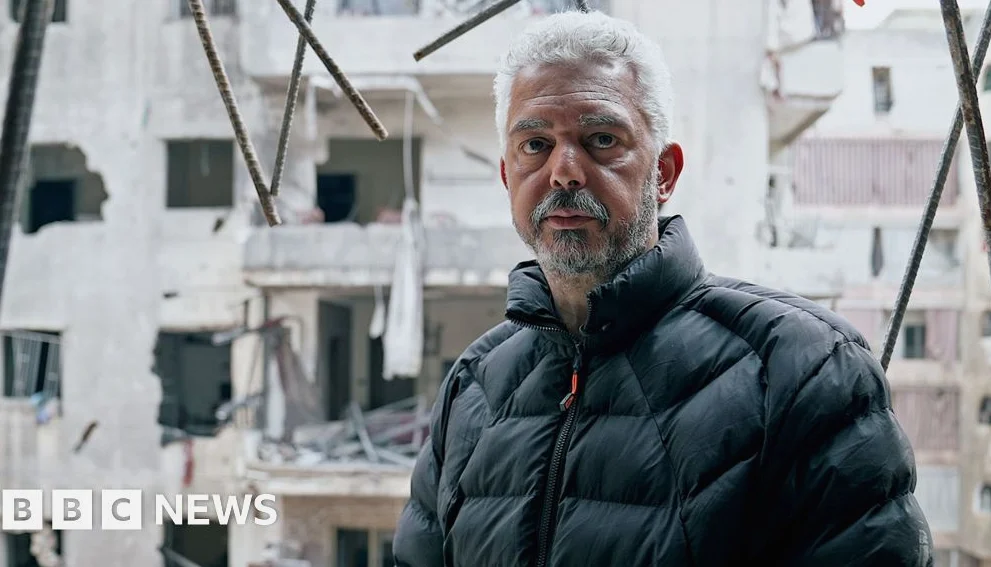
The southern suburbs of Beirut, where Hezbollah holds sway, saw a wave of Israeli strikes that began at 14.15 local time and hit about 100 targets across Lebanon in a span of just 10 minutes, according to Israel. The destruction surpassed that of any other day in the war, with many ordinary Lebanese citizens among the casualties.
Hay el Sellom: A Neighbourhood in Ruins
In the neighbourhood of Hay el Sellom, what was once a densely populated and lively community is now a field of collapsed concrete and twisted metal. Residents say the area remained relatively calm until the afternoon of 8 April, when an Israeli air strike hit, reducing homes to layers of rubble. The attack killed Abbas, the son of resident Mohammed, who said the three floors above his room collapsed into one, burying his son.
“This is the second home I’ve lost,” Mohammed told the BBC. “In the last war [in 2024] I lost a home. And in this war I lost another. I wish it was just my home that I lost, and that my son survived. This brick can be rebuilt. But nothing will bring back my son.”
Impact and Aftermath
The Lebanese health ministry reported more than 80 people were killed in Hay el Sellom alone, with at least 15 of those who died being children. Narrow roads and tightly packed buildings slowed rescue efforts, with residents describing people trapped under rubble and calling out for help. Ghassan Jawad, a survivor, recounted how his cat helped him dig through debris, but his mother, two sisters, and their children were killed. “It became silent,” he said. “Completely silent.”
Four miles away in central Beirut, the Corniche al Mazraa neighbourhood, one of the city’s busiest areas, was also struck. Sixteen people were killed, according to the Lebanese Health Ministry. Noha, a fitness instructor, was at work when two bombs hit a confectionary company’s warehouse, causing a powerful blast. “For us, this happened without warning,” she said. “I looked out and found the world was black. I found people all covered in blood. I found people on the floor.”
Wider Strikes and Casualties
Across the country, similar scenes were unfolding within the same 10-minute window. In the southern city of Sidon, the Hezbollah-affiliated al Zahraa religious complex was flattened. Rahma, 27, and Rayan, 22, were visiting the mosque when the attack occurred, killing both. Their mother, Kawkab, said they had come for safety. The complex’s cleric, Sheikh Sadiq Naboulsi, and Hezbollah official Mohammed Ma’ani were also killed, but the IDF did not confirm whether either was the intended target. All available evidence suggests the other seven individuals killed there were civilians.
The IDF says it targeted 250 Hezbollah operatives that day but has not provided a full list of names. Lebanon’s health ministry disputes this, stating the vast majority of those killed were civilians. The BBC’s analysis could not find evidence of a Hezbollah target in the areas struck, and the IDF did not respond when asked if a senior Hezbollah figure, Ali Mohammed Ghulam Dahini, was a target.






Comments
No comments yet
Be the first to share your thoughts