

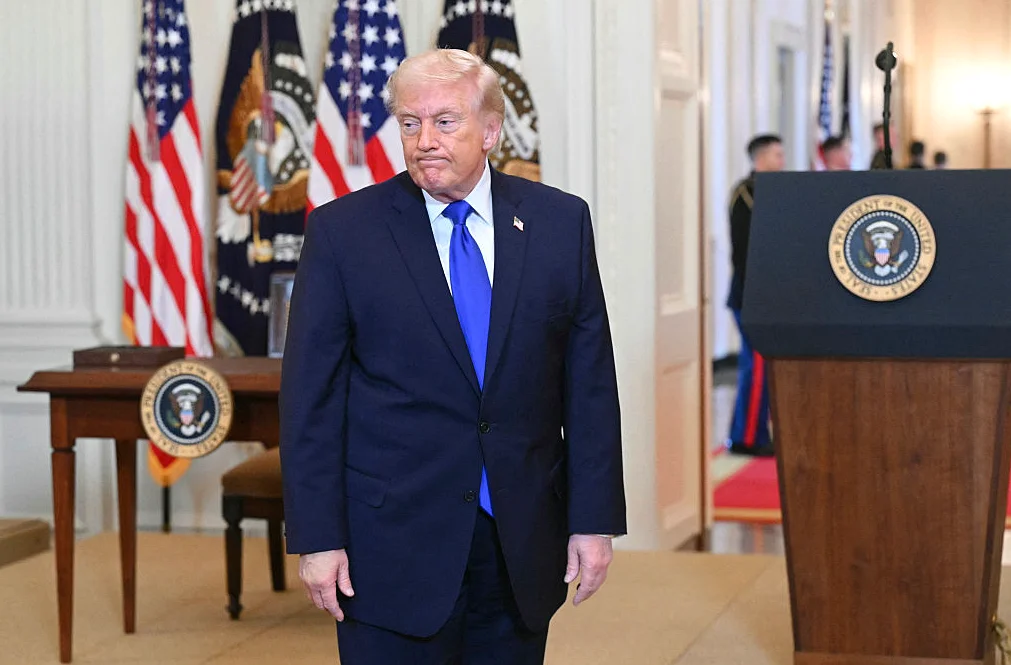
Black church leaders are raising concerns over the adoption of President Donald Trump’s rhetoric in sermons criticizing U.S. foreign policy, particularly regarding Venezuela. This comes amid growing scrutiny over the Trump administration’s actions in the region, which included the removal of Venezuelan President Nicolás Maduro without congressional approval.
Historical Context and Moral Responsibility
Rev. Dr. Martin Luther King Jr. was a vocal critic of U.S. military actions abroad, including the Vietnam War. His messages often emphasized the interconnectedness of global justice, stating, “We are caught in an inescapable network of mutuality, tied in a single garment of destiny.” This perspective is being revisited by Black religious leaders today as they evaluate the moral implications of U.S. military interventions.
According to some sources, the Black church community has been vocal in condemning Trump’s actions in Venezuela, including the seizure of oil resources and the removal of Maduro. However, concerns have been raised about how some sermons frame Maduro as a dictator, echoing Trump’s own rhetoric.
“I have no issue with condemning Trump, but I do take issue with how easily some Black clergy accept and regurgitate Trump’s characterization of another world leader,” said one religious leader. “This language can legitimize a narrative that we cannot trust.”
International Legal Violations and U.S. Actions
The Trump administration’s actions in Venezuela have been widely criticized as a violation of international law. The United Nations Office of Human Rights described the actions as a “grave, manifest and deliberate violation of the most fundamental principles of international law.”
The UN also noted that the U.S. actions risk destabilizing the entire region and set a dangerous precedent. The actions were taken without congressional approval and included the controversial killing of individuals in Venezuelan waters.
“Even the United Nations Office of Human Rights, which has been highly critical of Maduro’s administration, described the actions of the Trump administration as a clear breach of the UN Charter,” said a legal analyst. “This highlights the broader implications of such unilateral actions.”
Language and the Power of Propaganda
Words hold power, and the language used to describe leaders and situations can influence public perception and justify actions. Some argue that by labeling Maduro a dictator, the U.S. government is setting the stage for military intervention.
“Language prepares the foundation for violence long before it is justified,” said a political analyst. “People in power tell us who is dangerous, who is beyond redemption, and who should be controlled. By the time that violence or extrajudicial intervention by the elites happens, their actions seem reasonable in the public consciousness.”
Black church leaders are drawing parallels to the historical experience of African Americans, where the U.S. government has used labeling to justify surveillance, incarceration, and other atrocities. Dr. King, Malcolm X, and others were targeted by the FBI through the COINTELPRO program.
“We are not strangers to the experience of the U.S. government labeling people or groups in order to justify violence against them,” said a civil rights advocate. “This is why we must keep close watch to what the Trump administration is saying right now about Haitian and Somali Americans (among many others).”
Call for Political Education and Solidarity
There is a growing call for Black church leaders to engage in political education and study international movements from the perspective of the disenfranchised. This is seen as a continuation of Dr. King’s work, which included speaking on foreign policy issues.
“Justice work also involves us challenging the imperial perspective of the news that we receive through corporate and social media,” said a religious leader. “With high degrees of healthy suspicion, we must analyze what the Pharaohs of our time are telling us about our neighbors.”
Black Christians are being encouraged to explore organizations that can help analyze global issues and act locally, such as The Samuel DeWitt Proctor Conference and The Institute for Christian Socialism. These groups aim to provide a framework for understanding global events through an anti-imperial lens.
“I understand very well that Black clergy and Christians can be overwhelmed by the slew of responsibilities at church and throughout the community,” said a church leader. “My intention is not to inundate us with yet another thing to process or tend to. It is, however, my plea for us all to embrace an opportunity to ‘internationalize’ our Christian discipleship through an anti-imperial lens.”
As the debate over Trump’s foreign policy continues, the role of the Black church in shaping public discourse and moral leadership remains critical. The call for deeper engagement with global issues and a commitment to international solidarity is becoming more urgent.






Comments
No comments yet
Be the first to share your thoughts