

 The Guardian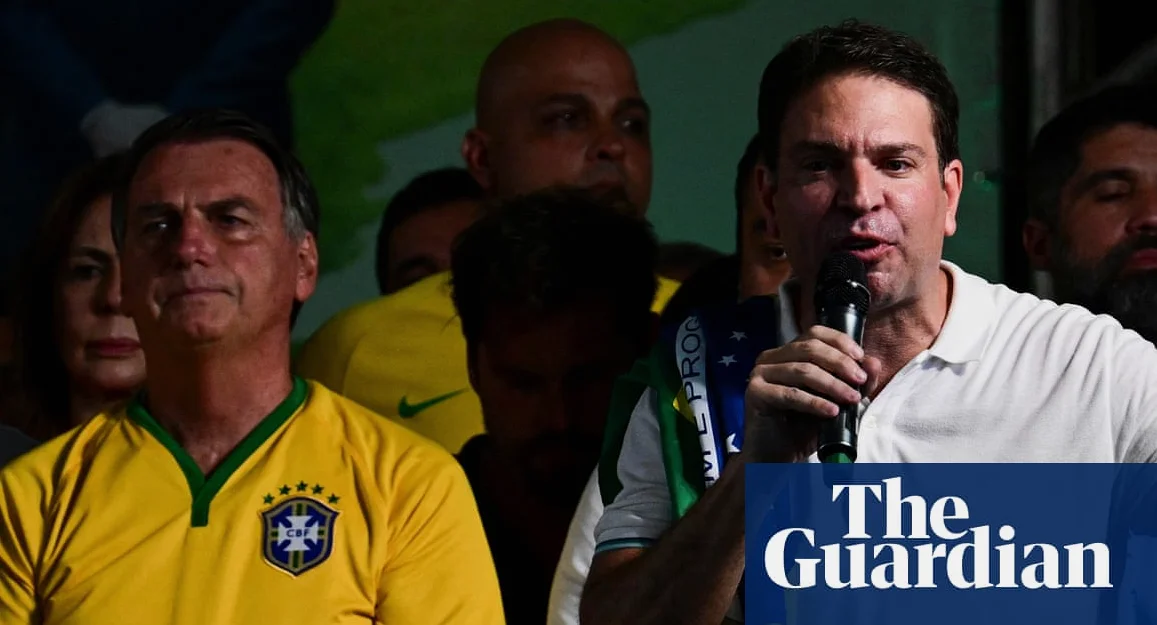
Brazil’s former spy chief. Alexandre Ramagem, was arrested by agents from Immigration and Customs Enforcement (ICE) in the United States, according to The Guardian — Ramagem fled the country days before Brazil’s former president Jair Bolsonaro was sentenced to nearly 30 years in prison for an attempted coup. He had been found guilty alongside six other members of Bolsonaro’s cabinet, though Ramagem evaded his sentence by fleeing to Guyana and then flying to the United States.
Ramagem’s Role in Illegal Surveillance
Ramagem, a former federal police officer, was sentenced to 16 years in prison after Brazil’s supreme court concluded he had transformed the Brazilian intelligence agency into a clandestine counterintelligence unit to illegally monitor officials seen as opponents of Bolsonaro. Investigators found he had used spy software to track the geolocation of supreme court justices, lawmakers, journalists, and public officials. He also monitored investigations involving Bolsonaro’s sons, including senator Flávio Bolsonaro, who is now emerging as a key opposition candidate in this year’s presidential election.
Following his conviction, Ramagem lost his position in the federal police and was stripped of his mandate as a congressman in Brazil’s lower house. His actions were part of a broader effort to undermine Brazil’s judicial system and protect Bolsonaro from scrutiny.
Trump’s Influence and Fugitive Life in the US
Donald Trump had attempted to influence the trial of his ally Bolsonaro by imposing additional tariffs on Brazil. Many supporters of the far-right Brazilian leader have sought refuge in the United States, including Ramagem, who spent months as a fugitive there. During his time in the US, Ramagem even appeared in a live stream hosted by a far-right Brazilian influencer, where he claimed to have the “approval” of Trump’s government.
During the live stream last November, Ramagem said he had reportedly received a message from someone in the Trump administration stating: “It’s good to know we have a friend who is safe and secure here in the US.” This statement highlighted his connection to Trump’s inner circle, even though Brazil formally requested his extradition in December.
Brazil’s federal police stated that Ramagem was detained on an immigration matter, and he appears in the ICE detainee database as “in custody,” with no details about his location. Paulo Figueiredo, a far-right Brazilian businessman and influencer living in the US, posted on social media that Ramagem was detained after a police stop in Orlando, “initially for a minor traffic violation and then referred to ICE.”
Legal Status and International Cooperation
Ramagem has “a pending asylum request, filed some time ago and still under review, which allows him to remain legally in the US until a final decision is made,” wrote Figueiredo, who has also been accused of involvement in the coup attempt but has not yet been tried because Brazilian judicial authorities have been unable to serve him while he has been living in the US for years.
Andrei Rodrigues, the director general of Brazil’s federal police, told GloboNews: “The arrest is the result of international cooperation between Brazil and the US in combating organized crime. Ramagem is a fugitive from Brazilian justice and, according to US authorities, is in an irregular immigration situation.”
Ramagem’s arrest marks a significant step in Brazil’s efforts to bring him to justice for his role in illegal surveillance and undermining the country’s judicial institutions. His presence in the US and alleged ties to Trump’s administration have raised questions about the broader implications of international legal cooperation and the political asylum process.
Brazil’s request for Ramagem’s extradition was made in December, and while the US authorities have detained him, the legal process surrounding his case continues. His pending asylum request suggests that his legal status in the US remains unresolved, complicating the extradition process.
Ramagem’s case highlights the complex interplay between international law, immigration policies, and the political dynamics between Brazil and the United States. His arrest by ICE highlights the growing emphasis on immigration enforcement and international cooperation in dealing with fugitives from justice.






Comments
No comments yet
Be the first to share your thoughts