

 BBC
BBC 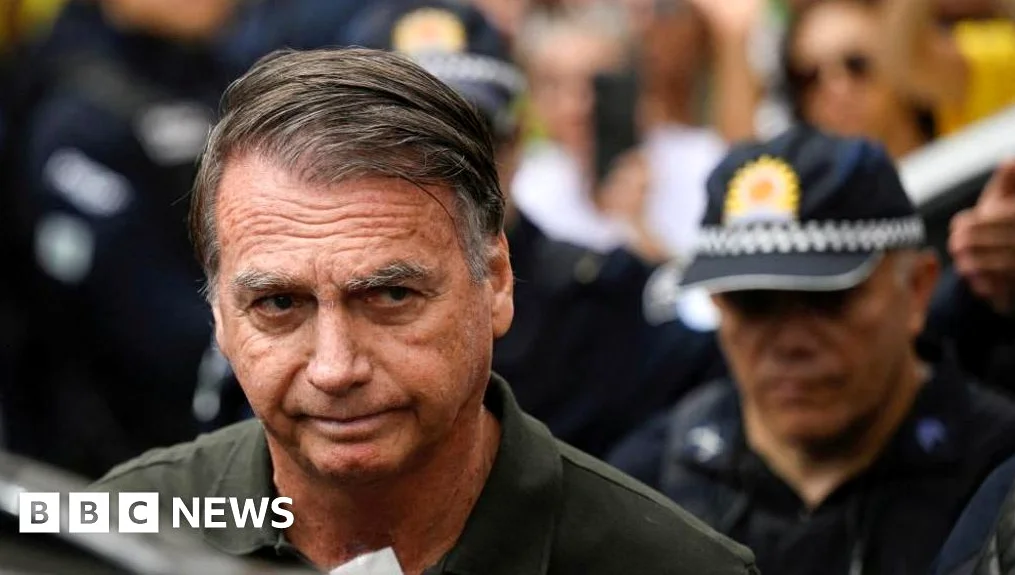
A judge in Brazil has ruled that jailed former President Jair Bolsonaro can be placed under house arrest for the next three months because of poor health. The 71-year-old was taken from his cell to a private clinic two weeks ago, where he was diagnosed with pneumonia and treated in an intensive care unit. He has since been discharged from intensive care but his lawyers have argued that his recurrent health problems, many of which stem from a knife attack he suffered in 2018, warrant him being granted house arrest for humanitarian reasons.
Legal and Health Context
Bolsonaro, who governed from January 2019 to December 2022, was sentenced to 27 years in jail for leading a conspiracy aimed at keeping him in power. Previous requests by his lawyers to allow him to serve his sentence in the confines of his home were rejected. But on Tuesday. Supreme Court Justice Alexandre de Moraes granted the request for an initial period of 90 days from the day of his discharge from hospital. Moraes said that after that period, Bolsonaro’s situation would have to be re-assessed.
The judge. Who also presided over the court case in which Bolsonaro was found guilty, also ordered that the former president wear an ankle monitor — After he was convicted in September, Bolsonaro spent some time under house arrest while his lawyers appealed against his sentence. But in November he was moved into a police cell after he tried to remove his ankle monitor with a soldering iron.
He later blamed the incident on ‘paranoia’ induced by the medication he was taking — Judge Moraes ruled at the time that Bolsonaro was a flight risk and ordered his arrest. In Tuesday’s ruling. The judge laid down strict rules by which Bolsonaro must abide while he is serving his sentence at home. He will not be allowed to use a phone or social media and the only visits he can receive are those by his family, lawyers and medical personnel – which will be restricted to limited periods.
Political Implications
Since being jailed. Jair Bolsonaro – who is banned from running for public office after being convicted – has backed his son Flávio as his preferred candidate for the presidential election in October. The 44-year-old senator has been gaining ground in opinion polls, with one recent survey suggesting he is neck to neck with the incumbent, President Luiz Inácio Lula da Silva, should the election go to a run-off.
Bolsonaro’s legal challenges and health issues have been closely watched by the public and political analysts. His supporters have expressed concern over the potential for his influence to continue despite his incarceration, while critics argue that the ruling reflects a balance between his health and the need to ensure he does not evade justice. The decision to grant temporary house arrest comes after several previous requests were denied, indicating a shift in the judicial stance on his case.
His legal team had long argued that the physical and mental health toll of incarceration was too great, citing his history of knife-related injuries and subsequent medical complications. The judge’s decision to allow house arrest for three months will be reviewed after that period, providing a window for reassessment based on his condition.
Bolsonaro’s incarceration and subsequent house arrest have significant implications for Brazil’s political landscape. His support for his son’s candidacy has already begun to shape the trajectory of the upcoming presidential election, with Flávio Bolsonaro emerging as a strong contender. The situation has also raised questions about the balance between individual rights and the rule of law, particularly in cases involving high-profile political figures.
According to the BBC. The judge’s ruling includes strict conditions to ensure Bolsonaro does not use electronic devices or engage in activities that could hinder the legal process; these measures are designed to prevent any potential interference with the judicial system while allowing him to receive necessary medical care at home.
Public Reaction and Future Outlook
The public reaction to the judge’s decision has been mixed, with some expressing relief that Bolsonaro’s health is being prioritized, while others are concerned about the potential for further legal maneuvering. Analysts suggest that the temporary house arrest may not be the end of the legal battles surrounding Bolsonaro’s case, as the political climate in Brazil remains highly charged.
Experts note that the upcoming presidential election is a critical moment for Brazil, with the potential for significant shifts in governance and policy. The support of a former president for his son’s candidacy is a powerful political endorsement that could influence voter behavior and campaign strategies.
The judge’s decision also sets a precedent for how high-profile cases are handled in the Brazilian legal system. By granting house arrest under strict conditions, the court is attempting to balance the rights of the individual with the needs of the justice system. This approach may be scrutinized in future cases, particularly those involving other prominent political figures.
As the 90-day period approaches, the legal team will need to assess whether Bolsonaro’s condition warrants an extension of the house arrest or if he will be returned to incarceration. This decision will be based on medical evaluations and the judge’s discretion, adding another layer of uncertainty to an already complex legal situation.
For ordinary citizens, the implications of this ruling are significant. It highlights the challenges of ensuring justice for high-profile individuals while also considering their health and well-being. The case also highlights the broader political dynamics in Brazil, where the legacy of former leaders continues to influence the political landscape.






1 Comment