

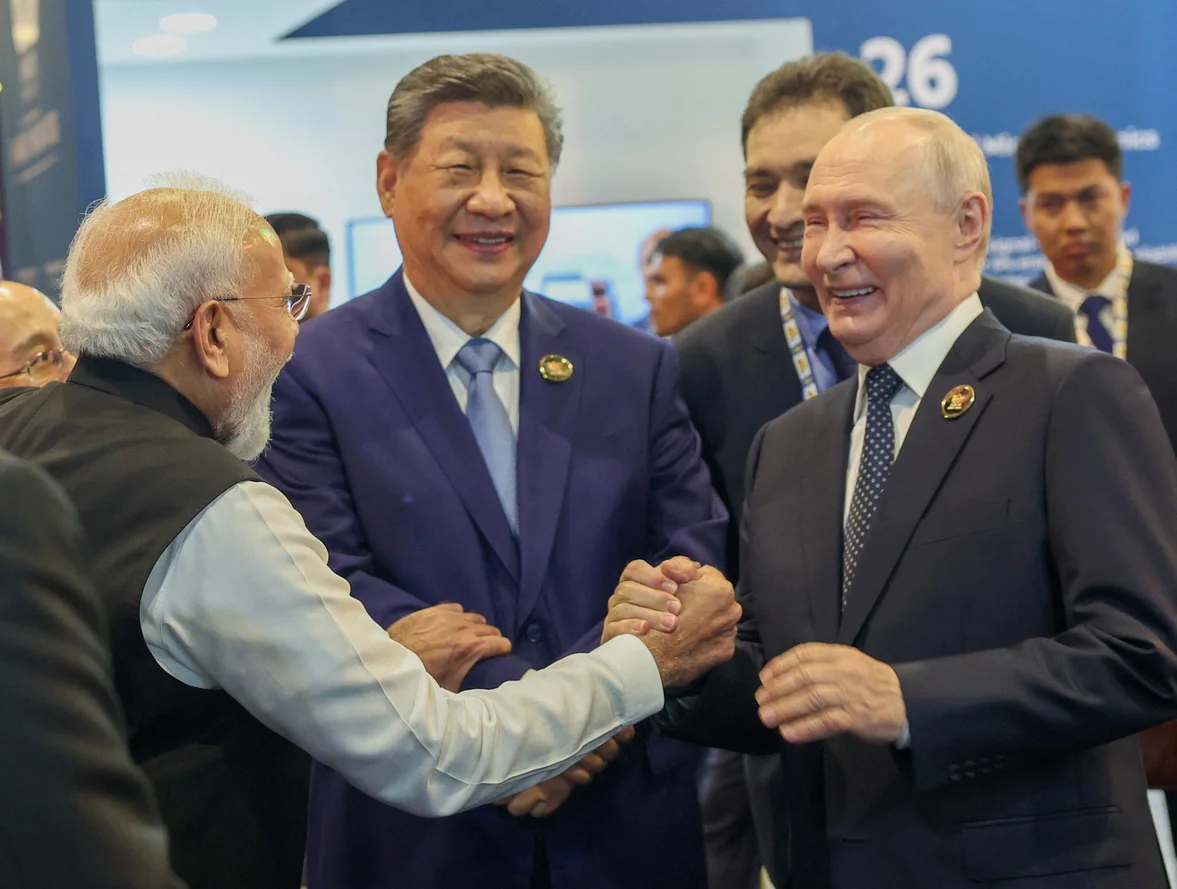
At the three-day Brics summit in New Delhi, the group, comprising Brazil, Russia, India, China, and South Africa, along with Egypt, Etiopia, Iran, Saudi Arabia, the UAE, and Indonesia, issued a declaration calling for de-escalation in the Middle East. The statement emphasized the need for restraint and the protection of civilian populations and infrastructure, according to DW.com, the declaration was formally adopted by Prime Minister Narendra Modi after a period of silence during which no objections were raised.
Focus on Conflict Prevention and Diplomacy
According to the declaration, Brics states expressed ‘deep concern’ over the escalation of tensions in the Middle East and urged all parties to avoid actions that could further worsen the situation. China’s President Xi Jinping, in particular, had previously stated that the war in Iran ‘does not serve common interests,’ as reported by ABC — the Brics members also reiterated the importance of safeguarding nuclear facilities and upholding international law, including IAEA resolutions, as noted by DIE ZEIT.
Economic Cooperation and the New Development Bank
The summit also addressed economic cooperation, with Brics members calling for increased use of local currencies in trade and financing, the group encouraged the New Development Bank (NDB) to expand its capacity and diversify funding sources to support large-scale projects. This was outlined in the joint declaration, as reported by ABC, but the NDB, established to provide financial support to Brics-led projects, is seen as a key tool for reducing reliance on Western-dominated institutions.
Geopolitical Expansion and Institutional Reforms
The Brics summit marked a significant moment in the group’s evolution, with leaders acknowledging the bloc’s growing influence; the group accounts for approximately half of the world’s population, 40% of global GDP, and 25% of international trade, according to ABC. Modi emphasized the need to reform global cooperation structures, calling for increased representation of emerging economies in international institutions such as the UN Security Council; Putin also supported the expansion of the Security Council to include more Global South nations, according to 경향신문.
Xi Jinping’s participation in the summit marked his first visit to India in seven years and highlighted the growing relationship between China and India, but the two leaders had faced diplomatic tensions after border clashes in 2020, but the summit represented a step toward reconciliation. Modi also outlined a 10-point action plan for the next summit, aimed at addressing global governance imbalances, as reported by 경향신문.
The Brics group, founded in 2009, continues to serve as a counterweight to Western-dominated global institutions, its growing economic and geopolitical influence is reflected in its recent expansion to 11 members and its calls for reform in global governance structures.


Comments
No comments yet
Be the first to share your thoughts