

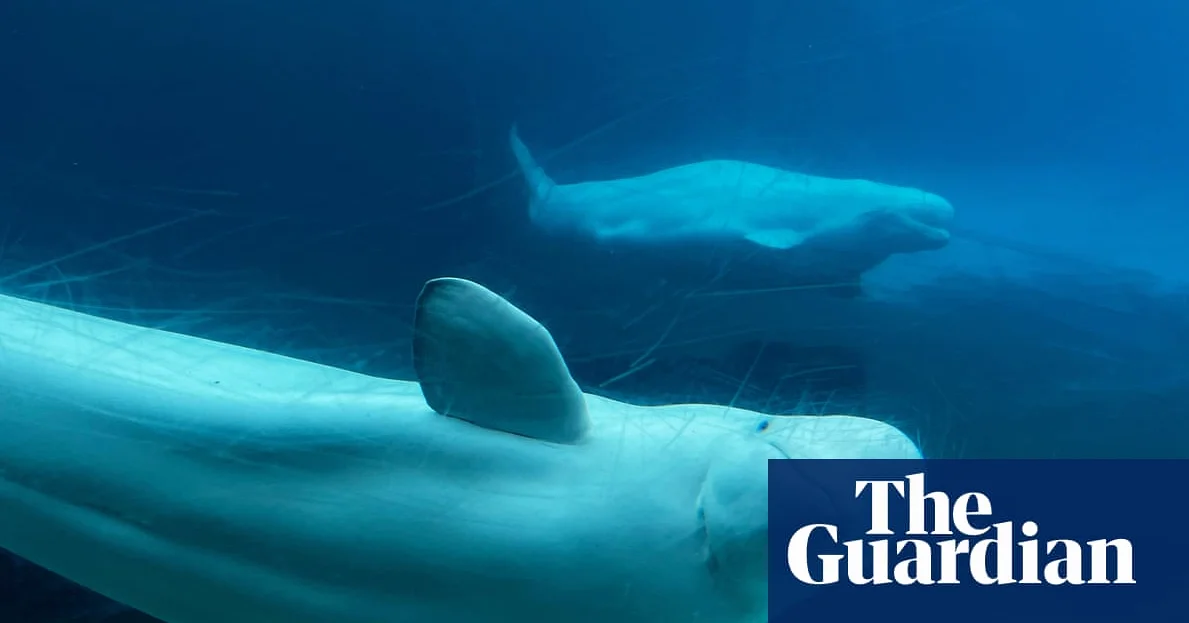
Relocation Offers and Legal Challenges
Oceanogràfic València. One of Europe’s largest aquariums. Has offered to take some of the whales, while a consortium of American aquariums in Georgia, Chicago, San Diego, and San Antonio has also agreed to host them. According to the same source, a spokesperson for the U.S. group said there was “no definite timeline” for the rescue, which could occur over “a matter of weeks.”
This decision was made after months of legal battles and threats from Marineland. The facility had previously threatened to euthanize the belugas after Canada’s fisheries minister blocked their sale to China. According to The Guardian, Canada’s federal government will only issue export permits if the move is in the best interest of the whales, and permits will be issued closer to the transport date pending final health checks by Canadian veterinarians.
Advocacy Groups and Criticisms
Animal rights groups have criticized the plan, calling it the “least worst option” for the whales. Kaitlyn Mitchell, a lawyer at Animal Justice, said in a statement that “for years, these animals have languished in decrepit, deteriorating tanks while Ontario’s animal welfare agency failed to take meaningful action.” Mitchell added that Canada should prioritize sending the animals to sanctuaries rather than aquariums.
The decision to send the whales to aquariums in Europe and the U.S. is a blow to a controversial sanctuary in Nova Scotia that had pitched itself as a potential home for the cetaceans. The sanctuary had also offered to host two orcas in France, but officials opted to send them to a Spanish zoo.
Broader Context on Stranded Marine Life
While the relocation of the belugas is a specific case, it highlights broader concerns about marine life and human intervention. In Washington state, stranded marine mammals such as seals or whales can appear in need of help. According to the Washington Department of Fish & Wildlife, most wild animals do not need to be rescued, and removing a baby animal from its environment,such as a seal pup—can be harmful or fatal.
Wildlife officials advise that the only time to intervene is if the animal is clearly sick or injured, or if the parent is confirmed dead. “More often than not, the parent is nearby,” the department said, noting that interfering often diverts resources from genuine rescue efforts. The same logic applies to larger animals: experts recommend calling for trained help rather than attempting to move a stranded whale or seal.






Comments
No comments yet
Be the first to share your thoughts