

 CBS News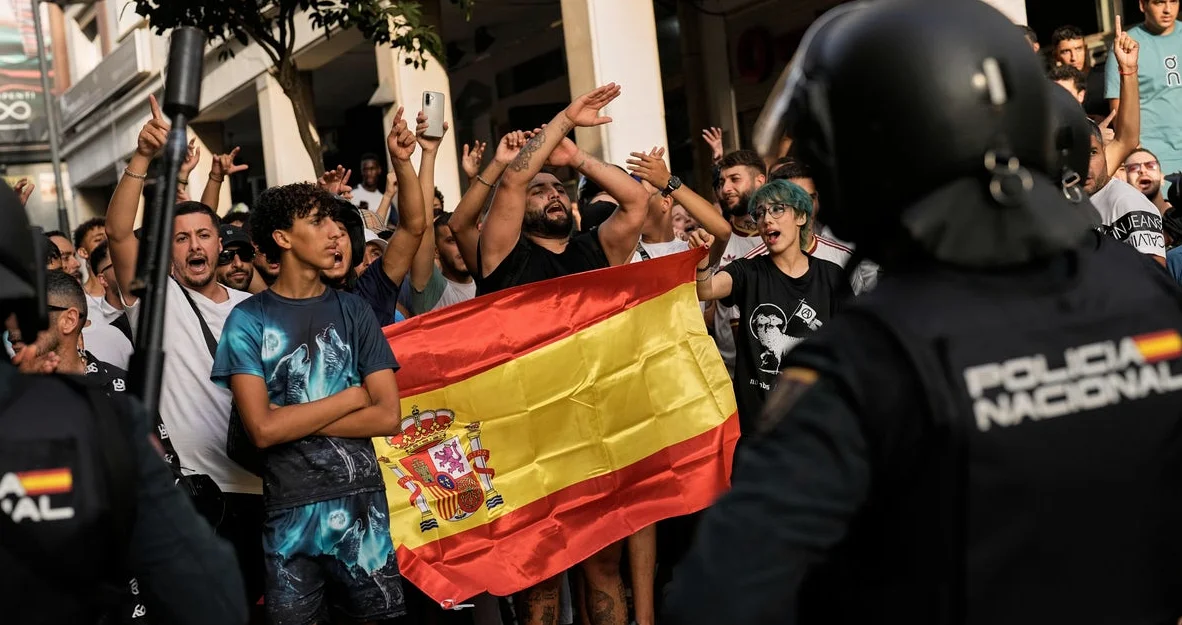
Return of Migrants and Ongoing Challenges
Most of the 60,000 North African migrants who entered the Spanish enclave of Ceuta had been returned to Morocco by Sunday, according to local officials. However, the city is still dealing with the aftermath of the border surge, which brought tensions to the surface among residents.
Humanitarian Crisis and Debate
At least 72 people died during the border breach, according to Spanish authorities. Some drowned, while others were killed in a stampede to cross a breakwater barrier. The humanitarian crisis has reignited debates around immigration across Europe. “It’s not the young men’s fault,” said Mohamad Abdelkader Driss, a 44-year-old waiter in the city. “If you open the border, of course everyone comes in, but the young men aren’t to blame. The authorities are responsible.”
Some returning migrants described the border as effectively open, saying authorities did little to stop the influx of thousands of people. Spain has announced plans to construct a containment fence to prevent further unauthorized entries.
Political Reactions and Protests
Over the weekend, far-right politicians and right-wing influencers visited Ceuta, sparking counterprotests. Among them was Alvise Pérez, a far-right European Parliament member, who called for the remaining migrants to be expelled. He faced an angry crowd of rival protesters and eventually sought shelter in a bar before being escorted out by police.
Twenty-year-old Ceuta resident Noor Ahmed criticized the far-right figures for taking advantage of the humanitarian crisis. “They just want to take advantage of the humanitarian crisis Ceuta is currently experiencing,” Ahmed said. Santiago Abascal, the leader of the far-right Vox party, also visited the city on Sunday and criticized the Spanish government for failing to protect its borders. “The frontiers of Ceuta and Melilla are the walls of our home and homeland, and they are not being protected by a corrupt and traitorous government,” he said.
Some residents expressed concern about the incident and its implications for the city’s cultural harmony. Eva Barrientos, who works at a logistics company, attended a protest to hear what the right-wing figures had to say. She questioned the loyalty of some foreign-born residents and accused them of having more allegiance to Morocco than to Spain. “In Ceuta, we have always lived together. We have four cultures living very well, without any problems,” she said. “But the only thing we are realizing now is that there is an enemy within.”
The Catholic Church also weighed in on the situation. Pope Francis said he was “following with concern the alarming situation in Ceuta, asking God … that solutions of peace, stability and justice may be found.” Migration has been a key focus for the Pope, as highlighted during his recent visit to the Canary Islands, one of Europe’s main migrant entry points.






Comments
No comments yet
Be the first to share your thoughts