

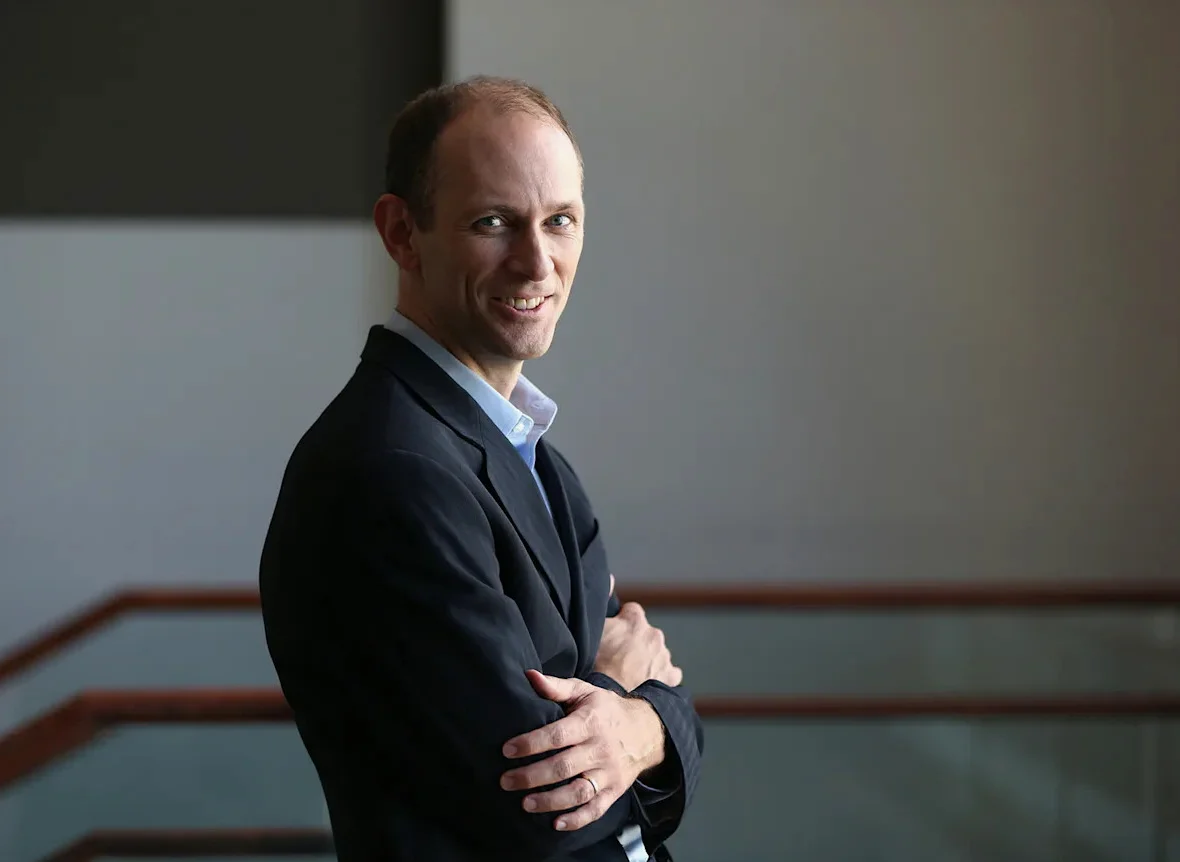
Chicago Federal Reserve President Austan Goolsbee has signaled that the Federal Reserve will not move forward with additional rate cuts unless there is tangible progress in bringing down inflation. In a speech at the National Association for Business Economists Conference, Goolsbee stated that the focus remains on ensuring inflation returns to the central bank’s 2% target before any further reductions in interest rates are considered.
Focus on Inflation Progress
Goolsbee said he remains optimistic that there could be more rate cuts later this year, but only if inflation shows clear signs of moving toward the 2% target. ‘That hinges on seeing actual progress on inflation that shows we are on a path back to 2%,’ he said.
The Fed’s preferred inflation gauge, the Personal Consumption Expenditures (PCE) Index, remained at 3% in December on a ‘core’ basis, which excludes volatile food and energy prices. Goolsbee noted that with inflation still at 3%, it is not obvious that the current interest rate policy is even restrictive.
Goolsbee also discussed the benchmark fed funds rate, stating that when adjusted for inflation, it is close to or even slightly below the central bank’s estimate of neutral. This level is designed to neither stimulate nor slow economic growth. He added that the Fed is monitoring various components of inflation, particularly in goods where tariffs have driven up prices.
Tariffs and Inflation
Goolsbee highlighted that multiple studies have found that the United States has absorbed the bulk of the cost of tariffs. However, the exact impact on consumers and the potential for further price increases remain uncertain. ‘If you keep seeing (inflation) pushing off when it’s supposed to be peak on goods inflation, that’s not a good sign,’ he said.
He also noted that services inflation, excluding housing, has been stubbornly high, at 3.3% over the past year. ‘That’s very unlikely to have come from tariffs, and it’s harder to make an optimistic case that high services inflation is just transitory. So we need to be vigilant,’ Goolsbee said.
Despite the persistent inflationary pressures, Goolsbee described the job market as stable. However, he noted that low hiring and low firing are indicative of uncertainty in the economy. With the Supreme Court’s recent decision to strike down President Trump’s tariffs enacted under emergency economic powers, Goolsbee expects this dynamic to continue.
‘There’s no evidence we’re breaking out of it,’ Goolsbee said. ‘If anything, we’re getting new shocks that are emphasizing it more. It feels likely to me that we’re going to continue to have low hiring with low firing precisely because I think the dynamic driving that is not the business cycle, it’s the unpredictability.’
What’s Next for the Fed
Goolsbee acknowledged that the Fed could make ‘several more cuts’ by the end of the year if inflation continues to decline. However, he warned that ‘front-loading too many rate cuts’ is ‘not prudent’ when expectations for a decline in inflation keep getting pushed back.
Analysts have been closely watching the Fed’s rate decisions, as they have significant implications for consumers, businesses, and the broader economy. A rate cut could lower borrowing costs, potentially stimulating economic activity, but only if inflation is under control. The Fed’s next policy meeting is expected to be a key moment in determining the trajectory of future rate decisions.
While the Fed has already cut rates multiple times in 2024, the path forward remains uncertain as inflation remains above the central bank’s target. The balance between controlling inflation and avoiding a slowdown in economic growth remains a key challenge for policymakers.
With inflation still stubbornly high and economic conditions uncertain, the Fed is likely to proceed cautiously, ensuring that any further rate cuts are made only when there is clear evidence of progress on inflation.






Comments
No comments yet
Be the first to share your thoughts