

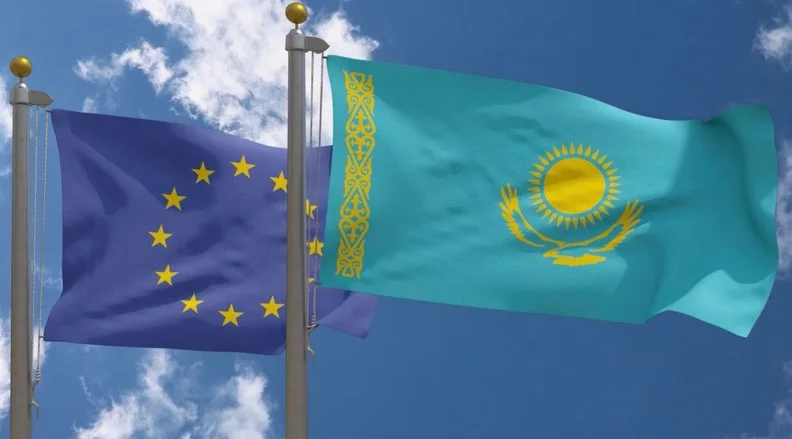
Kazakhstan’s civic space is shrinking as the government moves forward with a constitutional reform that critics say lacks transparency and inclusivity, according to a joint report by the International Partnership for Human Rights (IPHR) and the Kazakhstan International Bureau for Human Rights and Rule of Law (KIBHR). The report, prepared for the upcoming EU-Kazakhstan Human Rights Dialogue in March 2026, highlights a series of concerns regarding the erosion of civil liberties, political pluralism, and the treatment of journalists and activists.
Constitutional Reform Under Scrutiny
The reform, announced in January 2026, has been framed by the government as a step toward modernization. However, the process has been criticized as rushed and non-inclusive. A draft constitution was finalized within a month of launching the reform, with a referendum scheduled for 15 March 2026. This timeline has left little room for public debate or civil society participation.
Civil society groups have raised concerns about the potential impact of the reform on human rights. Notably, the omission of a clause that would have given international treaties precedence over national law could undermine the implementation of international human rights standards in the country.
Crackdown on Dissent and Independent Media
Independent journalists and media outlets have faced increasing pressure. Police raids and criminal prosecutions have targeted outlets such as Orda.kz and KazTAG, while online attacks have led to the blocking of content or the use of social media platform complaint mechanisms to shut down independent voices. In 2025, the Constitutional Court ruled against automatic refusals for public assemblies, but authorities continue to deny permits on vague pretexts.
Accreditation for journalists from the Kazakh service of Radio Free Europe/Radio Liberty was denied in 2025, signaling a broader effort to stifle independent reporting. The denial of accreditation, according to the report, reflects a misuse of rules to suppress critical coverage of the government.
Targeting of Activists and LGBTQ+ Communities
LGBTQ+ groups in Kazakhstan have reported increasing harassment, with police appearing to cooperate with anti-LGBTQ+ activists. A broadly worded ban on “LGBTQ+ propaganda,” adopted in 2025, has raised fears that it could be used to criminalize the discussion of LGBTQ+ issues. The law is also likely to exacerbate stigma and discrimination against these communities.
New legislation expanding the role of “community assistants” in crime prevention has also drawn concern. The law mandates these assistants to address “anti-social behavior,” a vague term that could be used to target activists, particularly those advocating for LGBTQ+ rights.
Activists, journalists, and bloggers face growing persecution. Criminal charges are increasingly used as a tool of retaliation, often under broad provisions of the Criminal Code. For example, journalists Gulnara Bazhkenova, Amir Kassenov, and Aset Mataev are being prosecuted for “false” information charges related to their investigative reporting. Satirical blogger Temirlan Yensebek was sentenced to five years of movement and social media restrictions for “inciting” inter-ethnic discord over a controversial song.
Activist Amangeldy Jahin is under investigation for “extremism,” reflecting a broader pattern of using such charges to penalize peaceful opposition. Five activists who peacefully opposed the construction of a nuclear power plant were convicted of “preparing riots” and given non-custodial sentences, equating dissent with criminal behavior.
Other activists, including Marat Zhylanbaev, Duman Mukhamedkarim, and Aigerim Tleuzhan, are serving prison sentences widely considered politically motivated. Zhylanbaev has been placed in a stricter prison regime and has conducted extended hunger strikes due to harsh detention conditions.
Activists who raise issues sensitive to Kazakhstan’s powerful neighbors, such as China and Russia, have also been targeted. Nineteen activists from the Atajurt movement are on trial for “inciting” national discord after protesting against China’s repressive policies. Defrocked Orthodox priest Yakov Vorontsov has been accused of running a drug den after opposing Russia’s war in Ukraine and attempting to establish an independent Orthodox community.
Lawyers representing defendants in politically motivated cases have also faced reprisals. Lawyer Murat Adam was stripped of his license after speaking out about procedural violations in the case of journalist Gulnara Bazhkenova, setting a dangerous precedent for the independence of the legal profession.
The report urges the EU to prioritize these issues during the Human Rights Dialogue and in its broader engagement with Kazakhstan under the Enhanced Partnership and Cooperation Agreement. The EU is being asked to push for concrete improvements in the protection of civic freedoms and the rule of law.

Comments
No comments yet
Be the first to share your thoughts