

 The Guardian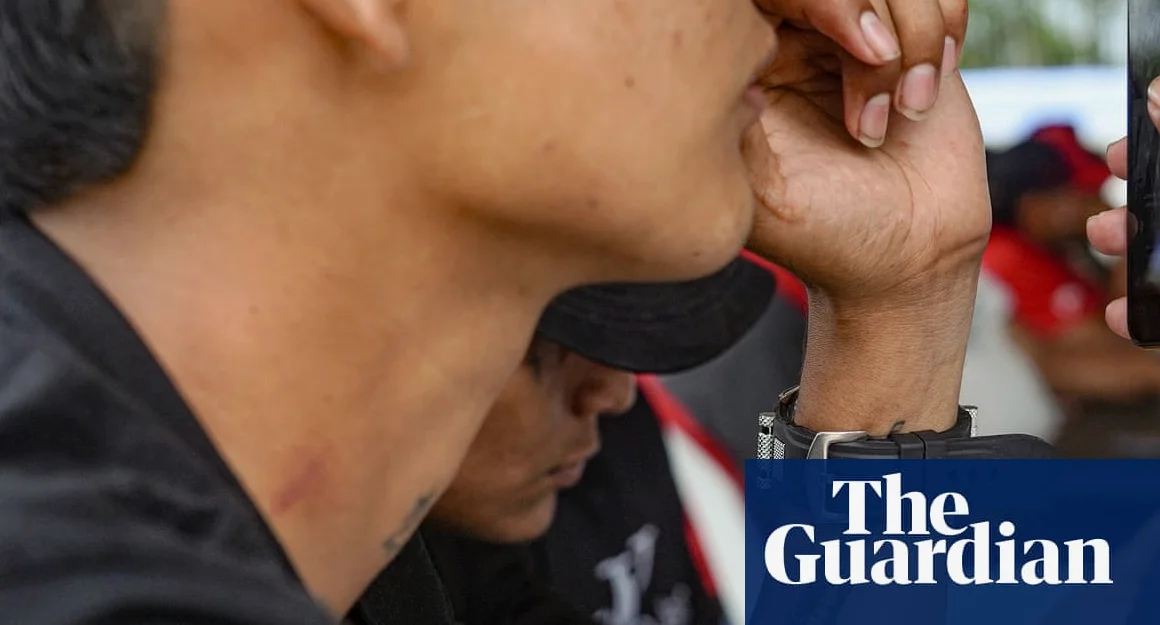
In mid-June, 99 guerrilla fighters were flown by helicopter to a small settlement in a rural area of southern Colombia where they lined up and, one by one, handed their weapons to government officials: rifles, pistols, machine guns and grenade launchers.
Transition to Civilian Life
They also stripped off their heavy tactical vests, field packs and camouflage uniforms, which were each piled into a bonfire to mark the beginning of a new life away from an armed conflict that has claimed nearly half a million lives in the last six decades.
That was precisely what the former president Gustavo Petro’s “total peace” plan had sought to achieve: negotiating with and disarming all of Colombia’s criminal groups, which are estimated to have nearly 30,000 members.
But the group of just 99 people was the only one to disarm, and did so just three days before the presidential runoff, which was won by the far-right millionaire lawyer Abelardo de la Espriella, who had campaigned on a promise to end “total peace” and return to a full-on strategy of jailing or killing criminals.
Uncertain Future
Now, several weeks after the new president took office, and amid efforts to deal with the aftermath of the 7.4-magnitude earthquake, as his government has already begun the promised airstrikes against criminal groups – the 99 do not know what will happen to them.
“We’re in limbo,” said Natalia Bríñez, 29, one of 13 women among the group staying in the temporary location zone, or ZUT by its Spanish initials, a government-controlled zone where, under surveillance and unable to leave, they were supposed to make the transition to civilian life over the following months.
The former guerrillas are housed in beige brick buildings decorated with drawings they painted themselves, including doves of peace, with a communal dining hall where three meals a day are served. No weapons are allowed inside and soldiers guard the ZUT from a perimeter less than a mile away.
One former combatant built a makeshift gym with weights made from metal pipes and tins filled with cement and sand, and there is an improvised football pitch, but most of them spend their days on their phones.
De la Espriella has repeatedly said his government will no longer negotiate peace agreements and has yet to announce what he intends to do regarding the people at the ZUT. The president has not responded to requests for comment.
In theory, any arrest warrants against the group are suspended, and they remain under state protection until 25 December, when Petro’s decree establishing the ZUT expires. But De la Espriella could revoke the decree at any time.
Concerns and Responses
Armando Novoa, the former government official who led peace negotiations with the group, said “the worst-case scenario would be for the new government to close the ZUT, launch a military operation and try to capture or kill them. That would be a crime against humanity, because these people are unarmed.”
Between 2 and 4 August, days before De la Espriella’s inauguration, Novoa led journalists including the Guardian through the ZUT. The Office of the High Commissioner for Peace, where he worked, has since been absorbed into the newly created National Security Commission – a move expected to result in more than 200 job losses – and Novoa has resigned.
For now, at least, the ZUT remains in operation and has a small library run by Bríñez, who has a phoenix tattoo on her left shoulder as a symbol of her rebirth away from the armed conflict.
“The hardest thing for me has been being away from my children,” said Bríñez, who has a seven-year-old daughter and a 10-year-old son and speaks to them on video calls, but will only be able to see them in person once her “transition” is complete, a process that includes vocational training and psychosocial support.
They were also supposed to receive financial support of about £425 a month, which had not yet been paid. In the meantime, some of them were planning to start a chicken-rearing business.
The 99 made up a small part of a group of about 1,000 combatants called Commandos of the Frontier, most of whom remain armed – and are part of the National Coordinator of the Bolivarian Army (CNEB), a former dissident faction of the Major Armed Forces of Colombia (Farc) with about 2,500 members which controls the border with Ecuador.
The Petro administration said negotiations were also under way with other members of the CNEB, who published an open letter addressed to De la Espriella saying they were willing to continue talks with him. It is not known whether the president responded.
Last Wednesday, De la Espriella ordered extradition. The CNEB’s chief “peace negotiator”, Geovany Andrés Rojas, known as “Araña” (Spider), had been in custody since February under a US extradition request for drug trafficking, which Petro had delayed.
Although such groups emerged in the 1960s as leftwing rebels fighting government abuses and seeking revolution, followed soon afterwards by far-right paramilitary groups, ideology has long since been overtaken for most of them by economic interests, above all drug trafficking (Colombia is the world’s largest producer of cocaine) and illegal mining.
“Here in the ZUT, the vast majority were not in the group because of any ideological commitment, but for economic reasons,” said Novoa. “It even surprised us that most of them simply called the group ‘the company’.”
Petro repeatedly tried to negotiate peace agreements with larger groups. The armed factions took advantage of temporary ceasefires to continue expanding, a process that had already begun before he took office. They also clashed among themselves for control of territory and illicit economies, which many security experts say contributed to a rise in homicides, kidnappings and massacres.
“Total peace” was an attempt to address what the landmark 2016 peace deal between the government and the Farc failed to resolve, as other armed groups and Farc dissidents remained active.
Petro’s administration failed to reduce violence, which instead reached its worst levels in a decade, and to reach the disarmament stage with any of the gangs, apart from the 99 former combatants – who handed over their weapons only on the eve of an election that every poll indicated the government-backed candidate would lose.
“They [the government] told us: ‘If this works, you’re opening the door for other groups and will set an example,’” said Bríñez.
Some security experts saw the agreement as rushed.
“It was a somewhat irresponsible decision,” said Paula Tobo, a senior researcher at the thinktank Ideas for Peace Foundation, which published an extensive report on why Total Peace failed.
Tobo said the 99 were now in a “legal limbo” because their protection rested on decrees that could be revoked and there is no legal framework for their transition to civilian life. All of the Petro administration’s proposals to regulate surrenders failed in Congress and, under current law, anyone who has committed crimes such as kidnapping or drug trafficking is not eligible for amnesty.
“It’s positive that these people wanted to lay down their arms, but it really wasn’t the right time for the government to take that decision … The previous administration clearly put them at risk of this government suddenly deciding to abolish the ZUT and arrest them,” said Tobo.
The group wrote a letter to De la Espriella reaffirming its “irreversible decision to commit to peace” and inviting him to visit the ZUT. At the time of publication it had received no response.
The youngest member of the group, a 19-year-old who asked to be identified only as Adrián, said they wanted “to have a home, a family”.
However, he knows what he will do if things do not go according to plan. “Honestly, I’d take up arms again, because we’re keeping our side of the bargain and the government should do the same, shouldn’t it?” he said.
Daniela Díaz travelled to Valle del Guamuez at the invitation of the Colombian government’s former Office of the High Commissioner for Peace.

Comments
No comments yet
Be the first to share your thoughts