

 Associated Press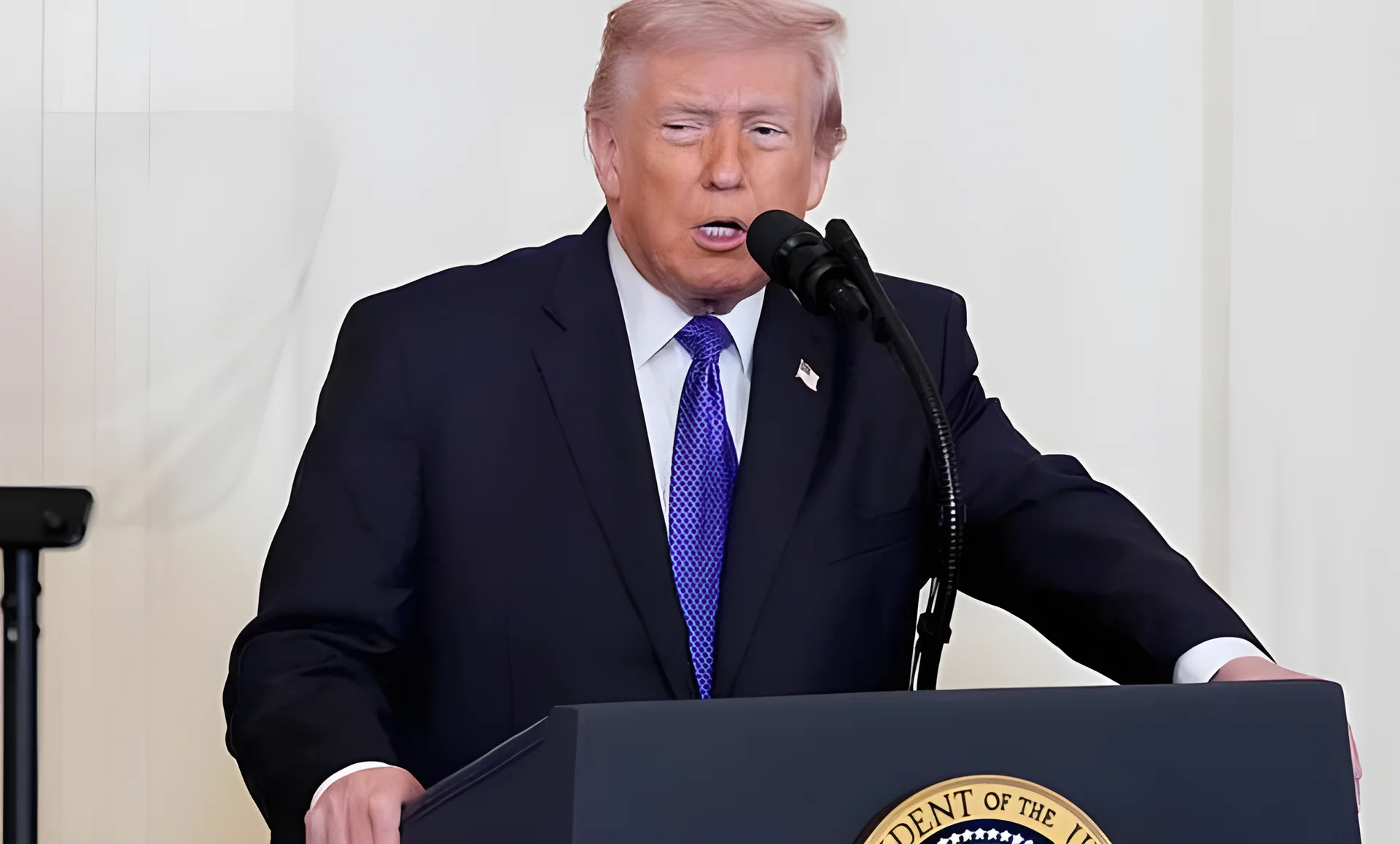
The U.S. House of Representatives is set to consider a measure aimed at curbing President Donald Trump’s military authority in the ongoing conflict with Iran, following a Senate vote that rejected a similar proposal. This marks the latest in a series of congressional efforts to assert oversight over presidential war powers, a topic that has been a focal point of debate during Trump’s second term.
Constitutional Framework and Executive Power
The U.S. Constitution grants the president the role of commander in chief of the armed forces, while Congress holds the authority to declare war. However, the balance of power has shifted over time, with the executive branch increasingly taking the lead in military decisions.
“The Constitution gives war powers to two different branches of government,” said Peter Mansoor, a military historian and retired U.S. Army colonel from Ohio State University. “The pendulum has swung towards the executive,” he lamented, arguing that “the framers meant for Congress to be the most powerful branch.”
During Trump’s second term, he has taken a series of military actions, including naval blockades near Venezuela, authorization of a military operation to arrest and depose its leader, Nicolás Maduro, and a sweeping bombing campaign in Iran. These actions have raised concerns about the extent of executive power in military decisions.
Historical Context and Congressional Involvement
Since World War II, the United States has engaged in multiple conflicts without formal declarations of war. The last such declaration was during World War II, yet the U.S. has been involved in full-scale conflicts in Korea, Vietnam, Iraq, and Afghanistan.
Congress has not declared an official state of war since 1945, but it has authorized military action through various resolutions and laws. For example, the War Powers Resolution of 1973 was intended to impose limits on presidential military actions by requiring consultation with Congress and allowing lawmakers to set parameters for military engagement.
Despite these legislative measures, the effectiveness of the War Powers Resolution has been limited. In 1982, President Ronald Reagan sent troops to Lebanon without citing the resolution, and in 1990, President George H.W. Bush notified Congress of troop deployment to the Middle East following Iraq’s invasion of Kuwait.
Recent Developments and Congressional Efforts
The latest congressional effort to limit Trump’s war powers in the Iran conflict came in the form of a resolution introduced by Senator Tim Kaine, a Virginia Democrat. The resolution, which failed in the Senate with a vote of 47-53, aimed to prevent a presidential “end-run around the Constitution.”
During the Senate debate on the Venezuela resolution earlier this year, Senator Rand Paul, R-Ky., criticized the “elaborate song and dance” surrounding the issue, calling it an “absurdity” to argue that Trump’s actions were anything other than waging war.
As of Wednesday, six U.S. service members had died in the Iran war, with an Army pilot receiving the Medal of Honor for actions taken in the conflict. However, the medal is legally restricted to actions taken when fighting a foreign enemy, raising questions about the legitimacy of the recognition.
Congress has historically played a role in authorizing military action, but the process has evolved over time. In 1964, President Lyndon B. Johnson secured the Gulf of Tonkin Resolution, which granted him broad authority to escalate the Vietnam War. The resolution was later repealed in 1971, but the war continued under subsequent administrations.
“War declarations don’t just define the start of a war,” Mansoor noted. “They also effectively require an official end, which triggers the Senate’s role in ratifying peace treaties. Sidestepping those legal bookends is how you get in these forever wars.”
Future Implications and Congressional Oversight
With the House set to consider a similar resolution, the debate over executive war powers is likely to continue. The recent Senate vote highlights the challenges faced by lawmakers in asserting oversight over military actions, particularly when the executive branch resists legislative constraints.
As the conflict with Iran continues, the role of Congress in shaping U.S. foreign policy and military engagement remains a critical issue. The outcome of the House vote could have significant implications for the balance of power between the executive and legislative branches.




Comments
No comments yet
Be the first to share your thoughts