

Energy Shortages and Protests
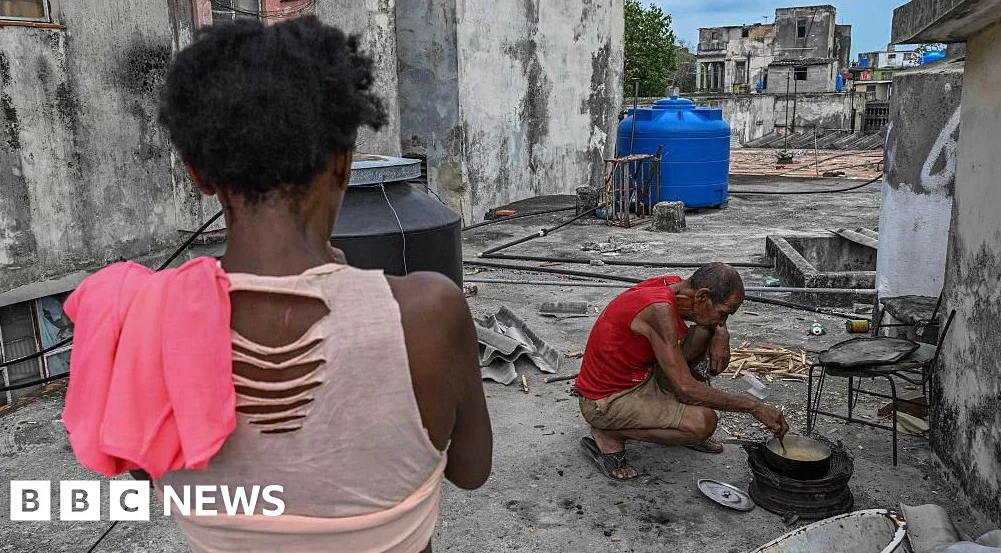
On Wednesday evening, rare protests erupted in Havana as hundreds of Cubans took to the streets, blocking roads with burning rubbish and shouting anti-government slogans. This marked the biggest single night of demonstrations in the city since Cuba’s energy crisis began in January, according to Reuters. In the San Miguel del Padron neighborhood, residents were heard chanting, ‘turn on the lights!’, as reported by AFP.
President Miguel Diaz-Canel attributed the energy shortages to the United States, calling it a ‘genocidal energy blockade’ in a social media post. ‘This dramatic worsening has a single cause: the genocidal energy blockade to which the United States subjects our country, threatening irrational tariffs against any nation that supplies us with fuel,’ he wrote.
US Involvement and Aid Offers
Last week, US Secretary of State Marco Rubio claimed that Havana had rejected a $100 million offer of humanitarian aid from the US, a claim Cuba denied. The US State Department reiterated its offer on Wednesday, saying the aid would be distributed in coordination with the Catholic Church and ‘reliable’ humanitarian organizations.
Meanwhile, in a Fox News interview on January 9, US President Donald Trump said, ‘We want to do something to help Cuba’ after host Sean Hannity suggested this was part of ‘Marco’s revenge.’ Secretary of State Marco Rubio echoed Hannity’s tone, remarking that if he were in the Cuban government, he would be ‘concerned at least a little bit.’
Venezuela’s Role and Regional Impact
Cuba normally relies on Venezuela and Mexico to supply oil to its refinery system. However, both countries have largely cut off supplies since US President Donald Trump threatened tariffs on countries that send fuel to Cuba. The energy shortages have had a significant impact on daily life, with tourism,Cuba’s economic engine—also suffering.
The crisis comes amid broader regional developments, including the Trump administration’s unilateral military intervention in Venezuela on January 3, which led to the capture and extraction of Nicolás Maduro and his wife, Cilia Flores. CEDA, a regional analysis group, noted that these developments unfold at a time when the US has frozen, canceled, or suspended nearly all of its humanitarian assistance to Venezuela and much of the region. Roughly 600,000 Venezuelans in the US are facing deportation due to Trump administration policies.
Trump has made increasingly bold statements about Cuba, declaring on Fox News that ‘Cuba is ready to fall’ and ‘going down for the count.’ These comments suggest a growing US focus on Cuba in the wake of developments in Venezuela.




Comments
No comments yet
Be the first to share your thoughts