

 BBC News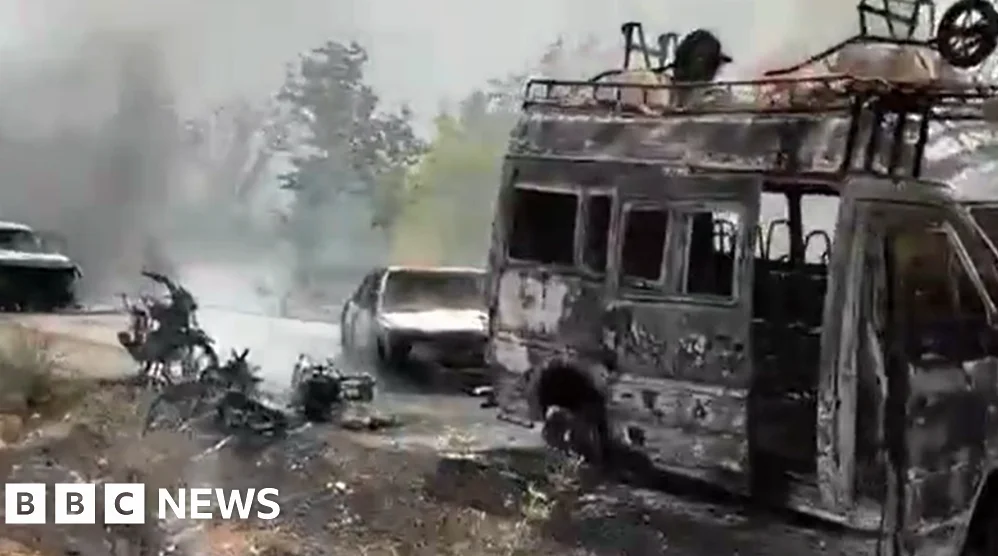
Dozens of vehicles. Including fuel tankers. Minibuses and trucks. Have been set on fire near Mali’s capital, Bamako, as jihadists step up a blockade of the city, the BBC has confirmed; the BBC has contacted Mali’s government for comment.
Verified Evidence of Burnt Vehicles
Videos filmed from passing vehicles and verified by the BBC show the charred remains of the vehicles on a road about 45km (28 miles) west of Bamako. There are no reports of casualties—those on board were said to have been asked to get out before the vehicles were burnt.
The BBC has authenticated the videos through matching two distinctive buildings on the side of the road to satellite imagery and checking for AI manipulation. NASA’s satellite-based platform Firms—detecting heat sources on Earth’s surface,also detected a heat signature at the same location on Tuesday.
Jihadist Motivation and Strategy
Jama’at Nusrat al-Islam wal-Muslimin (JNIM), a jihadist group affiliated to al-Qaeda, imposed a fuel blockade on Bamako last year, which it tightened after attacking the city last month. The fuel blockade is intended to suffocate Mali’s economy and weaken the legitimacy of the military leaders in power, experts say.
Mali is a landlocked country and depends heavily on fuel transported from neighboring coastal countries like Senegal and Ivory Coast. The militants have kidnapped drivers and burnt more than 100 fuel trucks on major highways in the country since last year, but some have made it to Bamako under military escort.
Before the latest attack, the fuel crisis resulting from the blockade had appeared to be easing. The Africa Corp, a Russian paramilitary group that evolved out of the Wagner Group, has been helping to get supplies into Bamako. The BBC has verified footage of Russian attack helicopters escorting convoys, including fuel tanks and heavy goods trucks along roads to the capital.
Economic and Social Impact of the Blockade
The blockade is leading to shortages and sharp increases in the price of many goods ahead of the Islamic holiday of Eid al-Adha, which falls next week. One man said that a kilogram of potatoes that used to be 350 CFA francs ($0.62; £0.46) now cost 500 francs ($0.90).
“Everything in the market has become expensive,” he said. Ahead of Eid, large numbers of sheep can usually be seen for sale on the streets of the capital of the Muslim-majority country,but this is not the case this year. Muslims are supposed to slaughter an animal to commemorate the willingness of Prophet Ibrahim to sacrifice his son Ishmael as an act of obedience to God’s command.
If they can afford it, every Muslim family in Mali tries to buy an animal to slaughter for Eid, but this year, the blockade means it has been difficult to transport animals to the city. One sheep seller told BBC Afrique: “Lots of people are blocked on the road. People are afraid because they [Islamists] take the animals.”
As a result, prices have shot up. One man told the BBC he could not afford to buy a sheep this year. Instead, he and some friends are thinking of coming together to buy a bull to slaughter. The blockade has also made it risky for people to travel to their home villages over the festive period, as they usually do.
“Travelling would put your life at risk, as well as that of your family,” said a resident, who identified himself as Moussa. “I’ve decided to stay and celebrate in Bamako,” he added.





Comments
No comments yet
Be the first to share your thoughts