

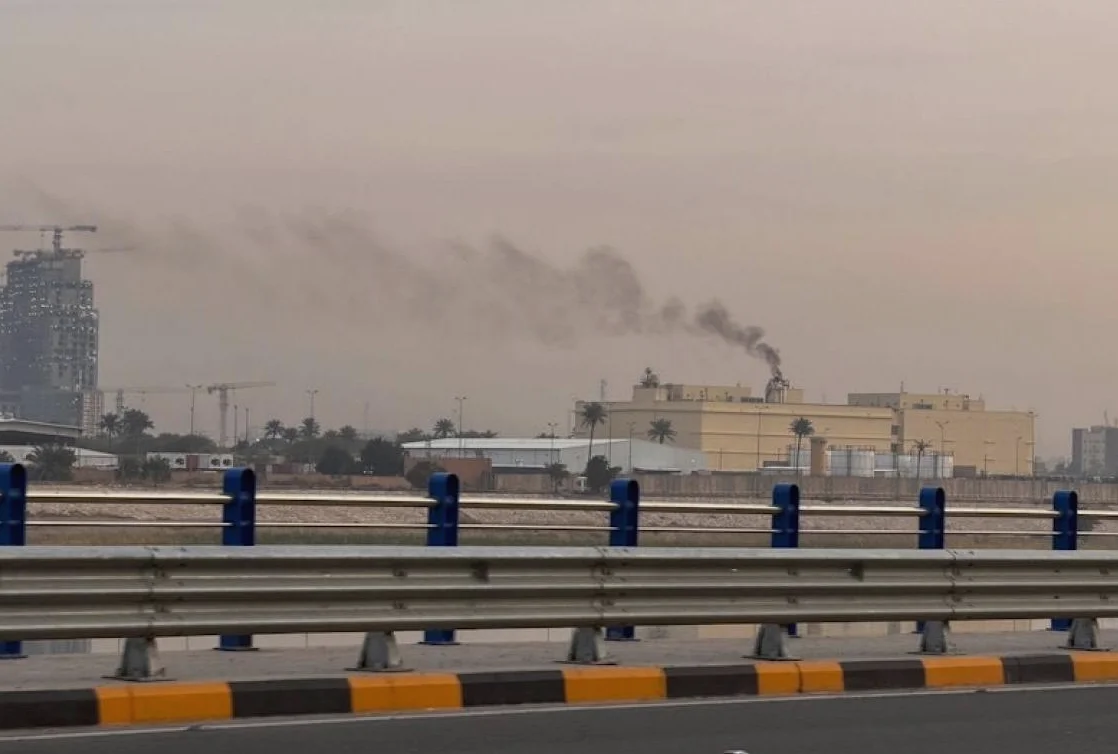
A missile struck a helipad inside the US Embassy compound in Baghdad on Saturday morning, according to two Iraqi security officials. The attack, confirmed by local sources, occurred amid rising tensions in the region and is the latest in a series of attacks on the sprawling diplomatic facility, which is one of the largest US diplomatic compounds in the world.
Escalating Threats to US Diplomatic Facilities
The drone attack took place as the US Embassy compound in Baghdad has been repeatedly targeted by rockets and drones fired by Iran-aligned militias. This is not the first time such an incident has occurred; the facility has faced multiple attacks since 2019, with the most recent occurring in 2023 when a drone strike damaged the compound’s perimeter.
According to the latest reports, the attack on Saturday morning left no casualties, though the extent of the damage to the helipad is still under assessment. Images shared by local media showed a column of smoke rising from the site, confirming the strike had occurred. However, the US Embassy in Baghdad has not yet released an official statement regarding the incident.
Security officials have not specified which group was responsible for the attack, but the timing and location of the strike suggest possible involvement by Iran-aligned militias. These groups have been linked to several attacks on US and Western interests in the region, including the 2021 drone strike that killed a top US general and a number of soldiers in Baghdad.
Impact on Regional Stability and Diplomacy
The drone attack on the US Embassy in Baghdad is likely to further complicate the already delicate security environment in Iraq. The country has been caught in a web of regional tensions, with Iran and its proxies playing a significant role in shaping the political and military landscape.
According to a report by the Institute for the Study of War, Iran-aligned groups have conducted over 30 attacks on US and coalition forces in Iraq since 2019, with a significant increase in such attacks since the withdrawal of US troops in 2021. These attacks have often been in response to US military actions in the region, including drone strikes and the presence of American forces in Iraq.
The latest attack could also have implications for the ongoing diplomatic efforts between the United States and Iraq. Relations have been strained in recent months due to the continued presence of US troops in the country, which many Iraqi officials have called for the removal of. The attack may be seen as an attempt to pressure the US to reconsider its military posture in the region.
According to a senior Iraqi security official, who requested anonymity, the attack on the embassy compound is part of a broader pattern of aggression by armed groups in the region. ‘These groups are seeking to destabilize the situation in Iraq and send a message to the US,’ the official said.
What’s Next for US and Iraqi Relations
The US Embassy in Baghdad has not yet commented on the attack, but it is expected to issue a formal statement in the coming days. The incident may also lead to increased security measures at US diplomatic facilities across the region, including in neighboring countries like Syria and Jordan.
According to a recent analysis by the Middle East Institute, the US is likely to continue its military presence in Iraq despite the risks. However, the attack may prompt a reassessment of the security strategy for US personnel and facilities in the region. ‘This incident will likely lead to a more cautious approach in terms of troop deployment and facility security,’ said a senior defense analyst.
The incident also raises questions about the effectiveness of current counter-drone measures in place at the US Embassy. Despite the presence of advanced security systems, the drone was able to penetrate the compound’s defenses, suggesting a possible gap in the current security protocols.
With tensions in the region showing no signs of abating, the attack on the US Embassy in Baghdad serves as a stark reminder of the ongoing challenges faced by diplomatic missions in volatile regions. As the investigation into the attack continues, the focus will remain on identifying the perpetrators and determining the broader implications for US-Iraq relations.
For now, the situation remains under close watch, with both US and Iraqi officials monitoring the developments closely. The coming days will be crucial in determining the response to this latest attack and its impact on the region’s stability.






Comments
No comments yet
Be the first to share your thoughts