

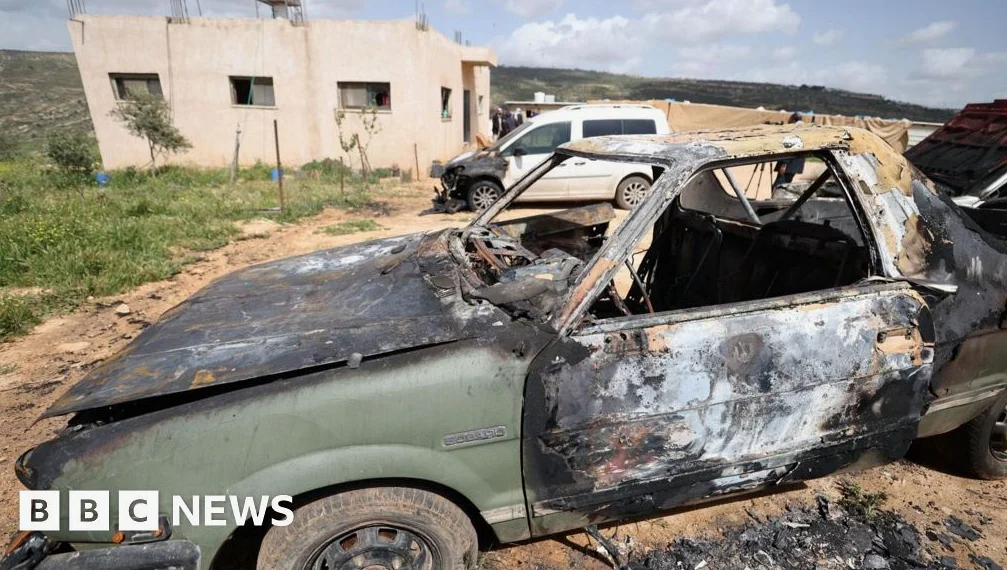
The European Union has approved sanctions against Israeli settlers and Hamas leaders for violence in the West Bank, ending a months-long delay caused by Hungary’s previous government. The sanctions target three Israeli settlers and four settler organizations, though their identities have not yet been disclosed; the decision came after Hungary’s new Prime Minister, Peter Magyar, lifted a veto imposed by the country’s former leader, Viktor Orbán.
EU Foreign Ministers Conclude Long-Stalled Agreement
The agreement was reached at a meeting of EU foreign ministers on Monday. Kaja Kallas. The EU’s foreign policy chief. Stated on social media that it was ‘high time we move from deadlock to delivery,’ emphasizing that ‘extremisms and violence carry consequences.’.
French Foreign Minister Jean-Noël Barrot praised the decision, calling it a step toward holding Israel’s ‘extremist and violent colonisation’ in the West Bank accountable. ‘These most serious and intolerable acts must cease without delay,’ he wrote on social media.
Israel Condemns the Measures
Israel quickly criticized the sanctions. Asserting that Jews have the right to settle in the occupied West Bank, despite this being in violation of international law. The country has long maintained its position that settlement activity is a legitimate exercise of self-determination, though this view is not shared by the international community.
Amnesty International has called on the EU to take further action, including suspending the EU-Israel Association Agreement. The agreement, which entered into force in 2000, provides Israel with privileged access to EU markets. In 2024, Israeli exports to the EU accounted for 28.8% of its total exports, according to trade data.
Amnesty argues that the EU must enforce its red lines on human rights and international law, particularly in light of events since October 2023. ‘If the EU fails to do so, it risks complicity in Israel’s ongoing genocide, unlawful occupation, and apartheid,’ the organization said.
Italy and Germany Hold Key Influence
In the complex EU voting system, the support of either Italy or Germany is often enough to sway a decision toward a qualified majority. Both countries have played a central role in blocking the suspension of the EU trade agreement with Israel and in shielding Israel from meaningful consequences for alleged crimes against Palestinians.
With the sanctions now approved, the next step could be a broader reassessment of the EU-Israel relationship. The EU remains Israel’s largest trading partner, and how it balances economic ties with its stated commitment to human rights will remain a key issue in the coming months.






Comments
No comments yet
Be the first to share your thoughts