

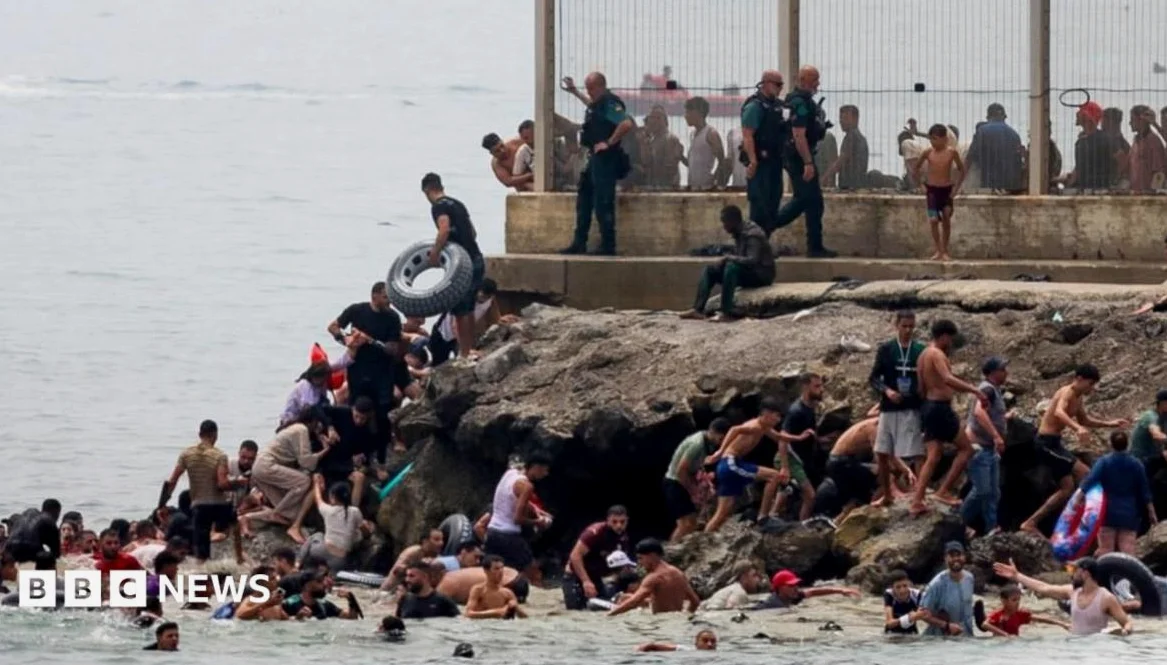
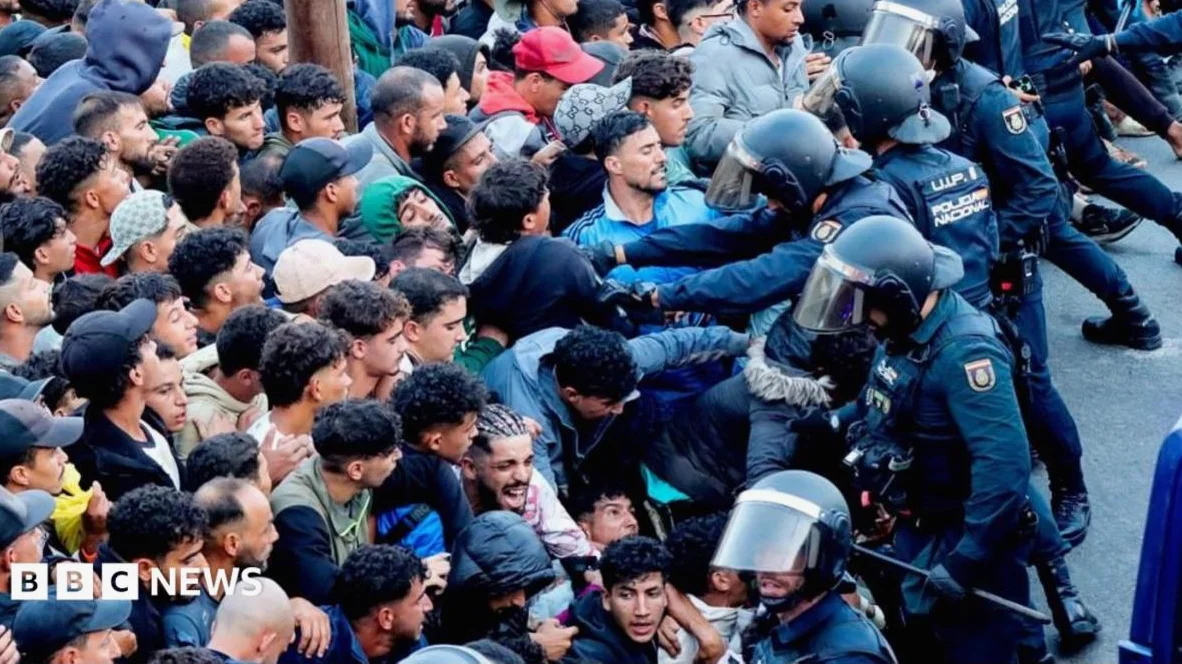
Twenty-two EU leaders have called for an emergency meeting of the EU Justice and Home Affairs Council to address the recent migrant influx into Ceuta, according to Euronews. The meeting, to be convened by Ireland, which holds the EU Council presidency — will take place on Tuesday — the leaders emphasized the need for a “common assessment of the situation” and a “coordinated European response” to uncontrolled mass crossings and potential hybrid threats.
Concerns over migration policy and border control
The letter, signed by EU leaders including German Chancellor Olaf Scholz and Polish Prime Minister Donald Tusk, was addressed to European Commission President Ursula von der Leyen, European Council President António Costa, and Irish Prime Minister Micheál Martin. It urged the meeting to be used to form a unified approach to the crisis, French President Emmanuel Macron, Portuguese Prime Minister Luís Montenegro, and Luxembourg’s Prime Minister Luc Frieden did not sign the letter.
The signatories expressed concern that the perception of easy illegal entry into the EU could encourage further attempts and undermine the bloc’s migration policy. They also noted that Spain’s decision to grant legal status to some unauthorized migrants might have acted as a “pull factor,” though Madrid has denied this.
EU foreign policy chief supports improved resilience
EU foreign policy chief Ursula von der Leyen welcomed the emergency talks, stating the bloc needed a “lessons learned process to improve our European resilience.” She added that “not a single person reached mainland Spain or the rest of the EU” during the recent influx. This remark suggests that while there was an increase in attempts to cross into the EU from Ceuta, no migrants had successfully reached other parts of the bloc.
von der Leyen’s comments highlight the importance of preventing uncontrolled crossings and maintaining the integrity of the Schengen system. The letter from the 22 leaders also called for “any necessary measures” to address the risks, including the potential reintroduction of internal border controls, which would mark a significant shift in the EU’s open-border policy.
Separate EU discussions on repatriation efforts in the Middle East
While the EU prepares to address the Ceuta migrant crisis, it is also considering repatriation efforts for European nationals affected by the conflict in the Middle East. According to data from Flightradar24, around 3,400 flights have been canceled at seven airports in the region, including those in Qatar, Israel, Iran, Syria, Iraq, Kuwait, and Bahrain. Dubai, Abu Dhabi, and Manama also closed their airports, causing significant disruptions to air travel.
French President Emmanuel Macron stated that “every measure is being taken to ensure the security of our national territory, our citizens, and our interests in the Middle East.” France has also pledged to deploy resources to protect its closest partners. Israel has announced it is preparing a repatriation mission once airspace reopens.
The scale of the potential repatriation operation is being compared to the EU’s response to the coronavirus pandemic. At the peak of the outbreak in 2020, the bloc coordinated a large-scale effort that brought home around 600,000 citizens, with the European Commission allocating €75 million to cover 75 percent of transport costs. The current crisis, however, remains in its early stages, and the number of European nationals in the region is still unknown.


Comments
No comments yet
Be the first to share your thoughts