

 Al Jazeera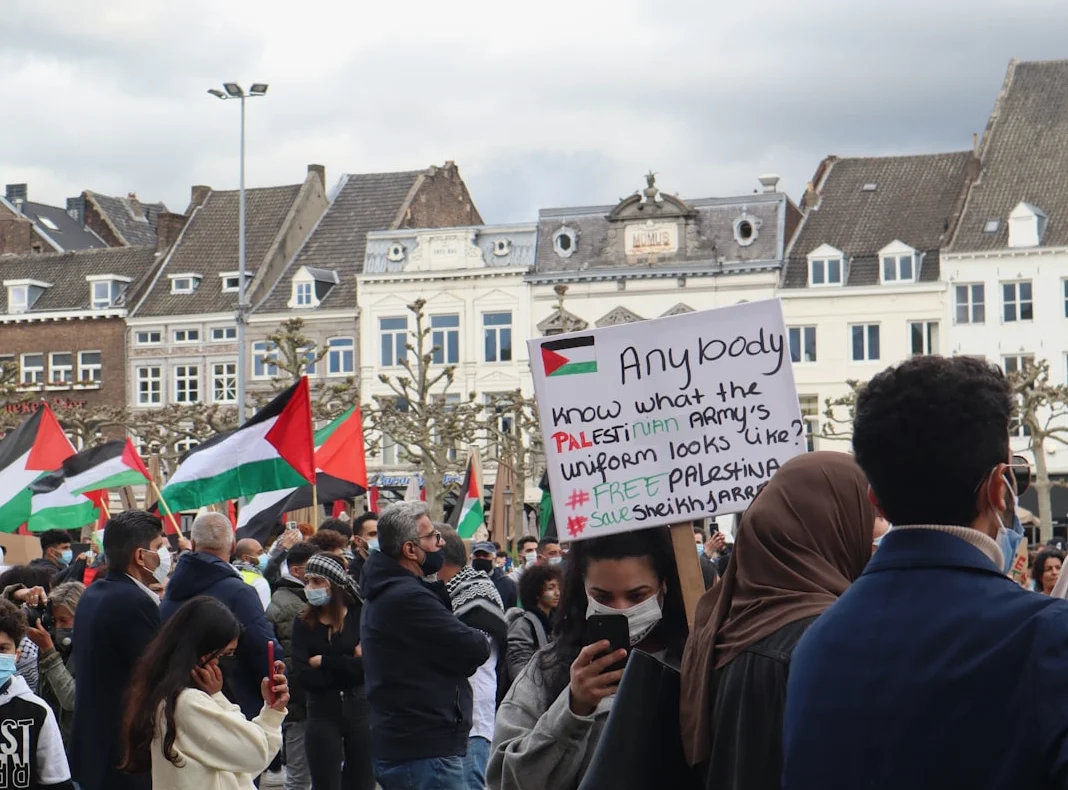
First-ever Settlement Expansion in 2025
The EEAS report. Published on July 17. 2026, details Israeli measures that amount to blatant aggression against Palestinian rights. In 2025 alone, the Israeli government approved 54 new official settlements in the occupied West Bank, excluding East Jerusalem, an first-ever number in a single year. In addition, 86 new settlement outposts were established, including 58 agricultural and pastoral outposts.
The report outlines plans for 63,311 settlement housing units in 2025. Of these, 27,941 are in the West Bank, and 35,370 are covered by 56 plans in East Jerusalem. This number is more than double the previous record set in 2023 and a huge leap from 2018, when just 11,513 units were advanced.
Fragmentation of Palestinian Territory
According to the EEAS, the logical outcome of this settlement project is the fragmentation of the West Bank. The report states that the northern and southern parts of the West Bank could be severed, and East Jerusalem could be isolated from the rest of the Palestinian territory. As a result, Palestinian communities would be confined to separate, encircled enclaves, making the establishment of a Palestinian state highly improbable.
Despite this, the two-state solution remains central to the EU’s official framework for resolving the conflict. Since the 1967 Arab-Israeli war, few phrases have been repeated more often by European politicians than “the two-state solution as the basis for ending the conflict.” The EEAS report reinforces the Palestinian narrative that the conflict did not begin in October 2023, when the genocidal war in Gaza started.
The report also exposes the extent of Israeli violations in the occupied West Bank, where armed resistance is not comparable in scale to that in Gaza. Over the same period, the West Bank has faced a different pattern of aggression: land confiscation, population displacement, geographic fragmentation, and the imposition of settlement control as a fait accompli.
European Response Remains Inadequate
The number of settlers in the West Bank and East Jerusalem is approaching 800,000, a critical mass integrated through extensive infrastructure into the institutional architecture of the Israeli occupation. Settlers use overt violence against Palestinians under the full and visible protection of Israeli soldiers. Direct physical violence sits at the top of the list of tactics used to impose this unlawful administration.
Europe’s response to these facts, now clearly laid out before decision-makers at both EU and national levels, is wholly disproportionate to the scale of Israel’s actions and falls far short of a genuine deterrent. On May 28, 2026, the EU imposed sanctions on four entities and three individuals among settlers and the organisations supporting them. The measures included asset freezes, bans on making economic resources available to them, and travel bans on the individuals.
On July 13, 2026, EU foreign ministers discussed further options to restrict trade with settlements, including full or partial bans on settlement imports, stricter export licensing, and possible tariffs. Kaja Kallas admitted that the current policy of differentiation, which treats settlements differently from Israel proper, has failed to curb trade with them because implementation varies across member states.
At the national level, Ireland enacted legislation on July 23, 2026, to ban the import of goods from Israeli settlements in the occupied Palestinian territory. In Belgium, the government approved a draft royal decree on July 18, 2026, subjecting goods from settlements to a special national government of licences, monitoring, and penalties. The Netherlands, for its part, issued an economic sanctions decision on July 21, 2026, targeting goods from Israeli settlements in territories occupied by Israel, to take effect on September 22, 2026.
Yet overall, Europe’s current policy looks more like “managing” the settlement problem than truly defending Palestinian rights or even preserving its own commitment to a two-state solution. It appears driven by embarrassment at the scale of Israeli atrocities in Gaza, massive public pressure in European streets, and precedents set by the International Court of Justice and the International Criminal Court, which are changing electoral calculations across the EU.
The measures therefore remain timid and inadequate. Yet the EU has far more powerful tools at its disposal than it has chosen to use. Its Association Agreement with Israel grants extensive trade, economic, political, and scientific privileges. Article 2 states that relations between the parties and all provisions of the agreement are based on respect for human rights and democratic principles as essential elements. On this basis, Europe could impose a unified ban on trade with settlements; broaden sanctions to target those who finance, manage, and protect outposts; bar companies complicit in settlement activity from access to EU markets, finance, and programmes; tighten banking and investment restrictions; and condition Israel’s privileges on clear benchmarks for halting settlement expansion, violence, and forced displacement.
Kallas has said that the EU Council’s legal opinion allows trade-related measures to be adopted by qualified majority voting, adding that the Union can act if there is political will. Israel can absorb isolated, unilateral measures by individual states. What it cannot absorb as easily is a collective policy adopted by the European Union, its key trade and political partner. The goal is not to dismiss national initiatives but to translate them into an EU-wide stance that turns settlements and settlers from an asset into a heavy burden for the occupation.
European politicians can also draw on the immense popular pressure that has emerged against Israel and its policies during the genocidal war. This pressure has taken the form of sustained demonstrations and actions: more than 50,000 protests and events in over 25 Western European countries and some 800 cities. It has also been expressed through the European Citizens’ Initiative (ECI) No. 2025/000005, which calls for the complete suspension of the EU-Israel Association Agreement. The organisers closed the signature drive on July 15, 2026, around six months before the formal submission deadline.






Comments
No comments yet
Be the first to share your thoughts