

 BBC
BBC 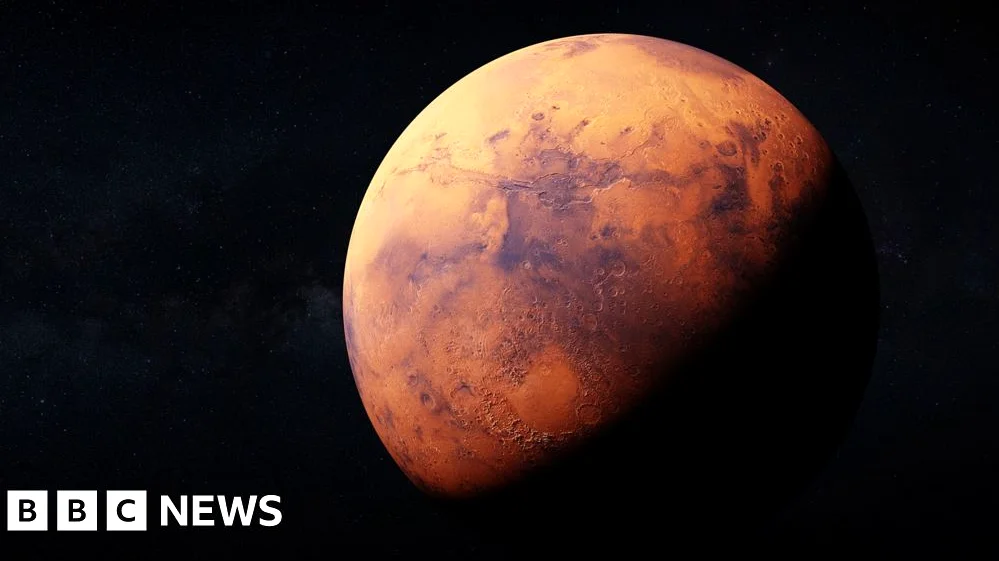
Nasa is preparing to launch the Artemis II mission, sending four astronauts on a journey around the Moon in the coming days, according to the BBC. This mission is a key step in the agency’s long-term goal of establishing a lunar base and eventually sending humans to Mars; the Artemis programme has been years in the making, involving thousands of people and estimated to have cost $93bn to date.
Resources and the Value of the Moon
The Moon. Often seen as a barren and desolate landscape, is actually rich in resources that could be vital for future space exploration and even Earth-based industries. Prof Sara Russell. A planetary scientist at the Natural History Museum, explains that the Moon contains elements found on Earth, such as rare earth elements, which are in short supply on our planet.
“The Moon has got the same elements in it that we have here on Earth,” Russell said. “An example is rare earth elements. Which are very scarce on Earth. And there might be parts of the Moon where these are concentrated enough to be able to mine them.”.
Other valuable resources include metals like iron and titanium, and helium, which is used in superconductors and medical equipment — However, the most surprising and valuable resource is water. “It has water trapped in some of its minerals, and it also has substantial amounts of water at the poles,” Russell said. This water can be used for drinking, oxygen production, and even as fuel for spacecraft.
The Race for Lunar Real Estate
The race to return to the Moon is not only about scientific discovery but also about securing valuable resources and strategic positions; the United States’ Apollo missions of the 1960s and 1970s were driven by a Cold War competition with the Soviet Union. Today, the primary competitor is China, which is making rapid progress in its space program.
“China has been making fast progress with its space programme. It’s successfully landed robots and rovers on the Moon, and says it will get humans there by 2030,” the BBC reports. Both the US and China are vying for access to the most resource-rich areas of the Moon, which could provide a strategic advantage in future space exploration.
The United Nations’ 1967 Outer Space Treaty prohibits any country from claiming ownership of the Moon, but it allows for the use of lunar resources. Dr Helen Sharman, the first British astronaut, explains that countries can establish a presence on the Moon without formal ownership. “You can’t own a piece of the land because of the UN treaty, but you can basically operate on that land without anybody interfering with it,” she said.
Paving the Way to Mars
Nasa’s ultimate goal is to send humans to Mars in the 2030s, but the Moon is seen as a critical stepping stone. “Going to the Moon and staying there for a sustained period is much safer, much cheaper and much easier to be a test bed for learning how to live and work on another planet,” Libby Jackson, head of space at the Science Museum, said.
On the Moon, Nasa can test technologies for providing air, water, and power for astronauts. These technologies will be essential for Mars missions, where any failure could be catastrophic. “These are all technologies that if you try them for the first time on Mars and they go wrong, it’s potentially catastrophic. It’s much safer and much easier to try them out on the Moon,” Jackson said.
The Moon’s unique environment, with no plate tectonics or weather to erode its surface, makes it a natural archive of Earth’s history. “The Moon is a fantastic archive of the Earth. A new haul of rocks from a different area of the Moon would be amazing,” Russell said. The Moon holds a record of 4.5bn years of Earth’s history, providing insights into our planet’s formation and evolution.
The Artemis missions are also expected to inspire a new generation of scientists and engineers. “We live in a world of technology. We need scientists, engineers and mathematicians – and space has a brilliant ability to excite people about those subjects,” Jackson said. The mission’s live-streaming in 4k is hoped to capture the imagination of young people and encourage them to pursue careers in science and technology.
Experts believe that the Artemis programme will also have economic benefits for the US. “New jobs and a thriving space economy will give the US a return on the billions of dollars it’s poured into Artemis. As will any spin-offs from the technology developed for the missions that have a use on Earth,” the BBC reports.
Dr Helen Sharman believes that the return to the Moon could have broader benefits for humanity. “If we really come together, we can produce so much that’s beneficial to humankind. It shows us what humans are capable of,” she said.






Comments
No comments yet
Be the first to share your thoughts