

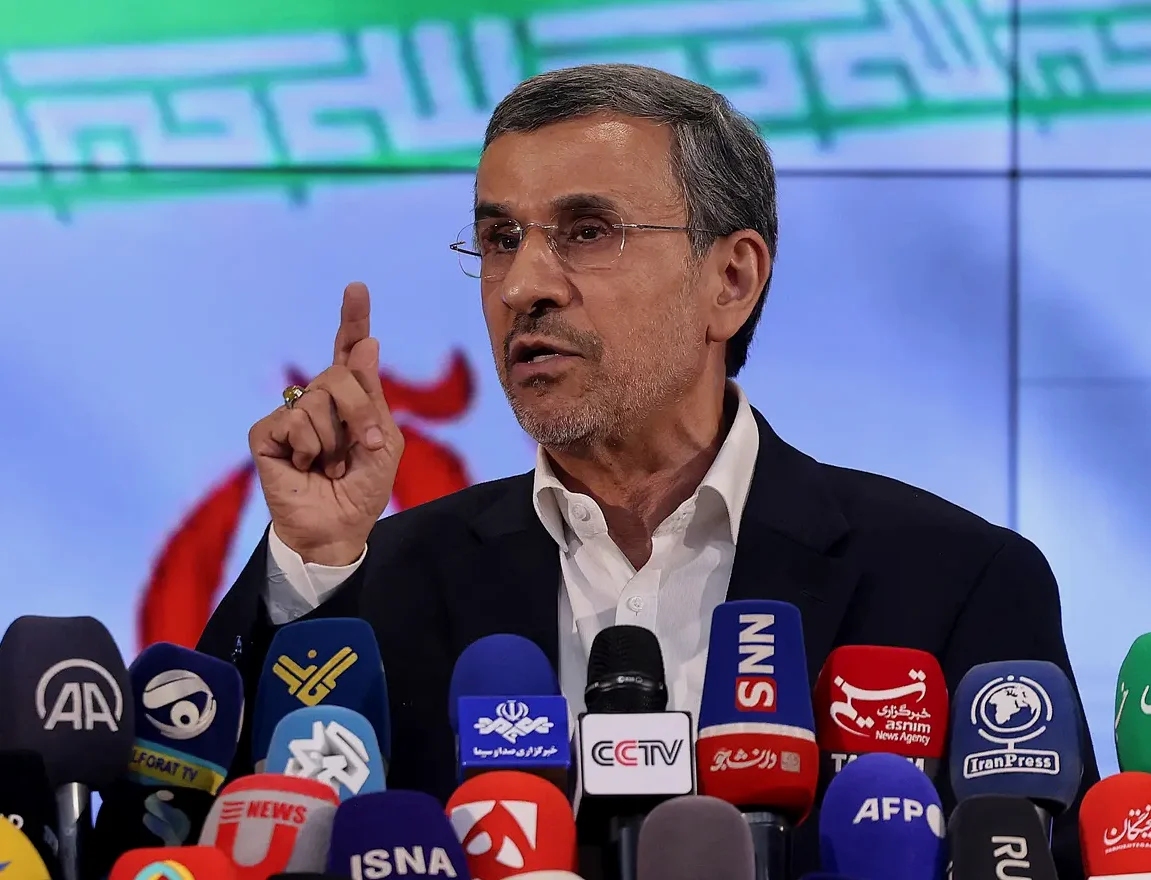
Former Iranian President Mahmoud Ahmadinejad was killed in joint US-Israeli strikes on his private residence in the Narmak district of northeast Tehran, the Iranian Labour News Agency reported. Ahmadinejad, who served as president from 2005 until 2013, was killed along with many of his close advisors and bodyguards. The attack marked a significant escalation in the ongoing conflict between Iran and the United States, which has been intensifying over the past several weeks.
Strikes Target High-Level Leadership
The development comes after Iran’s Supreme Leader Ayatollah Ali Khamenei was killed in a precision strike on a high-security compound in Tehran. Several other top leaders were also killed after the US and Israel, on Saturday, launched a massive coordinated aerial campaign, codenamed Operation Roaring Lion by Israel and Operation Epic Fury by the United States, which struck multiple sites across Iran. The strikes targeted government buildings in Tehran and suspected nuclear facilities, specifically aiming to decapitate the highest levels of Iranian leadership.
According to reports, the bodyguards, who were part of Ahmadinejad’s security cover, were members of Iran’s Islamic Major Guard Corps (IRGC). The IRGC has been a central force in Iran’s military and political structure, and their involvement in Ahmadinejad’s security detail highlights the high-level nature of the target.
US President Announces Ongoing Campaign
US President Donald Trump announced the death of Iranian Supreme Leader Ayatollah Ali Khamenei in the joint strikes and said, “Heavy and pinpoint bombing will continue uninterrupted throughout the week, or as long as necessary to achieve peace throughout the Middle East.” The statement signals a continuation of the US military campaign, which has already caused significant damage to Iran’s infrastructure and leadership.
Confirming the death, the IRGC, in a series of statements via state media and Telegram, declared that the “killer of the Imam” would face “severe, decisive, and deterrent punishment.” In response, the US president said Washington would hit Iran with “force that has never been seen before” if it retaliated against US and Israeli strikes.
The region remains on edge as US and Israeli military forces continue to strike strategic targets across Iran, aiming to dismantle the remnants of the regime’s command structure. In a violent retaliatory wave, Iranian missiles and drones have lit up the night skies over US allies across the region, including the UAE, Qatar, Bahrain, and Saudi Arabia.
Significance for the Region and Global Stability
The deaths of Khamenei and Ahmadinejad represent a seismic shift in the power dynamics of Iran. As the Supreme Leader, Khamenei was the highest authority in the country, and his death would likely trigger a power vacuum that could destabilize the region. Ahmadinejad, though no longer in office, was a prominent figure in Iran’s political landscape and his killing sends a clear message to Iran’s leadership.
Analysts have warned that the ongoing strikes and retaliatory actions could lead to a full-scale war in the Middle East, with potentially catastrophic consequences for regional stability and global oil markets. The United Nations has called for immediate de-escalation, but tensions remain high.
The strikes also highlight the growing role of US-Israeli military coordination in the region. Israel, which has long been at odds with Iran, has been working closely with the US to counter Iranian influence in the Middle East. The joint operation represents a new phase in the conflict, with both sides showing no signs of backing down.
According to the latest reports, the US has deployed additional military assets to the region in anticipation of potential Iranian retaliation. The Pentagon has confirmed that several aircraft carriers and military bases are now on high alert. The situation is expected to remain volatile for the foreseeable future.
The impact of these events on ordinary people in the region is already being felt. Civilians in Iran, as well as in neighboring countries, have been caught in the crossfire of the escalating conflict. According to the Iranian Red Crescent, over 1,000 civilians have been injured in the past week alone, and thousands have been displaced from their homes.
As the situation continues to unfold, the international community is closely watching the developments. The United Nations Security Council is expected to hold an emergency meeting in the coming days to address the crisis. The outcome of these discussions could determine the course of the conflict in the region.






Comments
No comments yet
Be the first to share your thoughts