

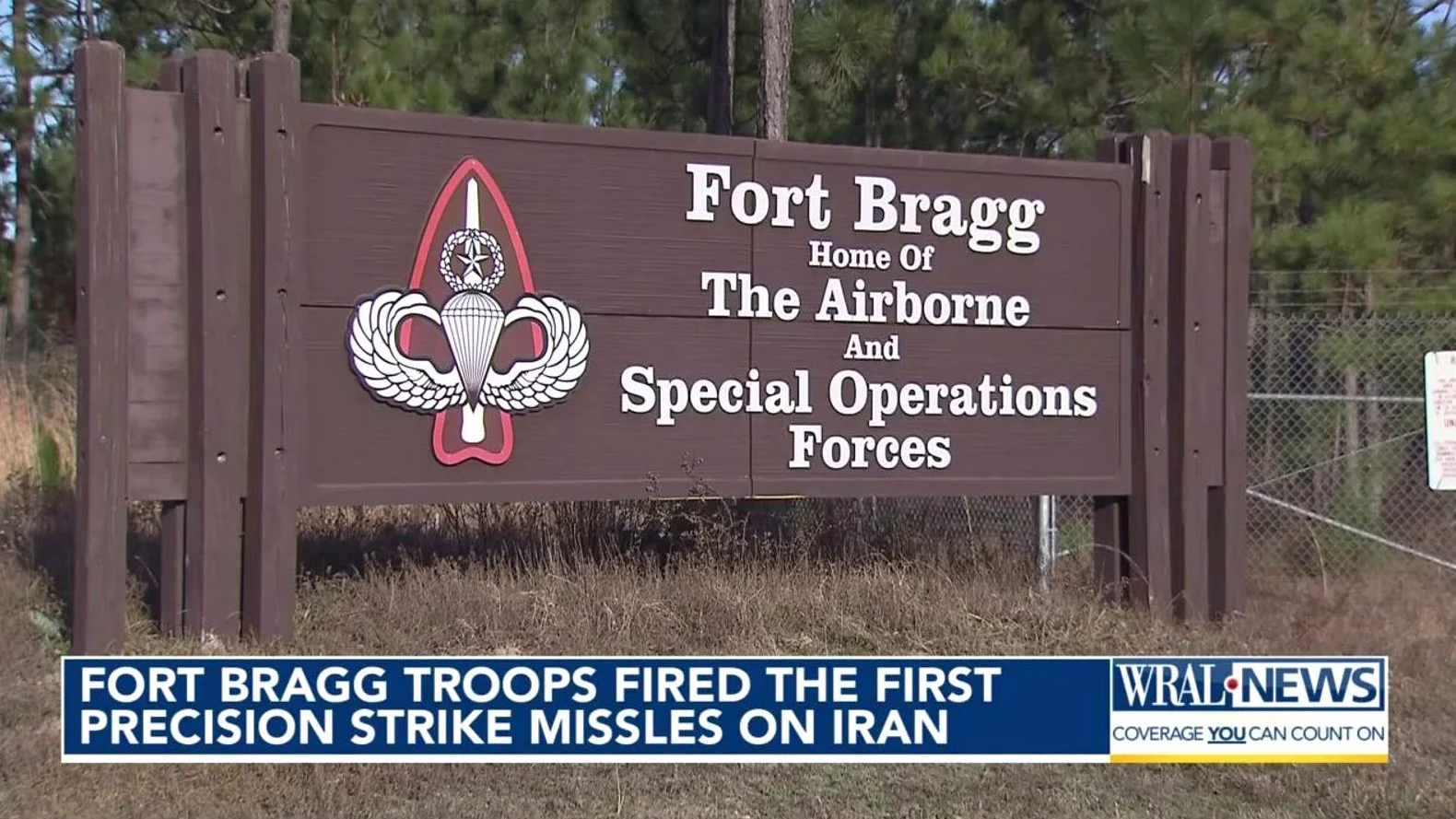
According to the United States Department of Defense, troops from Fort Bragg, North Carolina, have launched the first precision strikes on Iran. The soldiers involved in the operation are part of the 3rd Battalion, 27th Field Artillery Regiment. This development was announced during a press briefing at the Pentagon, where Air Force General Dan Caine and War Secretary Pete Hegseth provided details about the military actions.
Operational Details and Impact
The 3rd Battalion, 27th Field Artillery Regiment is stationed at Fort Bragg, one of the largest military bases in the United States. The unit is known for its long-range precision fires and has been deployed to various global hotspots. According to Pentagon officials, the precision strikes were conducted in response to escalating tensions in the region, which have been exacerbated by Iranian military movements and threats against U.S. interests.
Air Force General Dan Caine, who spoke alongside War Secretary Pete Hegseth during the press briefing, emphasized the professionalism and preparedness of the soldiers. ‘The soldiers I met came from all over this great country,’ Caine said. ‘They spoke with a sense of calm, pride, purpose, and clarity that tells you clearly, they understand the weight of what they’re doing and the people who depend on them.’
The general also noted that in less than two weeks, the Iranian Navy has been rendered ineffective. ‘We have taken out key components of the Iranian Navy, which has significantly reduced their ability to operate in the region,’ Caine added. ‘This operation has been executed with precision and purpose, and it has sent a clear message to those who would threaten our interests.’
Significance and Regional Implications
The precision strikes mark a critical shift in U.S. military strategy in the Middle East. Previously, the U.S. had relied on airstrikes from aircraft carriers and drone operations to counter Iranian threats. However, the use of ground-based precision missile systems from Fort Bragg represents a new approach to countering Iran’s military capabilities.
Analysts say the strikes could have far-reaching implications for regional stability. ‘This is a clear signal that the U.S. is willing to take direct military action in response to Iranian aggression,’ said Dr. Emily Carter, a defense analyst at the Center for Strategic and International Studies. ‘It also raises the stakes for any future confrontations between the U.S. and Iran.’
For ordinary Americans, the impact of these strikes could be felt in several ways. Increased military involvement in the region could lead to higher defense spending, which may affect federal budgets and economic policies. Additionally, the risk of escalation could lead to a rise in oil prices, affecting the cost of living for many Americans.
According to the Pentagon, the precision strikes were conducted using advanced missile systems capable of targeting specific locations with minimal collateral damage. These systems are part of the Army’s long-range precision fires program, which has been under development for several years.
What’s Next for U.S.-Iran Relations
The U.S. military has not yet confirmed any further plans for operations in the region, but analysts suggest that the precision strikes may be part of a larger strategy to contain Iranian influence in the Middle East. ‘The U.S. is likely to continue deploying advanced military capabilities to counter Iran’s growing military presence,’ said Dr. Carter. ‘This could include more precision strikes, increased surveillance, and greater coordination with regional allies.’
War Secretary Pete Hegseth has emphasized the need for a strong military presence in the region to deter further Iranian aggression. ‘We must be prepared to respond to any threats to our interests and those of our allies,’ Hegseth said during the briefing. ‘This operation demonstrates our commitment to protecting American lives and interests abroad.’
The U.S. has been involved in military operations in the Middle East for over two decades, with varying levels of success and controversy. The use of precision strikes from Fort Bragg adds a new dimension to the ongoing conflict with Iran, which has been marked by a series of escalations and de-escalations over the years.
According to the Pentagon, the operation was conducted in coordination with regional allies, including Israel and Gulf states. The U.S. has maintained close ties with these countries to counter Iranian influence in the region. However, the recent strikes may also strain relations with some European allies, who have expressed concerns about the potential for further escalation.
The U.S. military has not provided a timeline for future operations, but analysts suggest that the focus will remain on maintaining a strong deterrent presence in the region. ‘The U.S. is likely to continue investing in advanced military capabilities to ensure it can respond effectively to any future threats,’ said Dr. Carter. ‘This includes not only precision strikes but also cyber and intelligence operations.’
As the situation continues to unfold, the international community is closely watching the developments. The U.S. military’s use of precision strikes from Fort Bragg represents a significant shift in strategy, with potential implications for regional stability and global security.






Comments
No comments yet
Be the first to share your thoughts