

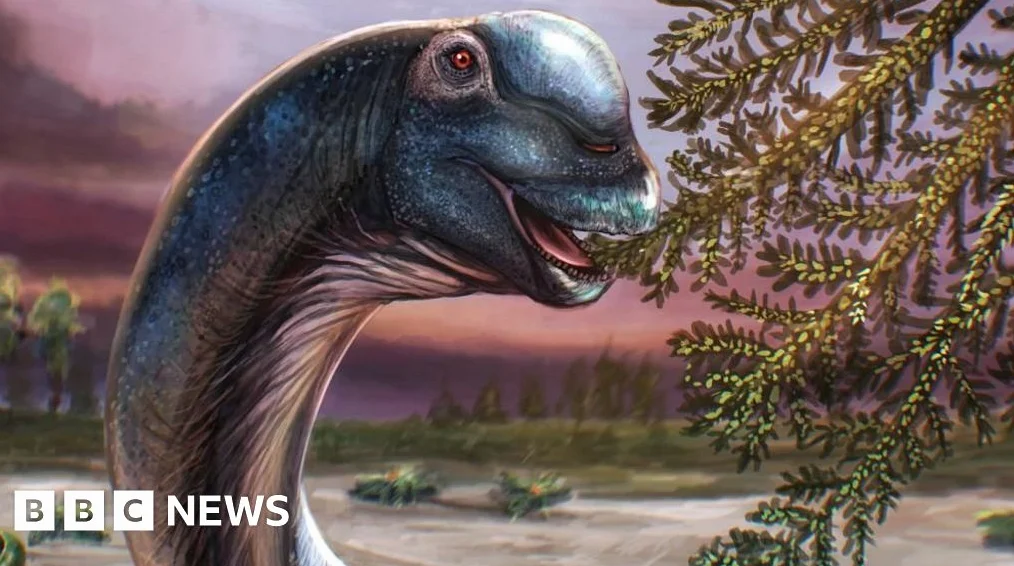
The Discovery and Naming of Nagatitan
The dinosaur was identified by a team of researchers from the UK and Thailand, led by Thitiwoot Sethapanichsakul, a Thai doctoral student at University College London (UCL). The fossils were found beside a pond in the province of Chaiyaphum about a decade ago. The name Nagatitan chaiyaphumensis combines elements from Southeast Asian folklore and Greek mythology: “naga” refers to a serpent in local mythology, while “titan” refers to the gods in Greek mythology. “Chaiyaphumensis” indicates the province where the fossils were discovered.
Sethapanichsakul, a self-described “dinosaur kid,” said the study fulfills a childhood promise of naming a dinosaur; Nagatitan is the 14th dinosaur to be named in Thailand.
Size and Significance
The sauropod measured 27 meters (88 feet) in length, longer than a diplodocus — it weighed as much as nine adult Asian elephants, Sethapanichsakul said the researchers refer to Nagatitan as “the last titan” of Thailand because it was found in the country’s youngest dinosaur-bearing rock formation. He explained that younger rocks laid down toward the end of the dinosaurs’ reign are unlikely to contain remains because the region had become a shallow sea by then.
Researchers estimate the size of Nagatitan from the spine, rib, pelvis, and leg bones discovered, and a front leg bone was nearly 6 feet long, and the fossils were first discovered by a local resident in 2016, and initial excavation occurred between then and 2019. However, funding ran out, and the excavation resumed in 2024 after new funding was secured.
Evolutionary Insights
Sethapanichsakul noted that Nagatitan represents an evolutionary trend in sauropods becoming larger during the Early Cretaceous period. While larger sauropods have been found in the later part of the Cretaceous period,some as heavy as 70 tons,Nagatitan falls into the “upper middle” range of the largest dinosaurs ever discovered. Sethapanichsakul said the discovery provides insight into the kind of evolutionary changes occurring at the time.
“It gives us an understanding of the potential kind of evolutionary trends that are beginning to occur around this time,” Sethapanichsakul said; he added that during the Middle Cretaceous, super giant sauropods were found in China, South America, and likely Africa. Nagatitan essentially represents an “on-ramp” to that kind of supersizing in sauropods.
Overall, the discovery highlights how ancient climatic conditions may have allowed gigantic dinosaurs to develop; the study contributes to a broader understanding of sauropod evolution and the ecological and environmental factors that influenced their size and distribution in Southeast Asia.






Comments
No comments yet
Be the first to share your thoughts