

 BBC
BBC 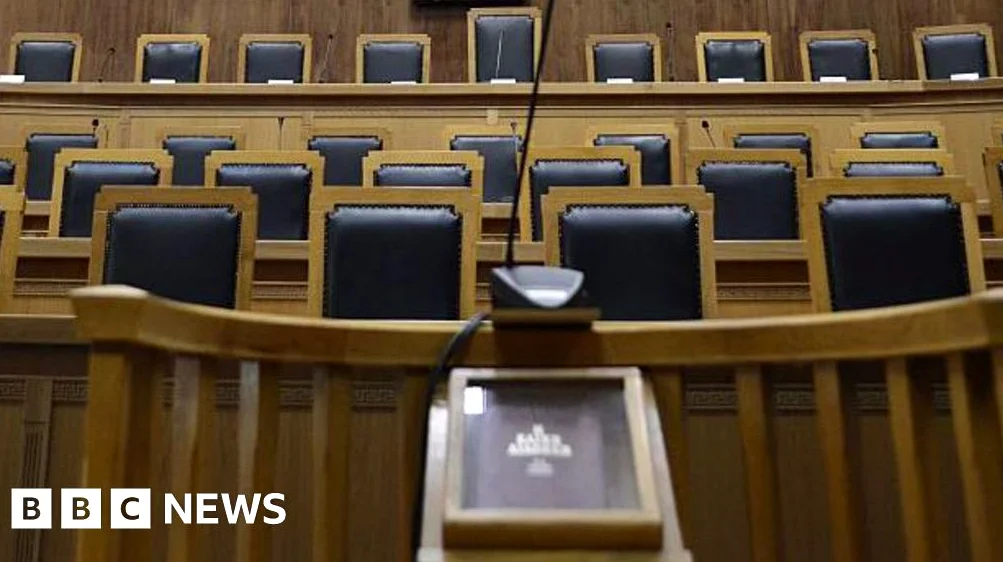
A Greek court has convicted four individuals in the high-profile Predator spyware scandal, which targeted 87 people including government ministers and journalists. The case, dubbed ‘Greece’s Watergate,’ has raised concerns about democratic accountability and the use of surveillance technology in the country.
Background and Legal Context
The scandal dates back to the summer of 2022 when Nikos Androulakis, the current head of the Greek Socialist party Pasok, discovered that he had received a malicious text message containing a link. The message was linked to Predator spyware, marketed by the Athens-based Israeli company Intellexa. At the time, the use of such software was illegal in Greece, but a new law passed in 2022 legalised its use by state security under strict conditions.
Predator spyware can access a device’s messages, camera, and microphone. Androulakis also found that he had been tracked for ‘national security reasons’ by Greece’s intelligence services. The use of the software to target him and others sparked a public outcry and raised questions about the extent of government surveillance.
Legal Proceedings and Sentencing
In what became known as ‘Greece’s Watergate,’ the four individuals who marketed the software were found guilty by an Athens court of misdemeanours for violating the confidentiality of telephone communications and illegally accessing personal data and conversations. The court sentenced the four defendants to lengthy jail sentences, suspended pending appeal.
Although they each face 126 years in prison, only eight years would typically be served, which is the upper limit for misdemeanours. The four defendants — two Greeks, Felix Bitzios and Yiannis Lavranos, and two Israelis, Tal Dilian and Sara Hamou — were not present in court for the verdict, as they had not been in the dock during the five-month trial.
The court refused to grant mitigation to the defendants and stated that the defendants appear to have acted with the participation of ‘unknown third parties,’ which may include officials from Greek and foreign intelligence services. The judge ordered the trial records to be sent to the Athens Prosecutor’s Office to investigate whether a series of felonies were committed, including the offense of espionage.
Impact on Public Figures and Legal Repercussions
Among the many public figures targeted in the scandal was Thanasis Koukakis, a financial reporter who investigates corruption. He stated that the court’s decision satisfied him regarding the violation of his private life and noted that the court proved there are safeguards in place for the functioning of the rule of law in Greece.
Zacharias Kesses, a lawyer for victims of the Predator affair, said that after today’s decision, justice must, without distraction, investigate the involvement of third parties in felony offenses. He called for a thorough examination of the case to ensure that all relevant parties are held accountable.
Prime Minister Kyriakos Mitsotakis, who placed Greece’s intelligence services (EYP) directly under his supervision, called the affair a scandal. However, no government officials have been charged in court, and critics accuse the government of trying to cover up the truth. One in three of the dozens of figures targeted had also been under legal surveillance by EYP.
The case has since escalated into a debate over democratic accountability in Greece. Despite the seriousness of the case, this is the only part of it that has come to trial and took place in a court concerned only by misdemeanors. The small ground floor courtroom was full of Greek and foreign journalists on Thursday morning, highlighting the significance of the case.
The Predator spyware scandal has raised questions about the use of surveillance technology and the extent of government monitoring in Greece. The case has also highlighted the need for greater transparency and accountability in the use of such technology by state security agencies.






Comments
No comments yet
Be the first to share your thoughts