

 World Headlines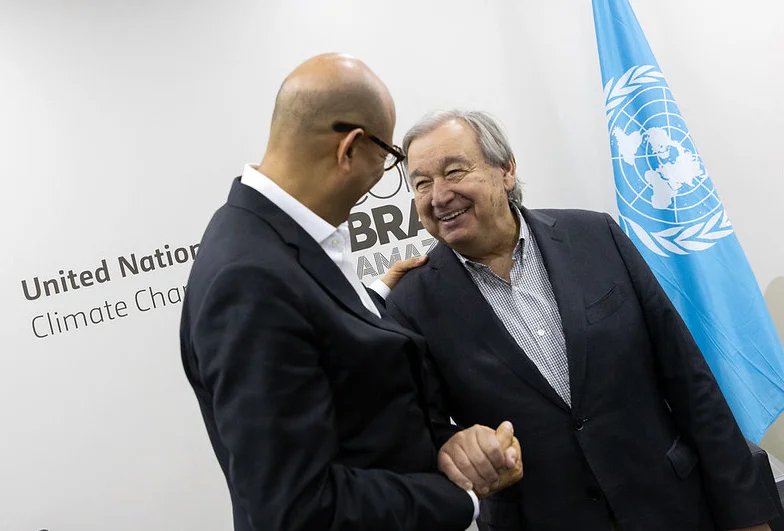
PARIS (AP) — United Nations Secretary-General Antonio Guterres demanded an end to treating the shift from fossil fuels as taboo. In a video address to the International Energy Agency’s ministerial meeting, he pressed governments, producers, consumers, civil society and financial institutions to join a new forum for straight talk on the energy transition.
“History is littered with the wreckage of failed transitions — broken economies, scarred communities and lost opportunities,” Guterres said. “We face a choice: design the transition together — or stumble into it through crisis and chaos.”
His push arrives amid sharp divides. U.S. Energy Secretary Chris Wright, speaking at the Paris event, dismissed climate change as far from the world’s top problem. He threatened to withdraw U.S. support from the IEA unless it drops its focus on the energy transition and prioritizes issues like clean cooking fuels, including fossil gas. “It’s a really physical problem, but it just isn’t even remotely close to the world’s biggest problem,” Wright said.
IEA Executive Director Fatih Birol highlighted expansions instead. Brazil, India, Colombia and Vietnam have joined the Paris-based agency, he announced. UK Energy Secretary Ed Miliband called the move a “vote of confidence” in the IEA’s outreach to emerging economies.
Guterres spoke just over two years after world leaders at COP28 in Dubai agreed to transition energy systems away from fossil fuels. Three months ago, more than 80 governments at COP30 in Brazil sought a formal roadmap on the phaseout, but it fell short of consensus. Brazil’s COP30 presidency responded with a pledge for an informal global roadmap ahead of COP31 in Antalya, Turkey, this year.
Australia, co-leading COP31 talks, committed to pressing for an end to coal, oil and gas in energy systems. Meanwhile, Colombia and the Netherlands will co-host the first international conference on fossil fuel phaseouts in Santa Marta this April. Colombian officials aim to launch a permanent platform there for a “coalition of the willing” to tackle economic dependence on coal, oil and gas.
“There were still no specific spaces or meeting places dedicated to comprehending and addressing the pathways needed,” said Maria Fernanda Torres Penagos, director of climate change in Colombia’s Environment Ministry, last month.
Details remain fuzzy on how Colombia’s effort meshes with Guterres’ proposal. Alex Rafalowicz, director of the Fossil Fuel Non-Proliferation Treaty Initiative, welcomed the UN chief’s stance. His group, backed by 18 countries, already hosts talks on a fossil fuel treaty. “The Santa Marta conference is the first stop on this journey,” Rafalowicz said. “All countries that are seriously committed to the 1.5C limit should be there.”
Existing groups like the Beyond Oil and Gas Alliance and Powering Past Coal Alliance discuss phaseouts, but major producers such as Saudi Arabia and Russia stay away. Guterres wants his platform to produce a global plan aligning investments, energy security and climate targets, with milestones and financing aimed at developing nations.
He has long laid out timelines: Wealthy countries should quit coal by 2030, others by 2040, to hit 1.5C warming limits. The IEA pegged net-zero emissions by 2050 as key to that goal in a 2021 report.
The Paris meeting highlights tensions as global energy demand climbs. Fossil fuels still power 80% of the world’s energy, according to IEA data, even as renewables surge. Guterres’ call seeks to bridge producers like OPEC members and consumers in Asia and Europe, where coal use lingers despite green pledges.





Comments
No comments yet
Be the first to share your thoughts