

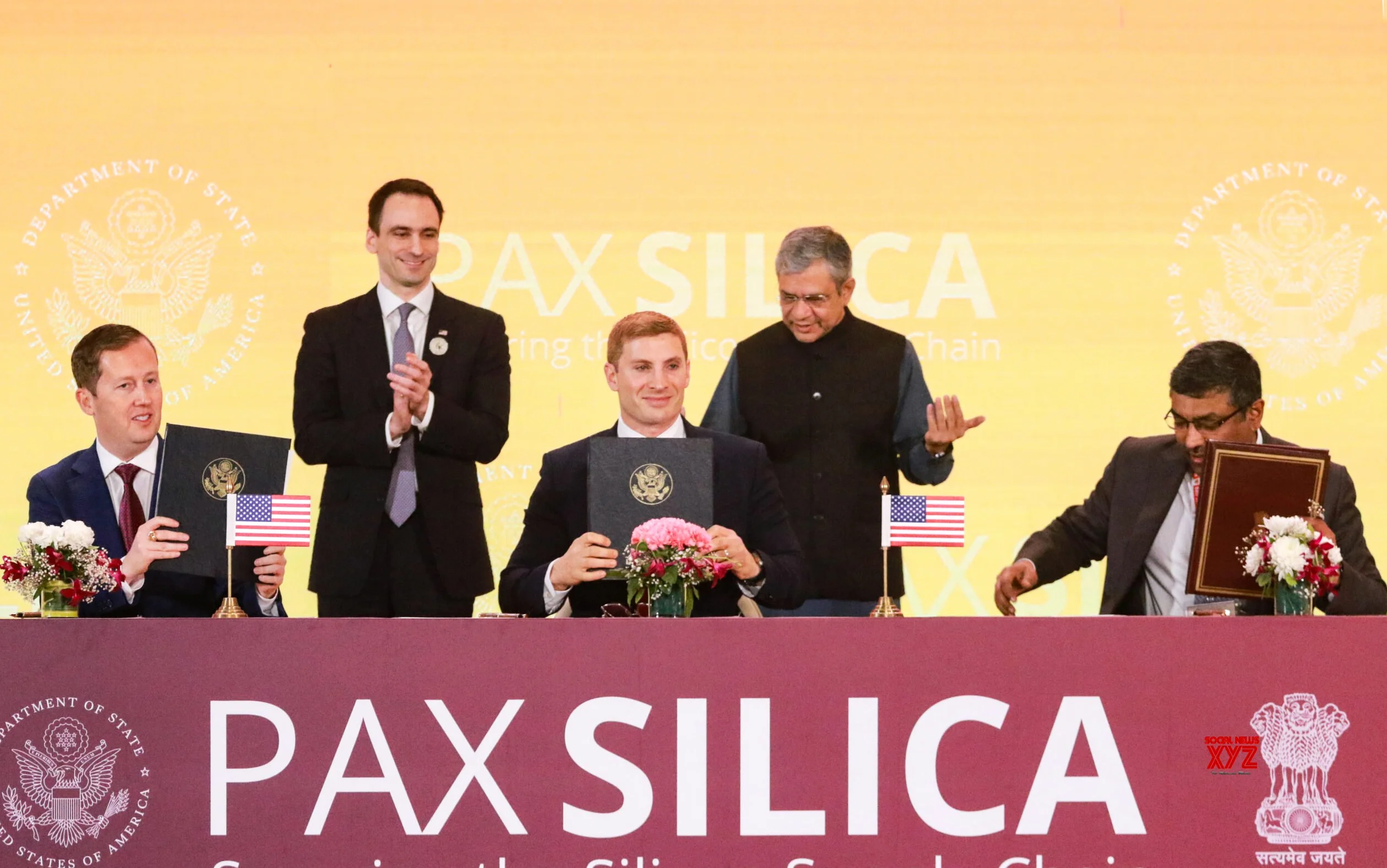
NEW DELHI — India signed onto the Pax Silica coalition Friday at the India AI Impact Summit 2026, embracing a US-backed framework for semiconductor cooperation that experts say could shield the nation from supply chain vulnerabilities.
The initiative unites countries tied to chip manufacturing and advanced technology to diversify away from China-dominated networks. Ashok Chandak, president of IESA and SEMI India, called it a game-changer. “India’s strong semiconductor design talent, growing fabrication and packaging ecosystem, and vast domestic demand make us the trusted bridge between East and West,” Chandak said.
Pax Silica promises secure access to semiconductors and AI infrastructure vital for India’s defense, telecom, mobility and economic expansion. Chandak described it as a bulwark against any single nation disrupting chip flows. “No single geography can choke our supply now,” he added.
Minister of Electronics and IT Ashwini Vaishnaw marked the occasion with strong words during the summit. “We are not just holding a summit; we are building the future,” Vaishnaw said. He stressed new foundations for India’s youth, including a million high-value jobs from expanded manufacturing.
The coalition emerged as a strategic pivot. Rather than clashing over technology, participants aim to collaborate on semiconductors, critical minerals and AI. For India, long a major electronics consumer, this shifts gears toward global design and production leadership.
“The message is clear: the future of technology rests on trusted partnerships,” Chandak told reporters. “Pax Silica lets India turn talent into manufacturing dominance.”
Officials outlined goals for a resilient, democratic tech ecosystem. Initial partners focus on reducing China reliance in chips and compute power. India’s entry bolsters that effort, using its engineering prowess and market size.
Vaishnaw framed the pact beyond paperwork. It fortifies digital sovereignty, ensuring no external power can halt India’s progress by cutting off semiconductors. Chandak echoed that, dubbing Pax Silica India’s ‘Silicon Shield.’
The summit highlighted real stakes. Semiconductors power everything from smartphones to fighter jets. Disruptions, like those during the pandemic, exposed risks. Pax Silica counters with diversified production across allied nations.
India’s semiconductor push accelerates. Government incentives draw factories from Taiwan’s TSMC and others. Domestic demand, fueled by 1.4 billion people, provides scale. Design hubs in Bengaluru and Hyderabad already churn out IP for global firms.
Experts see broader ripples. Secure AI infrastructure could speed adoption in healthcare, agriculture and finance. Chandak pointed to defense applications, where chip shortages once hampered projects.
Challenges remain. Building fabs demands billions and years. India lags in advanced nodes below 10 nanometers. Yet Pax Silica offers shared resources, from US design tools to Japanese materials expertise.
Vaishnaw’s team eyes quick wins. Packaging and testing clusters in Gujarat and Assam ramp up. Partnerships with Micron and others secure early investments.
The coalition arrives amid tense geopolitics. US export curbs on advanced chips to China spurred alternatives. India’s neutral stance in US-China rivalry now pays dividends as a swing player.
At the summit, delegates from Japan, South Korea and Europe nodded approval. India’s move signals deeper Quad tech ties, blending security with commerce.
Chandak wrapped up optimistically. “This isn’t just factories. It’s a million jobs and tech independence.” For a nation racing digital maturity, Pax Silica feels like timely armor.




Comments
No comments yet
Be the first to share your thoughts