

 BBC
BBC 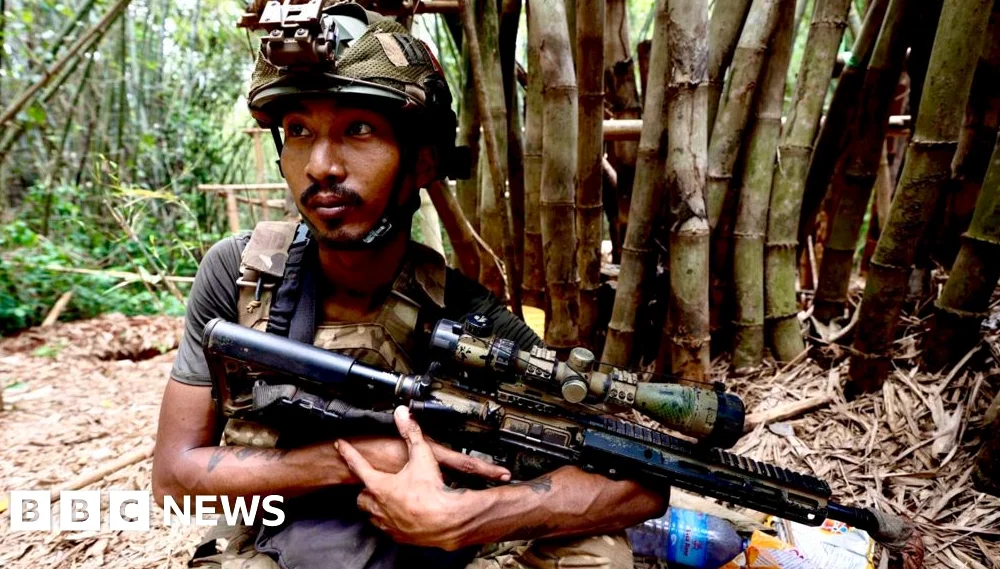
Four young men in a hidden rebel camp deep in Myanmar’s jungle-covered mountains were forcibly recruited by the military, highlighting a new dynamic in the country’s civil war, according to the BBC.
Forced Recruitment and Desperation
One man was grabbed off the street for lacking ID and forced to enlist — Another was taken on the way back from a late-night karaoke session. A third was arrested while working for the forestry department; the fourth claims he was framed by having drugs slipped into his shoe.
“Before we even understood what was happening, we were sent straight to the front lines,” one of the men, aged between 19 and 25, told the BBC.
They spent four months in basic training before being deployed to the Karen state; On their way to get washed, they attempted to escape but were captured by the People’s Defence Force (PDF) rebels.
Now, they feel more at home with the rebels, saying they are treated “like brothers, not strangers.” They plan to eventually reach the border with Thailand to avoid being tracked by the military.
Military Gains in the Civil War
Despite the reluctance of these four unwilling recruits, the military’s forced conscription policy has shifted the junta’s fortunes in the civil war, though the military seized power in 2021 from the democratically elected government, jailing its leader Aung San Suu Kyi.
Civil war has torn the country apart, with thousands killed and millions displaced. More than two years ago. An alliance of ethnic and rebel groups made sweeping gains throughout the country, notching up a string of victories against the junta.
Now, the resistance is on the defensive in most areas. The military controls less than half the country but has made gains, including key townships and retaking a critical road from Mandalay to Myitkyina in the north.
Thousands of soldiers are advancing in an attempt to re-establish control of several border areas, including Kachin, Chin, and Karen states, while the BBC traveled to Myanmar without the permission of the authorities to report from rebel-held territory.
Challenges for the Rebels
Ko Kaung, a PDF battalion commander, says military conscription has been a major challenge on the battlefield. “It enabled the military with limitless manpower,” he said. Despite having technology and intellectual advantages, the rebels are constrained by limited resources and funding.
Meanwhile, PDF commander Da Wa agrees the conscripts are a problem. He notes that while many of the junta’s forces aren’t willing recruits, they are improving as fighters because they “are getting better at following orders.”
The junta has also improved its tactics, including a security pact with Russia that has increased its air power. “We see pairs of aircraft now, before it would be a single fixed wing,” Da Wa said.
China has also brokered ceasefires with several rebel groups and is throttling the supplies of weapons and ammunition to resistance forces. Kyar Soe, a platoon commander, says the lack of weapons is a big problem.
During a recent battle, Kyar Soe stepped on a landmine and lost most of his right heel. Myanmar is one of the most heavily mined countries in the world, with 745 people killed or injured by landmines last year alone, a quarter of them children.
Despite his injuries, Kyar Soe remains determined. “I’ll return to the fight,” he said. “One way or another I’ll fight until the very end as turning back home is no longer an option for me any more.”




Comments
No comments yet
Be the first to share your thoughts