

 The Guardian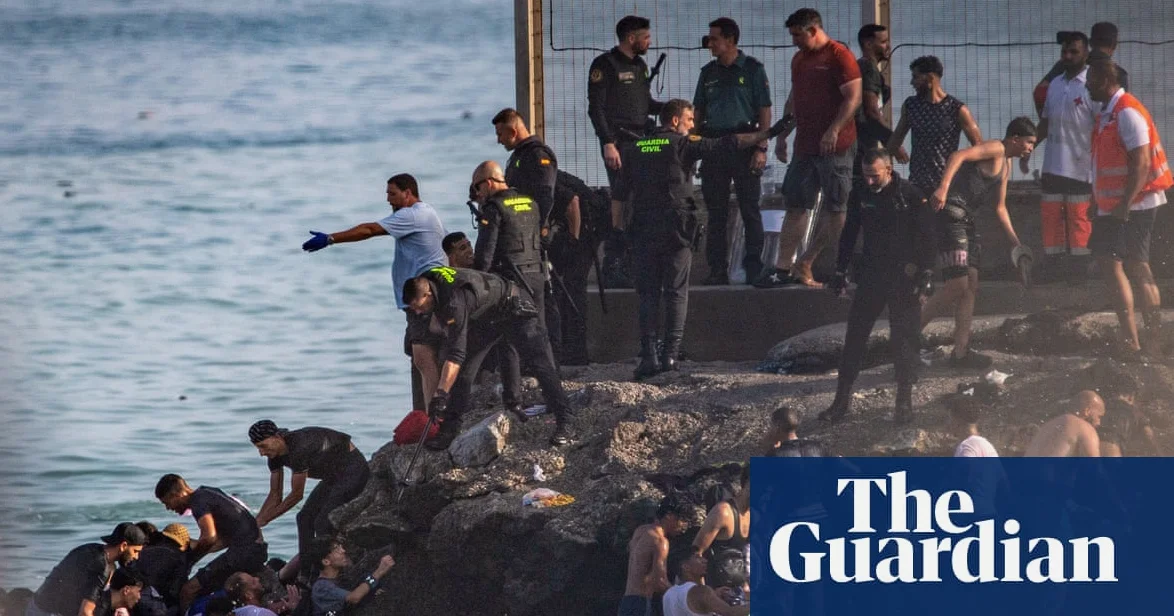
Overwhelming Influx Triggers Political Crisis
The huge influx, which took place over the course of just 24 hours, overwhelmed the city of 85,000 people, triggered a political crisis for Madrid and led to a mixed reaction from other EU countries, including calls for Spain to be suspended from the Schengen free-movement zone.
Sánchez, who arrived in Ceuta on Friday morning, said he would use all the resources at his disposal to guarantee the safety of the city’s population. He attributed the mass crossing to “human trafficking mafias” that had taken advantage of a decision by Spain’s supreme court, which recently ruled that those intercepted at sea while trying to enter Ceuta, or Spain’s other north African enclave of Melilla, could not be summarily returned under special rules.
Legal and Logistical Responses
Sánchez said a temporary reception centre would be established to facilitate the documentation, registration, triage and “expedited” expulsion of people with no legal claim to be in Spain. He also said the government would erect a visible barrier – a line of buoys, near the breakwater at Ceuta’s Tarajal beach to make it clear where the border was, and to legally comply with the court’s ruling.
Although the Spanish government said about 50,000 people had crossed the border on Thursday and in the early hours of Friday, the president of Ceuta put the figure at about 60,000. Spain’s interior ministry, which has deployed additional police officers and soldiers to the enclave, said more than 48,300 people had voluntarily returned to Morocco by 6pm on Friday.
The Irish presidency of the EU has convened a meeting of member states on Saturday, under the Integrated Political Crisis Response mechanism. EU sources said this will provide experts from member states with an opportunity “to discuss the movements into Ceuta over the last two days, the numbers of people who have returned to Morocco today, the supports being provided by the EU to Spain and diplomatic engagement with Morocco.”
Historical Context and Diplomatic Tensions
The latest incident dwarfs the last mass border crossing in May 2021, when Morocco loosened its border controls, allowing about 10,000 people to enter the territory over the course of two days. That crossing came amid heightened tensions between Madrid and Rabat over Spain’s decision to allow the leader of the Western Sahara independence movement, the Polisario Front, to be treated for Covid-19 in Spain. Morocco and the Polisario Front both lay claim to Western Sahara, which was under Spanish rule until 1975, when colonial authorities handed over the territory to Morocco and Mauritania.
That diplomatic crisis ended in 2022 when Madrid reversed its longstanding policy of neutrality and backed Morocco’s plan for Western Sahara – a move that had caused a diplomatic rift between Spain and Algeria, which had supported the Polisario group. Sánchez visited Algiers on 20 July, the first such visit by a Spanish head of government in four years, marking a thaw in relations with Algeria.
Moroccan government sources told the Europa Press news agency that the surge of people entering Ceuta was down to “criminal organisations” and insisted that Rabat’s cooperation with Spain remained “exemplary.” Morocco’s ambassador to Spain, Karima Benyaich, was quoted by the Associated Press as saying that “we have always prioritized legal, orderly and safe migration for all” and indicated that the situation had developed against Rabat’s wishes.





Comments
No comments yet
Be the first to share your thoughts