

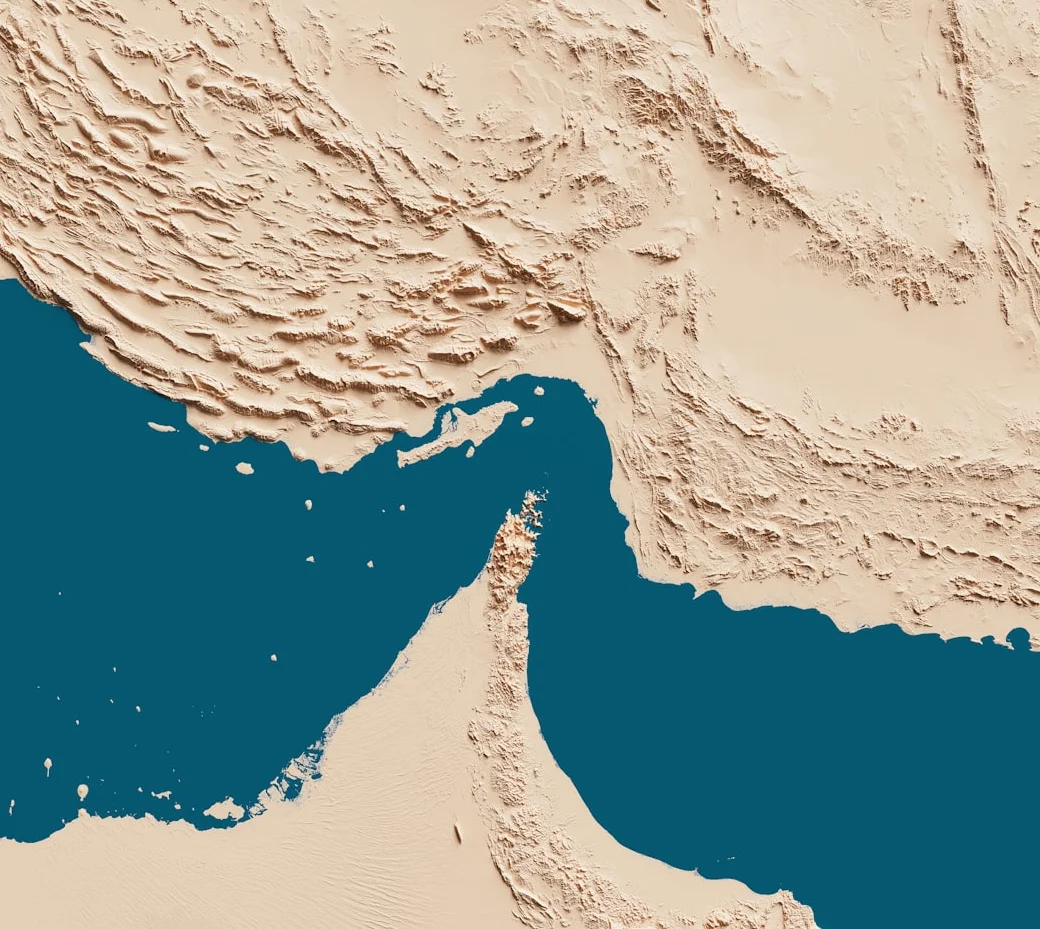
Iran’s reported closure of the Strait of Hormuz has sent shockwaves through global energy and financial markets; the Strait, through which about one-fifth of the world’s oil supply passes, is now reportedly shut down. The immediate market reaction includes a surge in crude prices, with Brent crude rising nearly 18% to $109 per barrel and West Texas Intermediate (WTI) jumping 26% to over $107, according to AD HOC NEWS.
U.S. Strikes and Iranian Retaliation
The crisis escalated after U.S. Central Command (CENTCOM) announced it had successfully defended Kuwait and Bahrain from Iranian missile and drone strikes; In response, U.S. forces carried out self-defense strikes against military targets on Iran’s Qeshm Island, per ABC News, as cited by TMGM. Further, Iran launched missile attacks toward a U.S. military base in Kuwait, intensifying regional tensions and pushing oil prices higher.
Meanwhile, Israeli forces intercepted Iranian missiles heading toward Israel, according to TMGM. The ongoing conflict between Israel and Iran has also spilled into Lebanon, where renewed Israeli strikes have eroded hopes for a regional ceasefire, contributing to the delayed reopening of the Strait of Hormuz.
Market Reactions and Central Bank Responses
The U.S. stock market faced significant losses as the Dow Jones Industrial Average futures dropped more than 1,000 points in pre-market trading, according to AD HOC NEWS. Energy prices soared. Stoking fears of stagflation due to rising costs and a weaker labor market—Friday’s jobs report showed the unemployment rate rising to 4.4%.
Swiss National Bank (SNB) Chairman Martin Schlegel noted the Swiss Franc (CHF) is significantly overvalued, prompting the central bank to increase its readiness to intervene in foreign exchange markets, as reported by TMGM. Switzerland’s trade surplus also rebounded to CHF 3.2 billion in April after hitting a more-than-two-year low in March, driven by a decline in imports and a rise in exports.
Global Oil Markets and Geopolitical Risks
Hyperliquid, a decentralized exchange, reported a surge in oil futures trading volume to $1.29 billion, with oil prices spiking to $120 per barrel due to the U.S.-Iran conflict and the reported closure of the Strait of Hormuz, according to TradingView. However, oil prices later retreated to $85.32 per barrel after intervention from the G7 and the International Energy Agency (IEA), which announced a joint release of 1.2 billion emergency oil barrels to stabilize markets.
Market sentiment has been volatile amid conflicting economic signals. The latest U.S. Job Openings and Labor Turnover (JOLTS) survey showed a stronger-than-expected increase in job openings, supporting the U.S. dollar and adding to the uncertainty in gold markets, according to TMGM.
Investors remain closely watching the situation, with rising inflation expectations and geopolitical tensions creating pressure on non-yielding assets such as gold. In the oil derivatives market, long-position liquidations have surpassed $40 million, with one major investor losing $1.55 million, as reported by Hyperliquid.






Comments
No comments yet
Be the first to share your thoughts