

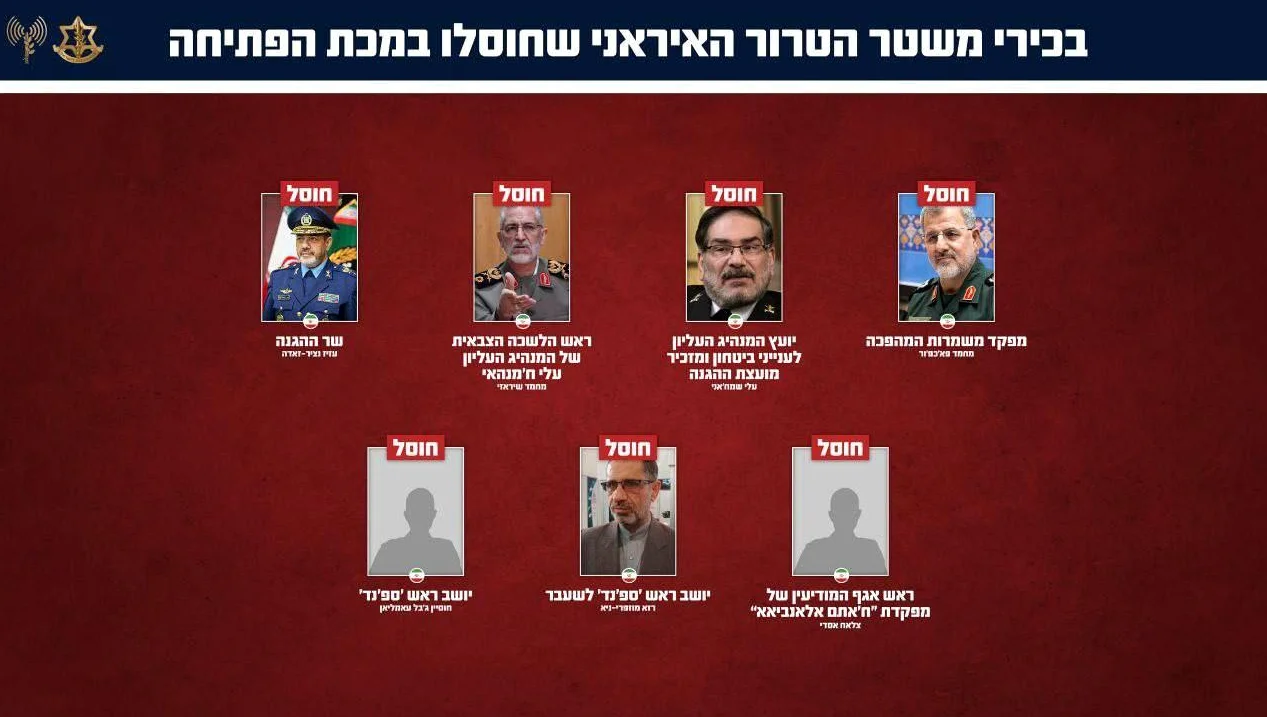
Iran has confirmed the deaths of Commander-in-Chief of the Islamic Major Guard Corps Mohammad Pakpour and Secretary of the Supreme Defense Council Ali Shamkhani. The IRGC has announced the start of what it describes as the ‘fiercest offensive operation’ in Iran’s history, targeting the United States and Israel.
Official Statements and Military Response
The Islamic Major Guard Corps (IRGC) released a statement confirming the deaths of Pakpour and Shamkhani, both high-ranking officials within Iran’s military and strategic decision-making apparatus. The statement did not provide details on the circumstances of their deaths but emphasized that the country would not remain passive in the face of what it described as ‘unprecedented aggression.’
President Masoud Peseshkian earlier warned that the killing of Ali Khamenei, who died on February 28 while performing his duties at his residence, would not go unanswered. Khamenei’s death, which occurred on the eve of a major military mobilization, has reportedly intensified Iran’s resolve to take retaliatory action.
According to sources within the IRGC, the ‘fiercest offensive operation’ is set to begin within days, with initial strikes expected to target military installations in the United States and Israel. The operation is being described as a full-scale response to what Iran perceives as a coordinated threat from its regional rivals.
Regional and Global Implications
The deaths of Pakpour and Shamkhani, both key figures in Iran’s national security structure, have raised concerns about the stability of the country’s military leadership. Analysts warn that the loss of these individuals could create a leadership vacuum that may affect the coordination of Iran’s response to the upcoming offensive.
According to a report by the Center for Strategic and International Studies, Iran has been increasing its military presence along its borders with Iraq and Syria, where it has long maintained a strategic foothold. The report states that the country has deployed additional missile batteries and drone squadrons in recent weeks, suggesting preparations for large-scale military action.
Regional experts note that Iran’s actions could trigger a broader conflict in the Middle East, particularly with Israel, which has been conducting air strikes against Iranian-backed groups in Syria and Lebanon. The United States, which has a military presence in the region, is also expected to respond to any escalation, potentially involving direct military intervention.
According to the International Institute for Strategic Studies, Iran has a stockpile of over 200,000 ballistic missiles, many of which are capable of reaching targets in Israel and across the Persian Gulf. The organization warned that the potential for a regional war is at its highest level in over a decade.
What Analysts Say
Dr. Farid Amini, a Middle East analyst at the University of Tehran, said, ‘The deaths of these high-ranking officials could destabilize Iran’s military hierarchy and lead to a period of uncertainty. However, the country’s leadership has shown a strong will to retaliate, and the offensive is likely to proceed as planned.’
Meanwhile, the U.S. Department of Defense has issued a statement urging all parties to de-escalate tensions and avoid any actions that could lead to a wider conflict. The statement added that the U.S. is prepared to take all necessary measures to protect its interests and personnel in the region.
Israel’s Ministry of Defense has not yet commented on the situation, but intelligence sources suggest that the country is preparing for a potential Iranian attack by reinforcing its air defenses and mobilizing reserve units.
According to the latest reports, the IRGC is expected to announce the full details of its offensive operation within the next 72 hours, with initial strikes potentially targeting military bases and strategic infrastructure in both Israel and the United States.
As the situation continues to develop, the international community is closely watching the actions of both Iran and its adversaries, with many fearing that the coming days could mark the start of a new chapter in regional tensions.




Comments
No comments yet
Be the first to share your thoughts