

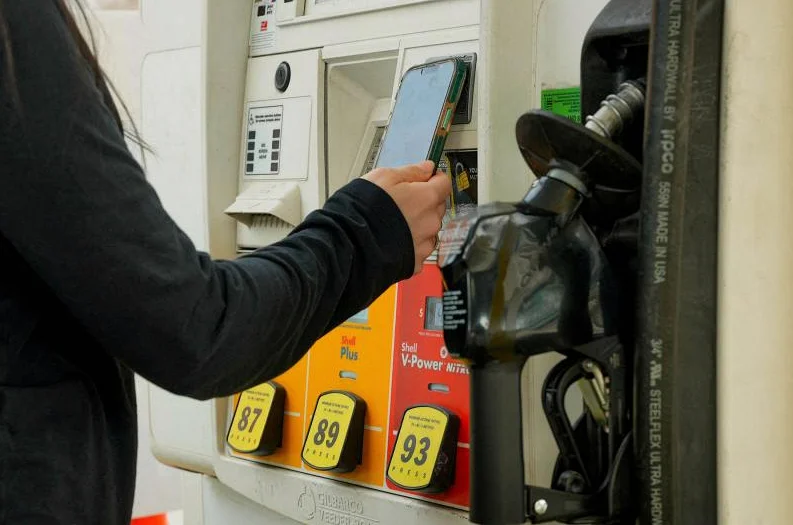
Oil prices have spiked to near $120 per barrel as fears of a prolonged Iran-Israeli conflict intensify, prompting a global scramble for stability and pushing the US dollar to new heights. Brent crude rose 23% to $114.36 a barrel on Monday, the largest single-day increase since 1988, while US crude surged 27% to $115.11, signaling a potential rapid climb in fuel costs.
Impact on Global Markets
The surge in oil prices has sent shockwaves through global markets, with the Nikkei in Japan dropping 7.5% on Monday, compounding a 5.5% fall from the previous week. South Korea’s benchmark index fell 8.1%, having already lost over 10% in the prior week. In China, the blue-chip index fell 2.3% despite the country’s substantial crude oil reserves.
China reported that inflation had already risen to 1.3% year-on-year in February, prior to the recent oil price spike. While this might not be immediately negative, it reflects a broader challenge of managing inflationary pressures in an economy historically plagued by deflation.
Energy Supply Concerns and Economic Fallout
Analysts warn that the conflict’s disruption of energy supplies through the Strait of Hormuz could lead to prolonged economic damage. Bruce Kasman, chief economist at JPMorgan, noted that the global economy remains heavily reliant on the concentrated flow of Middle East oil and gas through the strait.
Kasman estimated that oil prices could temporarily spike to $120 per barrel before moderating as the conflict eases. However, without a clear political resolution, he predicted prices would settle at around $80 per barrel by mid-year. He added that a sustained conflict could push prices well beyond $120, risking a global recession.
Such a scenario could cut global economic growth by 0.6% annually in the first half of the year and raise consumer prices by 1% annually. The potential for further escalation has raised concerns about a broader economic slowdown, particularly in Asia, which is heavily dependent on Middle East energy exports.
Geopolitical and Currency Shifts
The US dollar gained strength as investors sought safe-haven assets amid the uncertainty. However, the dollar pared some gains in the afternoon after a report indicated that G7 finance ministers were preparing to discuss a coordinated release of oil from emergency reserves managed by the International Energy Agency. This move temporarily eased pressure on oil prices, which had earlier approached $120 per barrel.
Despite this, the euro and British pound weakened by 0.6% and 0.7%, respectively, while the Australian and Swiss francs also fell. Ray Attrill, head of FX strategy at National Australia Bank, noted that the US dollar benefits from its role as a traditional safe-haven currency and the country’s status as a net energy exporter, contrasting sharply with much of Europe.
The economic uncertainty has triggered widespread risk aversion, with stocks, bonds, and precious metals all experiencing sharp declines. Michael Every, senior global strategist at Rabobank, warned that the longer the conflict persists, the more severe the economic fallout could be, describing the situation as potentially “terrifying” if unresolved by next week.
Deepali Bhargava, regional head of research for Asia-Pacific at ING, emphasized that the key question remains how high and how long oil prices will stay elevated. She noted that prolonged conflict and weak currencies could exacerbate inflation across the region, particularly in Asia, which is highly reliant on Middle East oil and gas.
The conflict has already led to the suspension of approximately 20% of global crude and natural gas supplies, as Iran targets ships in the Strait of Hormuz and attacks energy infrastructure across the region. Qatar’s energy minister warned that Gulf producers could halt exports within weeks, potentially driving oil prices to $150 per barrel.
High energy prices function as an economic tax, increasing inflationary pressures and potentially influencing central bankers’ decisions on interest rates. As the situation evolves, the global community is closely watching for any signs of de-escalation or coordinated international efforts to stabilize energy markets and economic growth.






Comments
No comments yet
Be the first to share your thoughts