

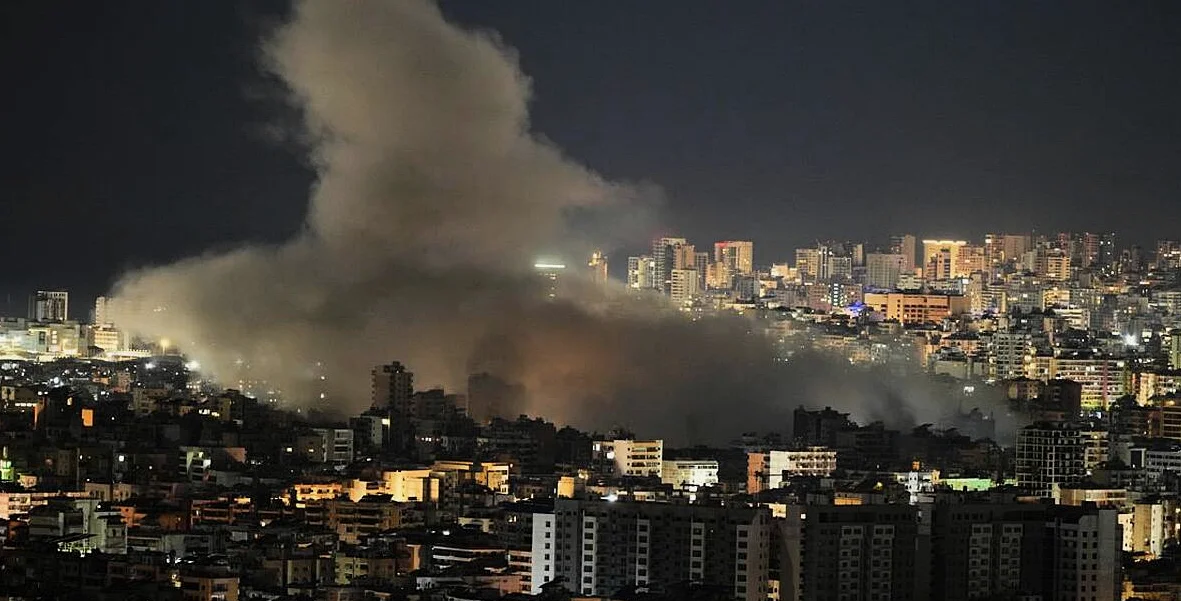
Iran launched missile strikes against Israel and U.S. military bases in the Middle East on Thursday, as Israeli forces intensified attacks in Lebanon and the conflict continued to escalate following a U.S. submarine’s sinking of an Iranian warship. Israeli military officials confirmed that air sirens had sounded in major cities including Tel Aviv and Jerusalem, indicating the arrival of incoming missile attacks. Iranian state television reported that additional strikes targeted U.S. bases in the region.
Escalating Air and Ground Strikes
The Israeli military announced new strikes in Lebanon, targeting the Iranian-backed Hezbollah militant group in the southern suburbs of Beirut. The attacks come after the U.S. and Israel intensified their bombardment of Iran on Wednesday, with the tempo of strikes so intense that Iranian state television announced the mourning ceremony for Supreme Leader Ayatollah Ali Khamenei, who was killed at the start of the conflict, would be postponed.
The conflict began on Saturday, when the U.S. and Israel launched a coordinated attack targeting Iran’s leadership, missile arsenal, and nuclear program, with indications that toppling the government was a goal. However, the exact aims and timelines have repeatedly shifted, signaling an open-ended conflict. President Donald Trump praised the U.S. military for ‘doing very well on the war front, to put it mildly,’ while fellow Republicans in the U.S. Senate supported his stance by voting down a resolution seeking to halt the war.
Regional Impact and Casualties
Iran has launched attacks on Bahrain, Kuwait, and Israel as the conflict has spiraled. Turkey reported that NATO defenses intercepted a ballistic missile from Iran before it entered Turkish airspace. According to officials in the affected countries, the war has killed more than 1,000 people in Iran, more than 70 in Lebanon, and around a dozen in Israel. The conflict has also disrupted global oil and gas supply chains, snarled international shipping, and stranded hundreds of thousands of travelers in the Middle East.
Neighboring countries are bracing for further escalation, with Iran’s paramilitary Major Guard having previously threatened ‘the complete destruction of the region’s military and economic infrastructure.’ Qatar’s Interior Ministry said authorities were evacuating residents near the U.S. Embassy in Doha as a temporary precaution, without providing further details. Fighter jets were heard overhead in Dubai, and a new attack off the coast of Kuwait appeared to expand the area where commercial shipping was in danger.
Oil Prices and Global Economic Concerns
An explosion rocked the area early on Thursday, according to the United Kingdom Maritime Trade Operations Centre run by the British military. The agency reported that a tanker appeared to come under attack but did not specify the cause. In the past, Iran has attacked ships by attaching limpet mines to them. Prior attacks since the conflict began on Saturday have occurred in the Gulf of Oman and the Strait of Hormuz, the narrow mouth of the Persian Gulf through which about a fifth of the world’s oil is shipped.
Oil prices have soared as Iranian attacks have disrupted traffic through the strait, and global stock markets have been hammered over concerns that the spike in oil prices may slow the global economy. Analysts warn that the ongoing conflict could have long-term economic consequences, particularly for countries heavily reliant on oil imports.
As the situation continues to unfold, the international community remains on high alert, with tensions showing no signs of abating. The next few days will be critical in determining the trajectory of the conflict and its broader implications for global stability and trade.






Comments
No comments yet
Be the first to share your thoughts