

 BBC
BBC 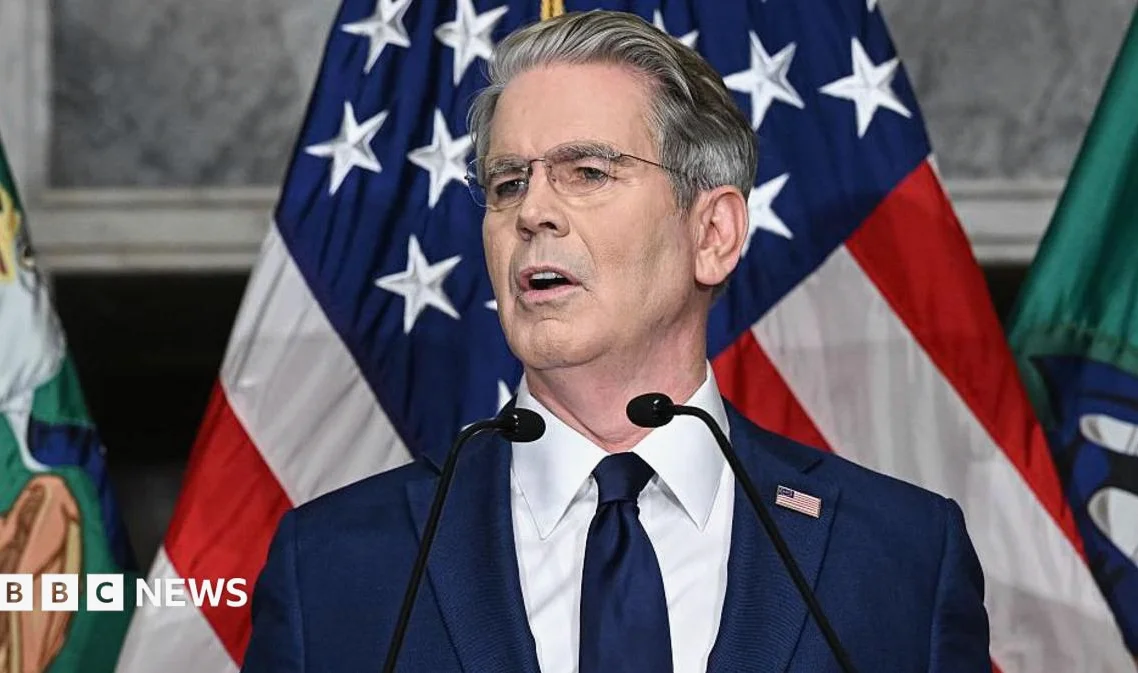
Iran’s economy minister, Ali Madanizadeh, said the country is fully prepared for the U.S. sanctions, which he claimed would result in another defeat for Washington, the BBC reported. The U.S. Treasury Secretary, Scott Bessent, described the measures as an ‘economic D-Day’ against the country and its supporters.
U.S. Seeks to Cut Economic Ties
Bessent stated the U.S. would sever all economic ties with Iran and warned that any nation financially partnering with Iran would be isolated — this follows U-turns and extended deadlines from the White House in its efforts to resolve the conflict.
Madanizadeh said Iran had been anticipating these measures for a long time. ‘The government is and was ready and has a two-year plan to manage these events,’ he told state television. ‘We also have our own tools and know how to play the game.’
International Reactions
Madanizadeh also noted that neither China nor Russia had accepted the U.S. measures, predicting that other countries would resist them; the Chinese Foreign Ministry emphasized that sanctions and pressure tactics did not help and that Beijing would take necessary actions to protect its interests.
Iran has warned it will shut down all oil exports from the region if the conflict continues, and the country has also issued a fresh warning to ships not to pass through the Strait of Hormuz without permission, according to Reuters. One fifth of the world’s oil and gas usually passes through the strait, a narrow waterway south of Iran.
The flow has been effectively blocked since the conflict began at the end of February, leading to higher oil prices globally. At a press conference earlier on Monday, Bessent outlined what has been called ‘Operation Economic Outcast,’ stating that the U.S. was launching an ‘economic onslaught against Iran’s financial connections around the globe.’
U.S. Targets Key Sectors
The Treasury Department has mapped networks, facilitators, and financial channels used by Iran to evade sanctions to trade oil, and the department has issued determinations against five sectors: digital assets, technology, gold, aviation, and shipping. The Treasury has also imposed sanctions on almost 60 entities, individuals, and vessels.
Bessent said these actions would ‘tighten the noose and block every potential source of revenue’ for Iran’s Islamic Major Guard Corps and the wider Iranian government. In a warning to governments and entities assisting or trading with Iran, he said they could not ‘claim they are blind to enabling this activity.’
He declined to highlight specific countries but mentioned that Trump would be phoning world leaders ‘with specific requests to cease their interactions with the administration.’ While he said it was important to give people time to understand the new sanctions, he added, ‘They should know that we will move very quickly and that we are serious.’
David Oxley, chief climate and commodities economist at Capital Economics, expressed skepticism about the effectiveness of the sanctions announcement. ‘With the renewed U.S. naval blockade already strangling Iran’s oil exports, the direct impact of ‘economic D-Day’ on Iran’s energy revenues will be somewhat of a damp squib,’ he said.
He added that the new package would have only a limited direct impact on Iranian energy flows in the short term. This is partly due to the fact that roughly 90% of Iran’s oil goes to China, a country ‘which has not recognized U.S. sanctions in the past and is unlikely to be cowed this time either.’
Over the course of the conflict so far, previous threats have included Trump saying in April that ‘a whole civilisation will die tonight’ unless Iran agreed to a deal to end the war and unblock the Strait of Hormuz. The U.S. eventually backed down from that position after mediator Pakistan intervened and called for more diplomacy.
The economic impact of the Iran war is being felt in the U.S. and globally — Higher oil prices have fueled concerns over the cost of living, with petrol and diesel prices much higher than a year ago. In the U.S., gasoline prices have surpassed $4 a gallon, and affordability is a top concern for American voters ahead of the mid-term elections in November.
On Monday, a barrel of Brent crude, the global benchmark for oil prices, was $92. Last week, Bessent announced the U.S. government would intervene in the bond markets and buy back more government debt in a bid to boost demand for bonds and lower borrowing rates. However, the impact of the announcement was short-lived, with long-term borrowing costs bouncing back up a day later.
Iran already faces tough economic sanctions from the U.S. Former U.S. President Barack Obama and several U.S. allies had agreed to a deal with the country in 2015, which lifted many sanctions in return for Iran agreeing to limit its nuclear program. However, Trump pulled out of that deal in 2018, calling it ‘defective at its core,’ and reimposed all U.S. sanctions on Iran.
During Joe Biden’s term as U.S. president, he made some attempts to reinstate the Obama-era deal, but this did not happen. In April this year, the Trump administration launched a wave of sanctions on foreign banks and firms doing business with Tehran after it became clear its military operations had not caused Iran’s administration to surrender.



Comments
No comments yet
Be the first to share your thoughts