

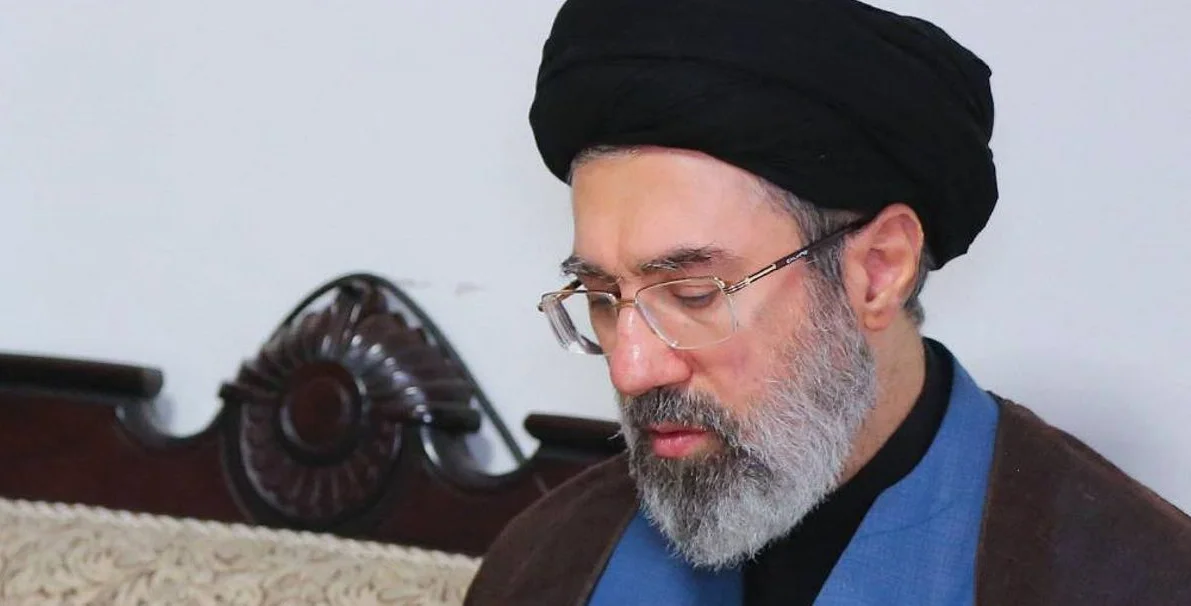
Iran’s newly appointed Supreme Leader, Mojtaba Khamenei, has reportedly been wounded just days after assuming the role, according to recent reports. The 56-year-old, who is the second son of the late Ayatollah Ali Khamenei, was officially declared his father’s successor by Iran’s 88-member assembly on Sunday. The news of his reported injury has sparked widespread speculation and concern across the region and beyond.
Background on the Appointment
Mojtaba Khamenei’s appointment as Supreme Leader comes at a critical time for Iran, following the death of his father, Ayatollah Ali Khamenei, in December 2024. The 88-member Assembly of Experts, a powerful body in Iran’s political structure, was tasked with selecting the next Supreme Leader. The process is considered highly secretive and is rarely discussed in detail with the public.
According to the Mirror, the Iranian state television broadcast a report on Sunday confirming Mojtaba’s appointment, but also mentioned that he had been wounded in the war. The reference to a ‘war’ is unclear, but it could allude to the long-standing tensions with the United States and its allies in the region, or to past conflicts such as the Iran-Iraq War in the 1980s.
Impact on Domestic and Regional Stability
The reported injury of Iran’s new Supreme Leader raises questions about the stability of the country’s leadership and the potential impact on its domestic and foreign policies. Iran has been a key player in the Middle East, with significant influence over regional conflicts and nuclear negotiations. Any disruption in leadership could lead to uncertainty in policy decisions and affect the country’s relationships with its allies and adversaries.
Analysts have noted that the sudden change in leadership, combined with reports of an injury, may create a power vacuum or lead to internal disputes within the regime. This could have far-reaching consequences, especially in light of ongoing negotiations over Iran’s nuclear program and its involvement in regional conflicts.
Reactions and Next Steps
Details about the nature of Mojtaba Khamenei’s injury remain unclear, and no official statement has been released by the Iranian government. However, the lack of transparency surrounding the situation has led to increased speculation and concern among both domestic and international observers.
According to reports, the Iranian state media has not provided further details about the injury, and the public has been left in the dark about the current status of the new Supreme Leader. This lack of information has raised concerns about the government’s ability to manage the transition of power and maintain stability.
Analysts have suggested that the next few weeks will be crucial in determining the direction of Iran’s policies. If Mojtaba Khamenei is indeed unable to take on his duties, it could lead to a power struggle within the regime, potentially resulting in a delay in decision-making or a shift in leadership priorities.
With the upcoming anniversary of the 1979 Islamic Revolution in February 2025, the situation in Iran could become even more volatile. The country’s leadership will be under pressure to maintain stability and address domestic challenges, including economic hardship and social unrest.
As the situation unfolds, the international community will be closely watching for any developments that could impact regional security and global relations. The reported injury of Iran’s new Supreme Leader adds another layer of uncertainty to an already complex political landscape.
Comments
No comments yet
Be the first to share your thoughts