

 BBC
BBC 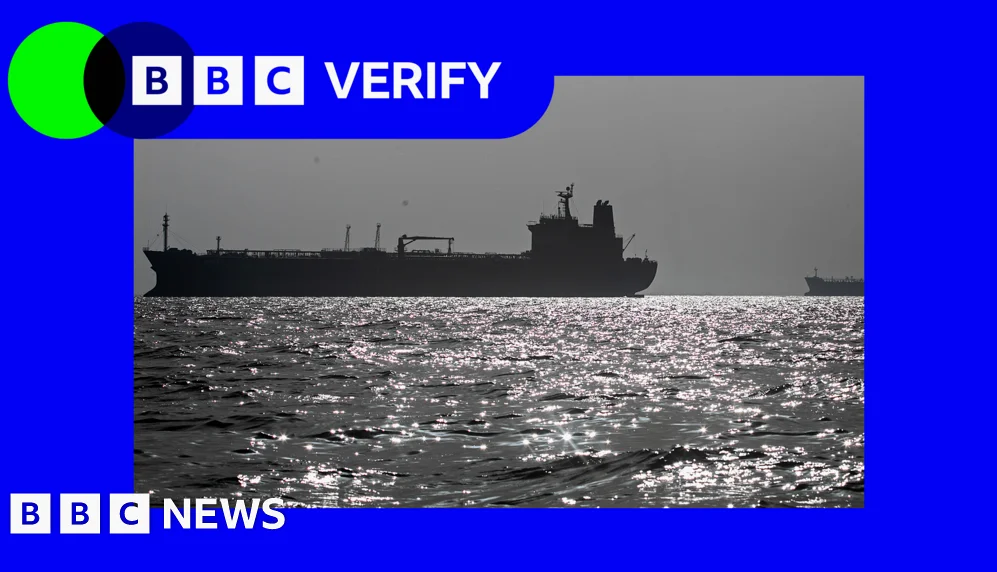
Three Iranian tankers loaded with crude oil have passed the US military blockade line in the Gulf of Oman, according to ship-tracking data, as reported by BBC Verify. Two of the tankers were broadcasting their locations as they crossed the line, while a third appeared to switch on its location tracker just past the blockade.
Blockade Remains in Place Until Deal is Finalized
President Donald Trump had announced on Sunday the “immediate removal” of the blockade of Iranian ports. However, US naval forces later confirmed the blockade would remain in effect until a deal with Iran is signed, expected to take place in Switzerland on Friday.
Michelle Wiese Bockman, senior analyst at Windward Maritime Intelligence, told BBC Verify that this move “is a sign that Iran is confident the blockade is over, even if the US has insisted it will be in place until Friday.”
Tankers Owned by Sanctioned Company
The three Iran-flagged tankers—Diona. Hero II. And Sonia I—are all owned by the National Iranian Tanker Company, which has been sanctioned by the US Treasury, as have the ships themselves, and the company has been a key player in Iran’s oil exports, which have been heavily restricted by US sanctions.
The US has imposed long-term sanctions on Iran in response to concerns over its nuclear program, support for groups designated as terrorist organizations, and alleged human rights abuses. These sanctions have significantly curtailed Iran’s ability to export oil, reducing its exports to the lowest level in six years.
Data from MarineTraffic shows that Hero II and Sonia I left Iran’s Chabahar port on Tuesday, where several other Iranian tankers are currently anchored; the ships sailed past the US blockade line into the Arabian Sea in the early hours of Wednesday morning.
Diona began broadcasting its location just past the US blockade line, which stretches from the eastern tip of Oman to the coast of Iran, on Wednesday. Maritime intelligence firm Windward says this is the first time any of these Iranian tankers have broadcast their locations since March.
Significant Oil Cargo Aboard
The three tankers are carrying a combined total of 3.8 million barrels of crude oil, according to TankerTrackers.com, though they are currently not broadcasting their planned destinations, adding an element of uncertainty to their final destination.
The US blockade has cut Iran’s crude exports to 260,000 barrels per day in May, less than a fifth of the 2025 average of 1.67 million barrels per day, data from maritime intelligence firm Kpler shows. This has had a significant economic impact on Iran, which relies heavily on oil exports to fund its government operations.
The US had stated early in its blockade that enforcement could happen outside the Gulf region, while BBC Verify has previously covered American forces intercepting Iran-linked vessels in the Indian Ocean, thousands of miles from the Gulf.
Another crude oil tanker owned by the National Iranian Tanker Company, Stream, stopped broadcasting its location just before the US blockade line and appears to be sailing towards Iran. The unladen tanker has been circling off the Pakistani port of Karachi since May 8, according to ship tracking data.
Since the announcement of the US deal with Iran, “Iranian-linked tankers and cargo ships have become noticeably more active globally,” according to the campaign and monitoring group United Against Nuclear Iran (UANI).
Two other crude oil tankers owned by the National Iranian Tanker Company, Dan and Sinopa, also began broadcasting their positions in the Strait of Malacca between Malaysia and Indonesia on Tuesday. Both tankers had not been seen on publicly available ship tracking platforms since early April and now appear to be sailing towards Iran.
“Iran is wasting no time getting its tankers back into circulation,” said Bockman.






Comments
No comments yet
Be the first to share your thoughts