

 BBC
BBC 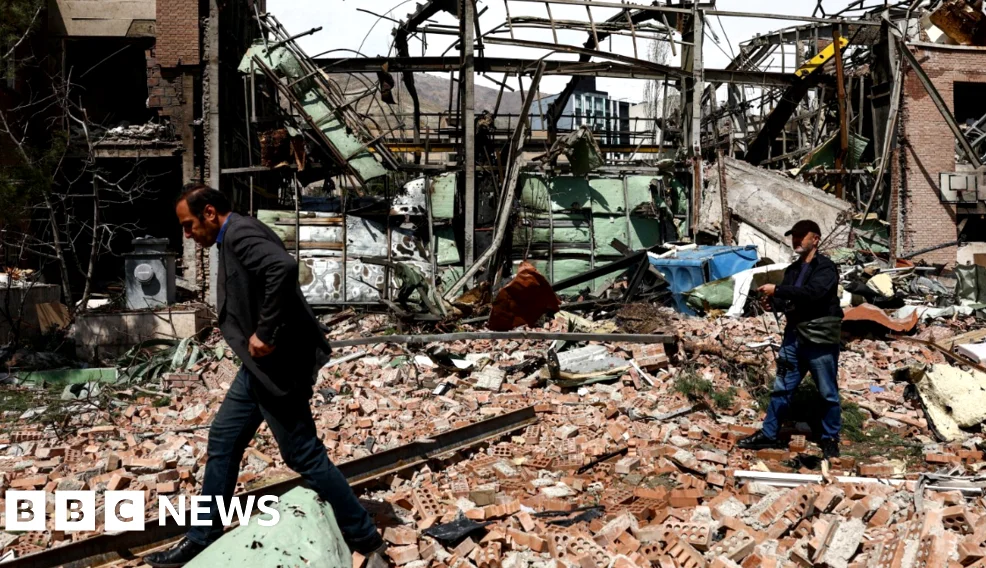
US President Donald Trump has warned that ‘all hell would rain down on’ Iran if it did not make a deal, according to the BBC, as tensions escalate between the two nations. His remarks came as Iran fired missiles at the Gulf States, Iraq, and Israel, with falling debris from intercepted missiles causing damage. The exchange of threats has intensified as the search for a missing American crew member continues following the downing of a US F-15 fighter jet over southern Iran on Friday.
Escalating Threats and Regional Concerns
An Iranian military spokesman. Ebrahim Zolfaghari. Warned that the entire region would become ‘hell’ if the US and Israel continued to escalate the conflict. His statement followed Trump’s reiteration of his threat on Truth Social that ‘all Hell will reign down on them’ if Iran failed to make a deal or reopen the Strait of Hormuz within 48 hours. The Strait of Hormuz. A vital transport route through which about a fifth of the world’s oil and gas usually passes, has been effectively closed off for more than a month due to the ongoing conflict.
Global fuel prices have soared due to energy export disruptions, with non-hostile vessels allowed to use the waterway by Iran, and However, the ongoing conflict, which has seen several ships attacked, has halted normal transport activity. The situation has raised concerns about the potential for further escalation, with the International Atomic Energy Agency expressing ‘deep concern’ over attacks on nuclear sites.
Search for Missing Crew Member and Damage to A-10 Aircraft
Meanwhile, US and Iranian forces are searching for a missing American crew member after a US F-15 fighter jet was shot down over southern Iran on Friday. According to US media. The pilot has been rescued. As Iranian officials are urging citizens to find the missing American ‘alive’ and are offering rewards for his capture. A US A-10 Warthog aircraft that was part of the search-and-rescue mission for the downed jet was also shot and damaged, but its pilot was rescued.
On 27 March. Trump announced he was pausing attacks on energy plants for 10 days for Iran to ‘make a deal’. He reiterated this threat on Truth Social, claiming that ‘many of Iran’s Military Leaders, who have led them poorly and unwisely, are terminated, along with much else’, following a strike on Tehran. However, there has been no response from Tehran to Trump’s claims, nor have the US provided further details to the post.
Israel said explosions have been heard over Jerusalem. Meanwhile, Iran has continued to fire missiles at Gulf States and Iraq. Iran also said the area around its Bushehr nuclear power plant had been attacked for the fourth time during the war. One of the plant’s employees was killed in the attack, Iran’s Atomic Energy Organisation said. It blamed the US and Israel for the attack, but neither country has confirmed carrying it out.
Nuclear Concerns and International Response
Bushehr is Iran’s only operational nuclear power plant and was completed with Russia’s help. The International Atomic Energy Agency said it had been informed of the strike and had expressed ‘deep concern’. It wrote on X that ‘no increase in radiation levels was reported’ and called for ‘maximum military restraint’ to avoid a nuclear accident. Iran’s statement on the Bushehr attack said the main parts of the plant did not appear to be damaged and its operation had not been ‘not affected’.
Moscow has evacuated many of its staff from the plant. The head of Russia’s state nuclear corporation, Rosatom, Alexei Likhachev, said on Saturday that the evacuation of 198 people remaining in the plant had started that morning. Iran’s nuclear programme has long been a point of contention, leading to extensive international sanctions. The US-Israeli war with Iran began on 28 February, two days after a third round of indirect US-Iran nuclear talks in Geneva.
As the conflict continues, the search for the missing US airman remains a focal point for both nations. The situation remains fluid, with both sides continuing to exchange threats and engage in military actions across the region. The international community is closely watching the developments, with concerns about the potential for further escalation and the impact on global energy markets.






Comments
No comments yet
Be the first to share your thoughts