

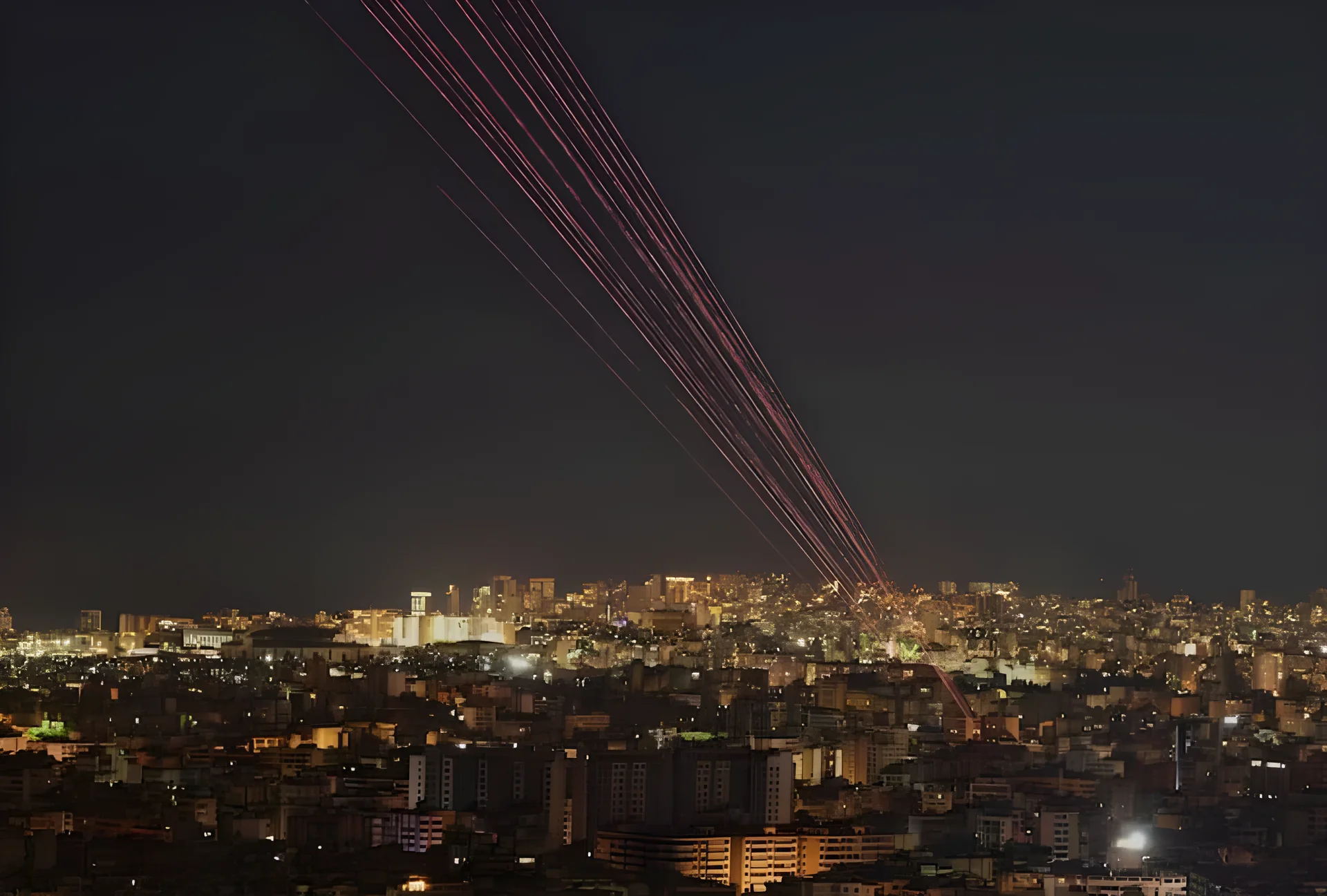
Iran launched fresh missile attacks targeting Israel and U.S. military bases in the Middle East, marking the sixth day of escalating regional conflict, while Israeli airstrikes hit Lebanon, killing at least eight people. The attacks and counterstrikes have intensified fears of a broader regional war, with oil prices rising as financial markets react to the unfolding crisis.
Chinese Envoy to Mideast for De-Escalation Efforts
China has announced plans to send a special envoy to the Middle East in an effort to de-escalate tensions. The envoy, Zhai Jun, will travel to the region to ‘make active efforts to help de-escalate tensions,’ according to a statement from the Chinese Foreign Ministry. This comes as Chinese Foreign Minister Wang Yi has held phone conversations with counterparts from several countries, including Russia, Iran, Oman, France, Israel, Saudi Arabia, and the United Arab Emirates, in an attempt to push for an end to the hostilities.
During these talks, Wang emphasized that ‘military operations must cease immediately and that all parties should return to dialogue and negotiation as soon as possible so as to prevent further escalation of tensions and the spillover of conflict,’ according to a Foreign Ministry spokesperson.
Israeli Alerts and Evacuations Across the Region
Israeli authorities issued alerts in Jerusalem, warning residents to seek shelter in bunkers after detecting missile launches from Iran. The Israeli military confirmed it had intercepted incoming missiles, but the scale of the attack remains unclear. Meanwhile, Spain repatriated more than 170 citizens from the Middle East via a military flight that landed in Madrid. The evacuation comes amid growing concerns over regional stability, as Spain has also refused to allow U.S. military forces to use two of its bases for operations against Iran.
Further south, Bahrain has imposed strict restrictions on filming related to its military operations. The state-run Bahrain News Agency issued a statement prohibiting the ‘photography, publication, or redistribution of any images, video footage, recordings, or information relating to its military installations, military operations, or defensive measures.’ This move is expected to further complicate independent reporting in the region, where media access has already been restricted since the 2011 Arab Spring.
Global Response and Evacuation Efforts
Australia is deploying six crisis response teams to the Middle East to assist stranded citizens, according to Prime Minister Anthony Albanese. The government has also sent unspecified military assets to the region as part of contingency planning. Officials are working ‘around the clock’ to handle the surge in consular requests, with Albanese stating that the country is committed to ensuring the safe return of its citizens.
South Korea has also seen its citizens affected by the conflict, with dozens of stranded travelers returning home from Dubai via a flight routed through Taiwan. Another group is expected to return later in the day, but hundreds more remain in the region as air traffic continues to be disrupted by the ongoing conflict. South Korea’s Foreign Ministry reported that approximately 2,000 short-term visitors are currently in the United Arab Emirates.
In Qatar, explosions were reported in Doha, the capital, according to Al Jazeera. Meanwhile, Cyprus confirmed that a drone which struck a British air base in the island nation was launched from Beirut, the capital of Lebanon. The official, speaking on condition of anonymity, said the drone had taken off from the Lebanese capital and had targeted the RAF Akrotiri base.
Israel’s military announced that it had conducted airstrikes against Hezbollah command centers in Beirut, targeting facilities used by the Iran-backed militant group to coordinate attacks against Israeli personnel and civilians. The airstrikes were reported to have been intelligence-based, with the military stating that the command centers were intended to be used for attacks on Israeli targets.
Iran has also claimed responsibility for an attack on an American oil tanker in the northern Persian Gulf, according to a statement from the Iranian Major Guard. The attack, reported by the British military’s United Kingdom Maritime Trade Operations center, may be linked to an earlier incident off the coast of Kuwait. The incident has raised concerns over the safety of maritime traffic in the region, with the Persian Gulf serving as a critical corridor for global oil shipments.
In a further escalation, Iranian state television aired a message from Ayatollah Abdollah Javadi Amoli, a senior Shiite cleric, calling for the ‘shedding’ of blood from Israelis and U.S. President Donald Trump. The statement, rare for a high-ranking cleric, warned of the ‘great test’ facing Iran and urged unity in the face of the combined airstrikes from Israel and the United States.
Meanwhile, Israel has begun to reopen its airspace to limited incoming flights, with one passenger flight per hour allowed in the first 24 hours under a phased plan. The move is expected to bring around 5,000 people back to the country, with further flights to be added depending on security assessments. Outgoing commercial flights remain operational, but the resumption of air travel is a significant step in stabilizing the region’s transportation networks.






Comments
No comments yet
Be the first to share your thoughts