

Israeli forces have launched a series of airstrikes across several Iranian cities, marking the tenth day of an escalating conflict between Iran and Israel. The attacks, which have targeted key urban centers, are part of an ongoing military campaign that began after coordinated strikes by the United States and Israel against Iranian positions. The conflict, which has now spanned ten days, has seen both sides intensify their military operations, with Iran vowing to continue its resistance against foreign pressure.
Symbolism in Missile Markings
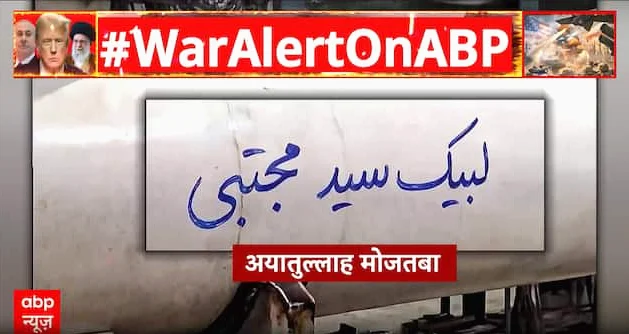
Recent images circulating from Iran show missiles prepared for launch bearing the name of Mojtaba Khamenei, the second son of the late Supreme Leader Ali Khamenei. According to Iranian officials, Mojtaba Khamenei has been selected as the country’s new Supreme Leader, a decision that has not been officially confirmed but is widely anticipated. The display of his name on these missiles is being interpreted as a symbolic gesture, signaling Iran’s resolve to continue its military response to Israeli and U.S. actions.
Iranian military officials have stated that the country possesses a vast missile stockpile, estimated at hundreds of thousands of warheads, which will allow it to maintain its retaliatory strikes. This claim highlights Iran’s belief in its ability to sustain the conflict over an extended period, despite international pressure and economic sanctions.
Escalation and Regional Impact
The conflict has already had significant repercussions across the Middle East, with civilian infrastructure and military installations targeted in multiple countries. The war began ten days ago following coordinated attacks by the United States and Israel against Iranian targets, which were initially expected to weaken Iran’s position after the death of its Supreme Leader, Ali Khamenei. However, the opposite has occurred, with Iran intensifying its military response and expanding its reach across the region.
Analysts have noted that the ongoing conflict is not only a regional issue but also has the potential to draw in other global powers. The involvement of the United States and Israel has raised fears of a broader regional war, particularly with the presence of U.S. military assets in the area. The situation remains tense, with both sides showing no immediate signs of de-escalation.
Iranian officials have repeatedly stated that the country will not surrender to pressure from the United States or Israel. This stance has been reinforced by the recent missile markings, which are seen as a demonstration of national unity and determination. The display of Mojtaba Khamenei’s name on the missiles is intended to send a clear message to both domestic and international audiences: Iran is prepared to continue its military campaign regardless of external challenges.
What’s Next in the Conflict
With the conflict now in its tenth day, the international community is closely monitoring the situation for any signs of a potential ceasefire or diplomatic resolution. However, both Iran and Israel have shown little indication of willingness to de-escalate the situation. Analysts predict that the war could continue for weeks or even months, depending on the outcomes of ongoing military operations and the response from other global powers.
Experts warn that the continued escalation could lead to increased civilian casualties and further destabilization in the region. The United Nations has called for an immediate ceasefire and has urged all parties to engage in diplomatic negotiations to prevent the conflict from spiraling out of control. However, with both Iran and Israel focused on their military objectives, the likelihood of a swift resolution remains uncertain.
The situation remains volatile, with the potential for further military actions in the coming days. The international community is watching closely, hoping for a resolution that can prevent the conflict from escalating into a broader regional war.





Comments
No comments yet
Be the first to share your thoughts