

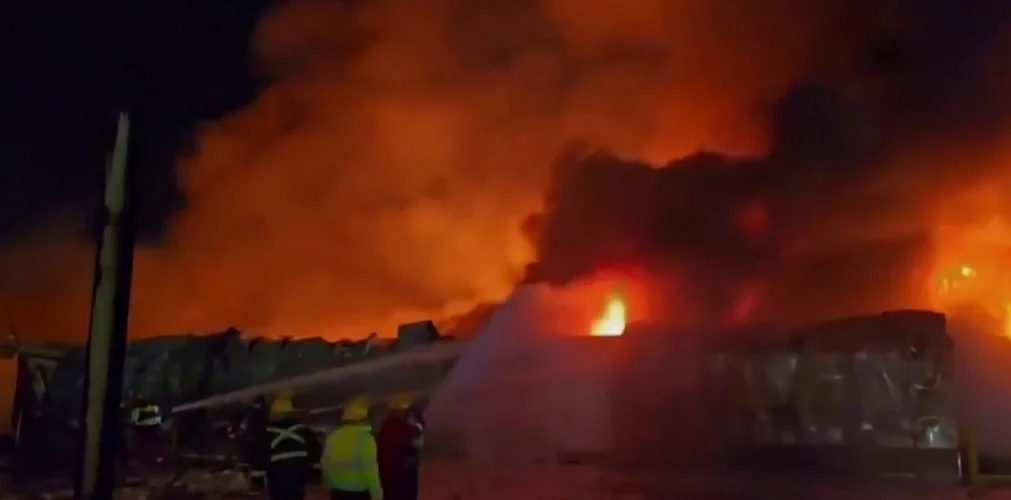
Iranian President Masoud Pezeshkian has rejected U.S. President Donald Trump’s call for ‘unconditional surrender,’ vowing not to back down as attacks against Iran continue. The remarks came as the U.S. and Israel have carried out a series of airstrikes targeting Iranian military assets and suspected weapons storage sites across the region, escalating tensions in the Middle East.
Regional Diplomacy and Security Concerns
Pezeshkian addressed neighboring countries in a televised speech, stating that Iran would not launch attacks against its neighbors unless their territory was used to strike Iran first. The statement is seen as an effort to reassure regional allies and de-escalate tensions, particularly with countries like Iraq, Syria, and Lebanon, where Iranian influence is strong.
According to the speech, Pezeshkian emphasized that Iran would not be the first to initiate conflict, but would defend itself if provoked. This marks a shift in rhetoric compared to previous administrations, which had been more aggressive in their statements about potential retaliation.
Analysts suggest that the Iranian president’s comments are also aimed at countering internal pressure, as recent strikes have caused casualties and damage to critical infrastructure within Iran. The U.S. and Israel have not officially confirmed the number of casualties, but local media reported at least 25 deaths and over 100 injuries from the latest wave of attacks.
Trump’s Demands and Regional Reactions
President Trump, who has been a vocal critic of Iran’s nuclear program and regional influence, has called for ‘unconditional surrender’ in a series of recent statements. The term has been widely used in U.S. media to describe Trump’s stance on how Iran should respond to Western pressure.
Pezeshkian responded sharply to Trump’s comments, stating, ‘They will take their dream to the grave if they think we will surrender unconditionally.’ The remark, delivered in a tone of defiance, has been widely reported across Iranian state media and has been met with strong approval from pro-regime factions.
Regional allies of Iran, including Syria and Hezbollah, have echoed Pezeshkian’s stance, warning against U.S. and Israeli aggression. In a statement, the Syrian government said, ‘Iran has the right to defend its sovereignty and will not be intimidated by external threats.’
Meanwhile, the United Nations Security Council has called for an emergency meeting to address the escalating situation. The meeting is expected to take place within the next two weeks, with representatives from the U.S., Iran, and several European countries expected to attend.
What’s Next in the Escalating Conflict
Analysts warn that the situation could continue to deteriorate unless diplomatic channels are re-established. The next key deadline is March 15, when a planned summit between Iran and several Arab Gulf states is set to take place in Baghdad. The summit aims to address regional security concerns and seek a de-escalation of hostilities.
According to the International Institute for Strategic Studies, the risk of a full-scale regional war has increased by 23% in the past month due to the ongoing strikes and retaliatory measures. The report also notes that Iran has increased its military activity in the Strait of Hormuz, a critical global shipping lane, which could further complicate the situation.
U.S. officials have not yet responded to Pezeshkian’s rejection of Trump’s demands, but sources close to the administration have indicated that further sanctions could be imposed on Iran if the situation does not stabilize by the end of March.
For ordinary citizens, the ongoing conflict has led to rising fuel prices and a shortage of essential goods in several countries. In Iran, the cost of gasoline has increased by 18% in the last month, while in Lebanon, bread and electricity shortages have worsened due to the region’s instability.
As the situation continues to unfold, the world watches closely to see whether diplomatic efforts will succeed in averting further escalation or if the cycle of retaliation will continue unabated.






Comments
No comments yet
Be the first to share your thoughts