

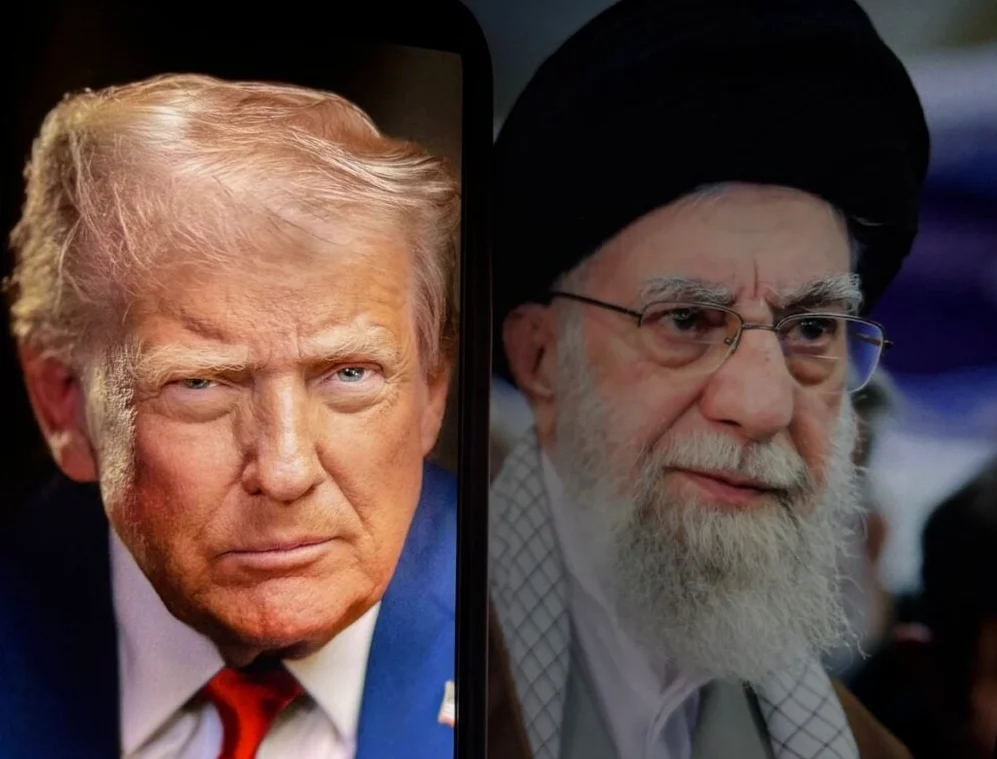
Iran’s Supreme Leader Ayatollah Ali Khamenei has elevated Ali Larijani to a key role in managing potential crises as the country braces for rising tensions with the United States. Larijani now holds the top national security position as head of Iran’s Supreme National Security Council, taking on a broader set of responsibilities beyond his formal title.
The move comes amid President Donald Trump’s ultimatum for a nuclear deal, setting a 10-to-15-day deadline and initiating a military buildup in the Middle East. These actions have already unsettled oil markets, with fears of disruptions to critical shipping routes fueling concerns about potential conflict.
According to The New York Times, Larijani’s growing influence has shifted power away from President Masoud Pezeshkian, who has downplayed expectations of resolving Iran’s issues and emphasized his background as a physician rather than a career politician. Despite diplomatic progress in talks, significant gaps remain, including Trump’s demand for Iran to halt all uranium enrichment.
Iran is preparing as if U.S. strikes could occur soon, with reports indicating that forces have been moved to maximum readiness. Missile launchers have been placed near the Iraqi border and along the Persian Gulf coastline, targeting both Israel and U.S. military bases. Iran has also periodically closed its airspace for missile tests and held drills in the Persian Gulf that briefly disrupted traffic through the Strait of Hormuz.
Energy traders have already reacted, with crude oil prices rising due to concerns that any fighting could disrupt transit through the Gulf of Oman and surrounding areas. Khamenei has issued public threats, warning that the U.S. military might face a setback so severe it would struggle to recover.
Larijani’s responsibilities include overseeing a crackdown on domestic protests, containing dissent, and coordinating with international partners such as Russia, Qatar, and Oman. He has also been tasked with managing nuclear negotiations with the U.S. and preparing governance plans in the event of conflict, as U.S. forces continue to gather in the region.
During a recent visit to Doha, Larijani told Al Jazeera, ‘We are ready in our country. We are not looking for war, and we won’t start the war. But if they force it on us, we will respond.’
Khamenei has also implemented layered succession planning, naming multiple backup options for key military and government roles and delegating authority to a small circle in case of communication failures. This strategy highlights the high-stakes environment as both sides continue to prepare for potential military actions.
Trump’s evolving stance reflects a more diplomatic approach, as he praised Khamenei for halting the execution of over 800 individuals, highlighting the complex dynamics in U.S.-Iran relations amid rising tensions. As military options are considered, Trump’s remarks may influence both negotiation strategies and potential conflict scenarios, particularly as the likelihood of U.S. strikes increases.
Market indicators have also reflected the geopolitical tensions, with oil prices rising due to concerns over shipping lanes and U.S. stock futures showing gains in overnight trading. Assessments of U.S. or Israeli military action against Iran have increased from 24% to 38% within hours, following comments related to Diego Garcia.



Comments
No comments yet
Be the first to share your thoughts