

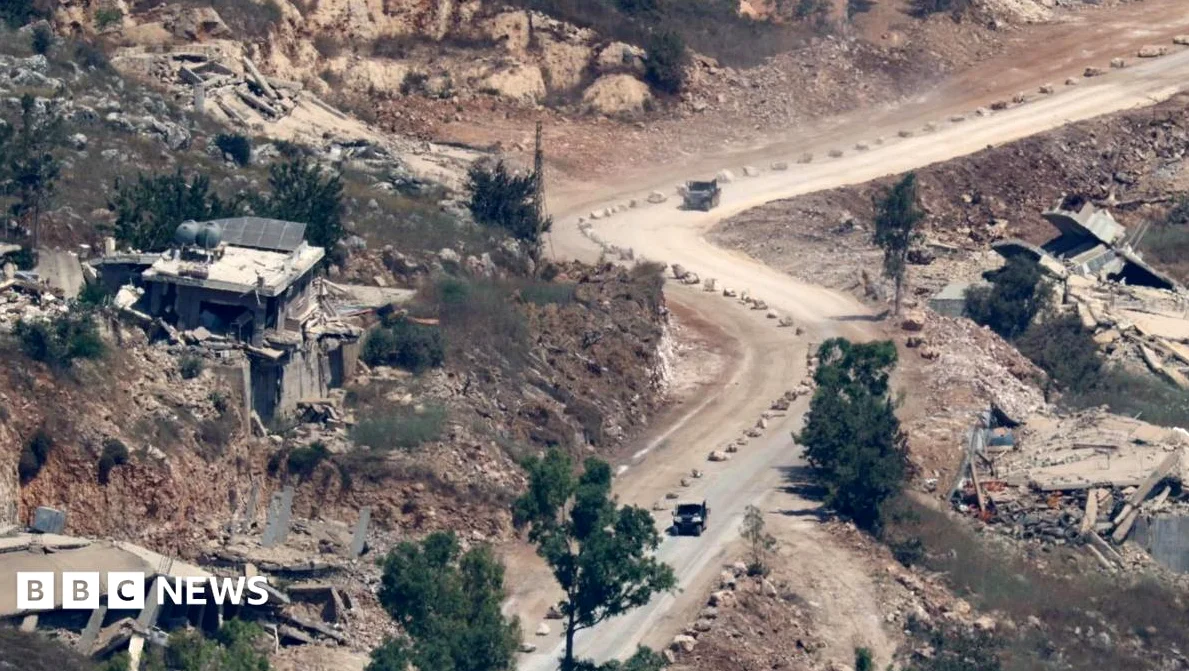
Israel and Lebanon signed a framework agreement on Friday after U.S.-brokered talks, aiming to stabilize the region and promote a full peace; However, shortly after the signing, Israeli Prime Minister Benjamin Netanyahu stated that Israeli forces would remain in southern Lebanon until Hezbollah disarms. The Israeli army currently occupies around 5% of Lebanese territory.
Escalation of Violence
Israeli strikes on targets in southern Lebanon have threatened to derail peace efforts. In a recent development, an Israeli helicopter attacked the town of Maroun al-Ras in the southern district of Bint Jbeil, and another attack occurred with machine gun fire from a newly established position in Tallet al-Hamams toward the Marjayoun plain. The municipalities of Bodai and Flawi, both located in the Baalbek governorate in eastern Lebanon, were also targeted by the Israeli army, as well as the vicinity of Nabi Chit, near the Syrian-Lebanese border.
Cuba’s Foreign Minister, Bruno Rodriguez Parrilla, condemned Israel’s attacks on Lebanon, stating that the bombings violate the ceasefire and are part of an aggressive policy to rework the Middle East. Rodriguez also denounced attacks on the ports of Hodeida, Ras Isa, and Salif, as well as the Ras Kanatib power plant in Yemen.
U.S. Involvement and Criticism
U.S. President Donald Trump has been involved in the diplomatic efforts, including a tense phone call with Netanyahu in which he reportedly used an expletive. Trump has publicly criticized Israel’s conduct in the conflict, despite insisting that Israel has the right to defend itself from Hezbollah rocket strikes on its territories. He has claimed he can “control Israel from attacking Lebanon” and stated, “They have a lot of respect for me. They do as I say.”
In the final point of the framework agreement, both Israel and Lebanon acknowledged the role of the U.S. in supporting their efforts to bring “wide-ranging peace” between the two nations, and expressed “deep appreciation for the vision and leadership of President Donald J. Trump.”
Humanitarian Impact
The conflict has had a significant humanitarian impact, with more than 11,600 people injured and over 1.2 million displaced, according to Lebanese authorities. Israeli authorities report that 36 Israeli soldiers and four civilians have been killed on both sides of the border during the conflict. Hezbollah has condemned the new deal, raising concerns about the potential for further escalation.


Comments
No comments yet
Be the first to share your thoughts