

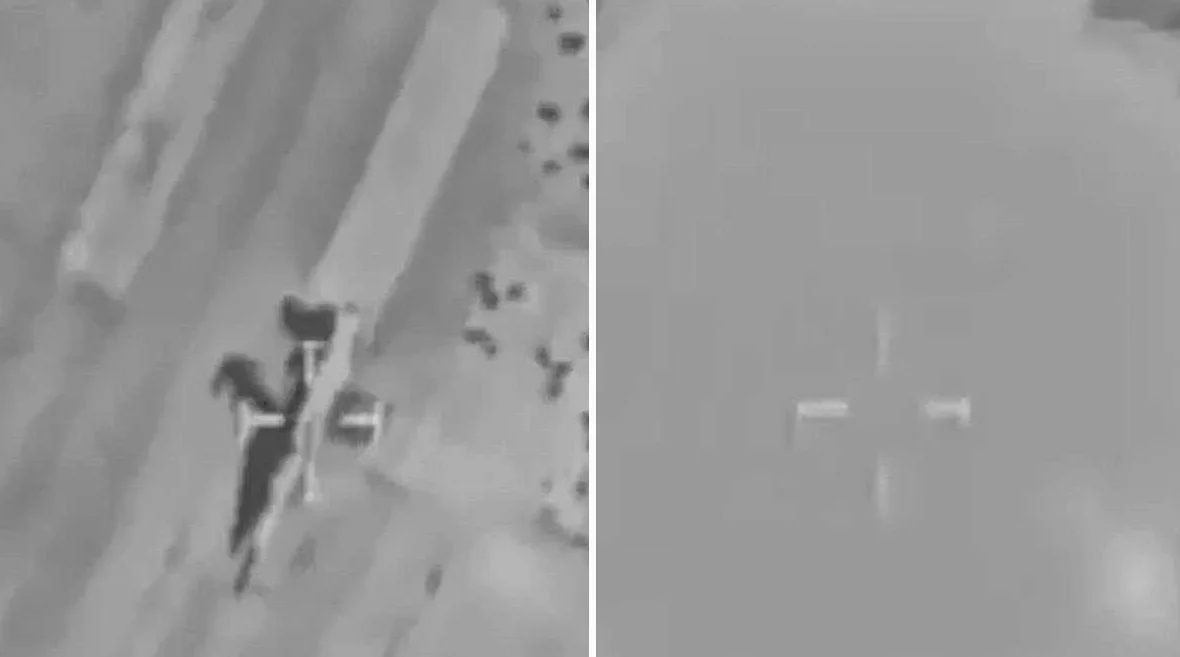
Israel launched a strike on Sunday targeting Tabriz airport in western Iran, destroying two of the country’s F-5 and F-4 fighter jets, according to the Israeli Defense Forces. The attack, part of a broader campaign against Iran’s military infrastructure, comes amid escalating tensions between the two nations, with Israel warning it will continue its strikes against the Islamic Republic.
Impact on Iran’s Air Force
The Israeli Defense Forces (IDF) confirmed that the attack targeted the airport as the jets were being prepared for takeoff. The strike was aimed at degrading Iran’s aerial capabilities and disrupting its military operations. IDF shared a video of the strike on X (formerly Twitter), showing the destruction of the aircraft.
The attack reportedly hit the Basij forces headquarters and other military installations in the area. The IDF stated that the operation was part of a broader effort to weaken Iran’s military and aerial defense systems.
The destruction of the two jets raises concerns about the operational readiness of Iran’s air force, particularly in the western part of the country. The Tabriz airport is a key hub for military aviation in the region, and its disruption could have immediate effects on Iran’s ability to project power in the area.
Khamenei’s Killing and Israel’s Warning
Israel has claimed that Supreme Leader Ayatollah Ali Khamenei was killed in previous strikes, though this has not been independently verified. Israeli Prime Minister Benjamin Netanyahu has stated that Israel’s operation will continue as long as necessary, citing Iran’s long-standing hostility toward Israel and the United States.
Netanyahu said that Iran has armed proxies in Gaza, Syria, and other countries, spreading fear and instability across the Middle East. He accused Iran of developing a vast network of terror, investing in atomic bombs and missiles aimed at erasing Israel from the map.
In a recent address, Netanyahu emphasized that Iran’s regime has called for the destruction of Israel and the United States for the past 47 years. He warned that the Iranian regime’s actions have kept the region in a state of fear and instability.
Regional Response and Calls for De-escalation
President Donald Trump has also issued warnings to Iran, urging the country to avoid further escalation. Gulf nations, including Kuwait, the United Arab Emirates (UAE), and Bahrain, have called for peace in the region, urging Iran to avoid actions that could lead to further conflict.
Despite these calls for de-escalation, Iran has not indicated a willingness to back down. The country has vowed to continue targeting U.S. bases in the region, signaling that the conflict is far from over.
Analysts say the situation is highly volatile, with the potential for further military exchanges between Israel and Iran. The destruction of the jets in Tabriz could be seen as a symbolic blow to Iran’s military capabilities, though it remains unclear how much this will impact its overall strategy.
Experts warn that the ongoing conflict could have broader implications for regional stability, particularly with the involvement of other countries in the Middle East. The situation is expected to remain tense in the coming weeks, with both sides likely to continue their military posturing.
As the conflict continues, the international community is closely watching the developments, with many hoping for a diplomatic resolution to prevent further escalation.




Comments
No comments yet
Be the first to share your thoughts