

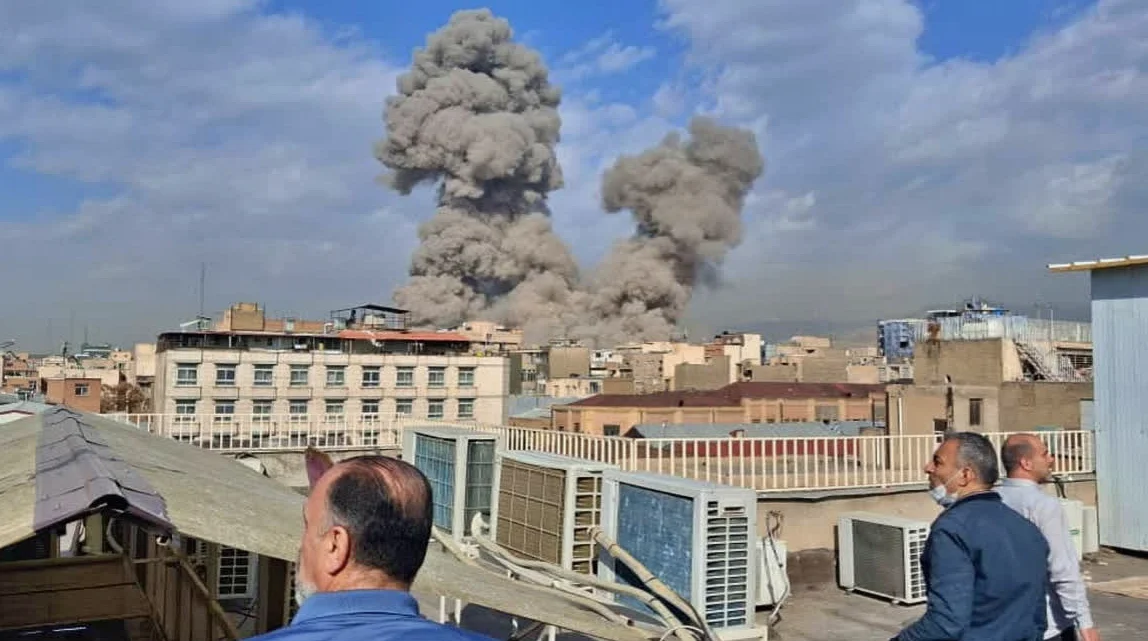
The Middle East is on the brink of a major conflict after Israel and the United States conducted a synchronized military operation targeting Iran. According to reports, the strikes—dubbed by Israel as Operation Lion’s Roar and by U.S. officials as Operation Epic Fury—have triggered a wave of retaliation from Iran, which launched missile and drone attacks on Israeli targets as well as U.S. military installations and allied states in the Gulf.
Escalation Across the Gulf
Iran’s response has been swift and widespread, with explosions reported in the United Arab Emirates, Kuwait, Qatar, and Bahrain. These attacks have raised fears of a broader regional confrontation. The Gulf region has been a flashpoint for tension for years, but this latest escalation marks one of the most intense moments in recent memory.
According to the U.S. military, the operation is part of a broader effort to dismantle Iran’s military infrastructure and disrupt its regional influence. The attacks have targeted key Iranian military sites, including command centers and missile storage facilities in multiple provinces.
Trump’s Warning and Long-Term Strategy
U.S. President Donald Trump has issued a stark warning to Iran, calling on the Major Guard, the Iranian military, and police to surrender. ‘Lay down your arms and receive full immunity or face certain death,’ Trump said in a public address, signaling a hardline approach toward Iran’s military apparatus.
Trump has also indicated that Operation Epic Fury, which he described as ‘one of the most overwhelming military offensives’ against Iran, will continue ‘at full force until all of the objectives are achieved.’ He suggested that the operation could last ‘four to five weeks’ if necessary, signaling a long-term commitment to the campaign.
Additionally, Trump hinted at a potential post-conflict scenario for Iran, suggesting a ‘Venezuela model’—a reference to a political structure where only the top leadership is removed while the rest of the state remains intact. This statement has drawn speculation about the U.S. approach to a possible regime change in Tehran.
Regional Fallout and Diplomatic Concerns
The strikes and subsequent retaliation have raised concerns among regional allies and international observers. Gulf states, including the UAE and Saudi Arabia, have expressed support for the U.S. and Israel, but are also wary of the potential for further escalation.
Iran has vowed to continue its military operations, with Supreme Leader Ayatollah Ali Khamenei issuing a statement condemning the attacks and calling for ‘a firm response.’ This has fueled fears that the conflict could spiral into a wider regional war, involving other powers such as Russia and China, who have growing interests in the Middle East.
Analysts warn that the situation could reach a breaking point if either side misjudges the other’s actions. The United Nations has called for an immediate ceasefire, but neither Israel nor the U.S. has indicated any willingness to halt the offensive.
According to recent intelligence reports, the U.S. has deployed additional military assets to the region, including fighter jets and naval vessels, to support the ongoing operations. This move has been interpreted as a signal that the U.S. is prepared to sustain a prolonged military campaign in the region.
The conflict has also had economic repercussions, with oil prices rising sharply in response to the uncertainty. The Gulf region accounts for a significant portion of global oil production, and any prolonged disruption could have a major impact on the global economy.
As the situation continues to unfold, the international community is closely watching for any signs of de-escalation. The coming days will be critical in determining whether the conflict can be contained or if it will lead to a wider regional war.






Comments
No comments yet
Be the first to share your thoughts